Table of Contents
The idea of an outdoor kitchen sounds brilliant right up until you start thinking about everything that could go wrong. The cost. The mess. The rain. The fact that you already spend half your weekends trying to keep on top of the garden, and adding a building project to that list feels like the kind of thing that sounds better in theory than it ever is in practice.
Here's the thing though. Done well, an outdoor kitchen actually makes family garden life easier, not harder. It moves food prep outside. It keeps the mess out of the house. It gives everyone a reason to be in the garden together, which is exactly what most families are trying to achieve when they redesign an outdoor space.
This guide is about how to approach it practically, with a family in mind, so you end up with something you actually use rather than something that looks great in planning and sits ignored by June.
Start With How Your Family Eats Outside
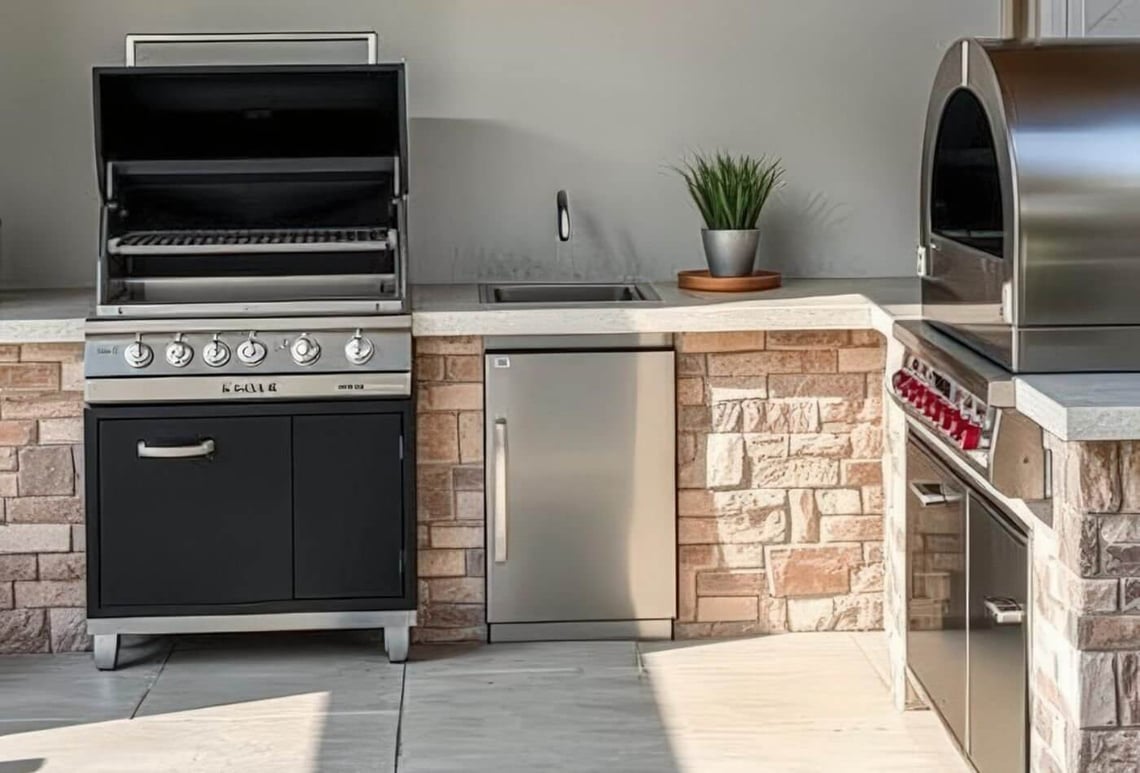
Not how you'd like to eat outside. How you actually do it.
Most families have a version of the same summer routine. The weather's nice, someone decides you should eat outside, and within ten minutes there's a parade of trips between the kitchen and the garden carrying plates, condiments, drinks, and the thing someone forgot. By the time everyone's sitting down, someone needs more ketchup.
An outdoor kitchen solves this because it puts everything where you need it. A worktop, a grill, somewhere to set plates down, somewhere to keep drinks cold. The fewer trips you make inside, the more time you actually spend outside.
Before you start looking at designs, write down what you actually cook and how you eat. If you do big family BBQs a few times a year, your needs are different from a family that eats outside three evenings a week through summer. If you have young children who need food quickly and simply, that's different again from a family where the kids are older and mealtimes are more relaxed.
The design follows the habit. Not the other way around.
What a Family Outdoor Kitchen Actually Needs
Forget the magazine versions with pizza ovens and wine fridges and built-in speakers. Those are great if that's what you're after. But most families with children need something more functional than aspirational.
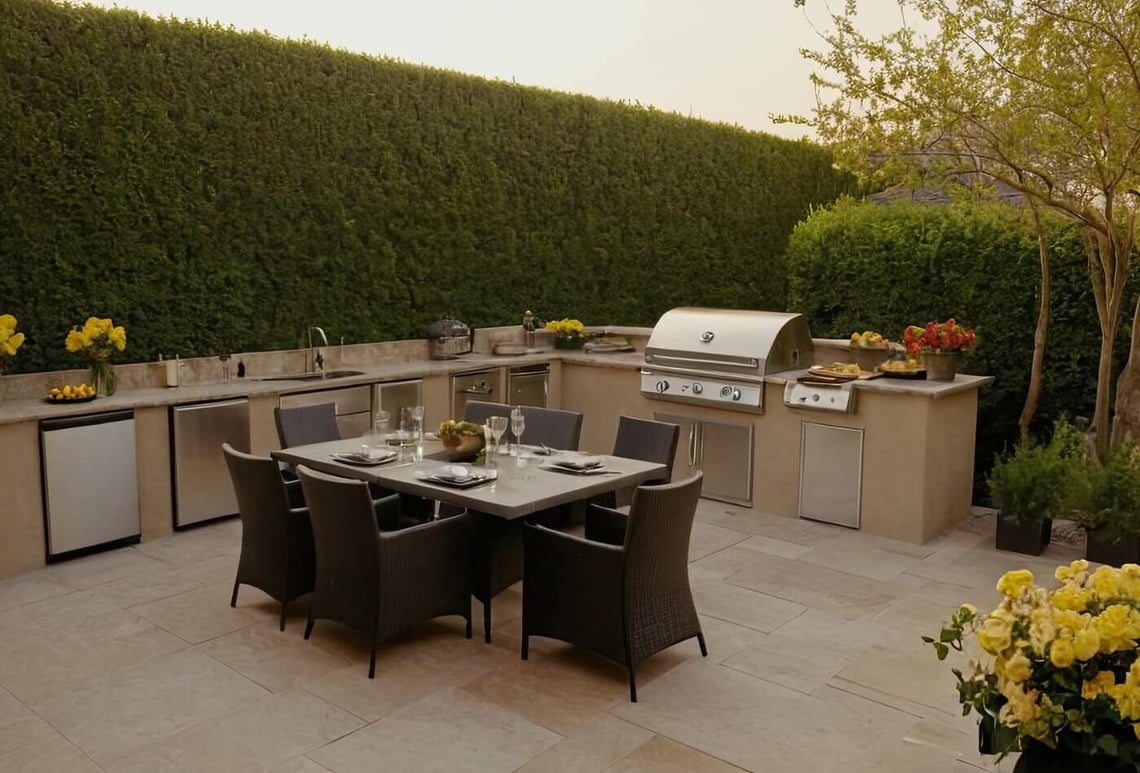
The basics that make a real difference are a solid worktop with enough surface to actually work on, a built-in grill or BBQ that doesn't require faff to set up, somewhere to put plates and food while you cook, and ideally a small fridge or cool storage for drinks and ingredients. That's it. That's the setup that changes how often you use the garden.
When you're thinking about outdoor kitchen worktop ideas, prioritise materials over looks. Porcelain is the standout choice for a family garden. It does not stain, it does not crack in frost, it wipes clean after kids spill things on it, and it requires zero maintenance beyond a cloth. Granite is similarly tough. Both hold up to the kind of treatment a family garden gets, which is rougher than most design guides acknowledge.
Avoid anything that needs sealing, treating, or special cleaning. You will not do it. Nobody does. Choose materials that look after themselves so you can focus on the actual cooking and eating rather than the upkeep.
Think About Where to Put It
Position matters more than almost any other decision you'll make about an outdoor kitchen, and it's the one most people think about last.
Close to the house is almost always right. Not because it looks better, but because the further it is from your back door, the less you'll use it. You want to be able to grab things from the kitchen, pop back in to check on a younger child, or dash inside if it starts raining without treating it like an expedition.
Think about wind direction too. Cooking into the wind means smoke in your face and food that takes longer to cook. A position sheltered by a fence, wall, or the house itself makes outdoor cooking more pleasant and more predictable.
Sun is trickier. You might want sun in the morning for a weekend brunch and shade in the late afternoon when you're cooking dinner. Most gardens cannot deliver both, so think about when you cook most often and plan around that. North-facing positions stay shaded; south and west-facing spots get afternoon sun, which for most family mealtimes is when you want it.
If you have young children, position the cooking area so you can see the rest of the garden while you cook. Standing at a grill with your back to where the children are playing is fine for short periods but becomes stressful quickly. A layout where you can watch the play area from the cooking station makes the whole thing considerably more relaxed.
Cover It, or Accept You Won't Use It Half the Year
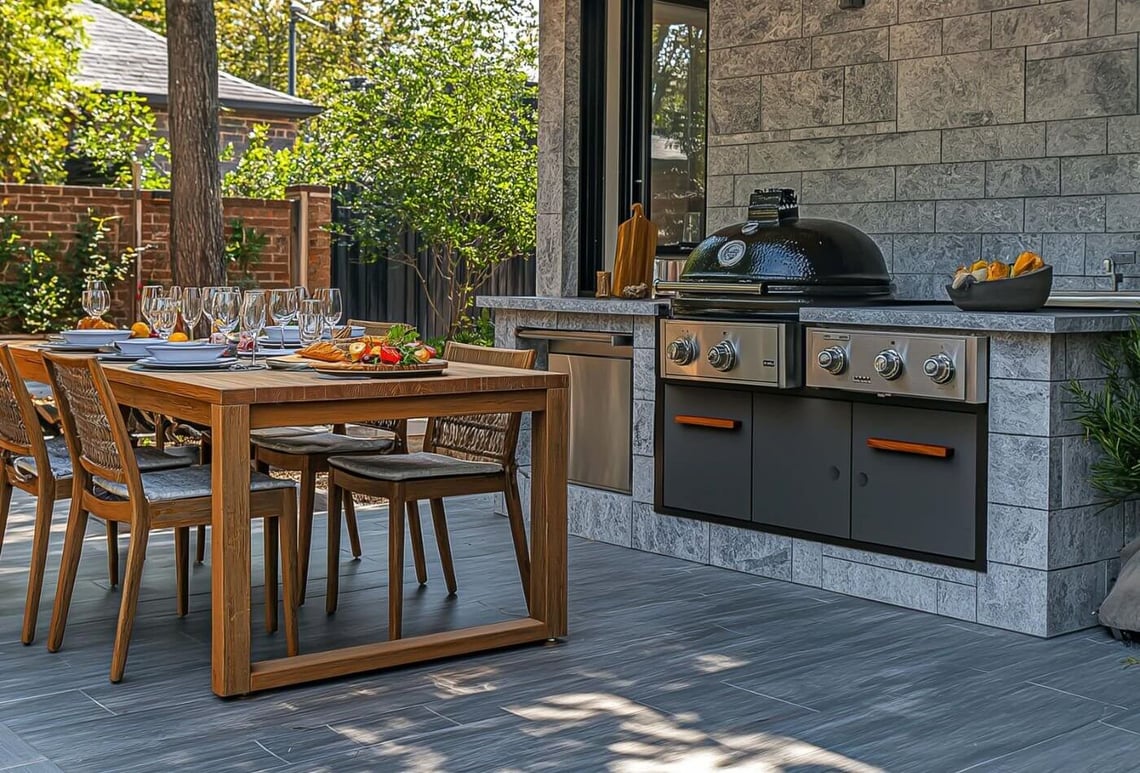
This is the decision that separates an outdoor kitchen that gets used all summer from one that gets used on the four days it doesn't rain.
The UK climate is what it is. Evenings cool down quickly. Rain arrives without warning. A completely uncovered outdoor kitchen in this country is optimistic.
Even a simple pergola overhead changes everything. It doesn't stop all rain, but it creates a sense of shelter that keeps people outside longer. A louvred roof or solid canopy goes further and gives you proper cover for cooking in light to moderate rain. The RHS has long noted that covered outdoor spaces get significantly more use through the British spring and autumn than uncovered ones, which is obvious when you think about it but easy to overlook when you're planning in January and imagining endless summer evenings.
Design the cover and the kitchen together. Post positions affect where units can go. Roof drainage affects the paving layout. These things need to be thought through as one project, not bolted together later. A pergola added to an existing kitchen after the fact rarely sits as neatly as one designed alongside it.
Plan for Children From the Start
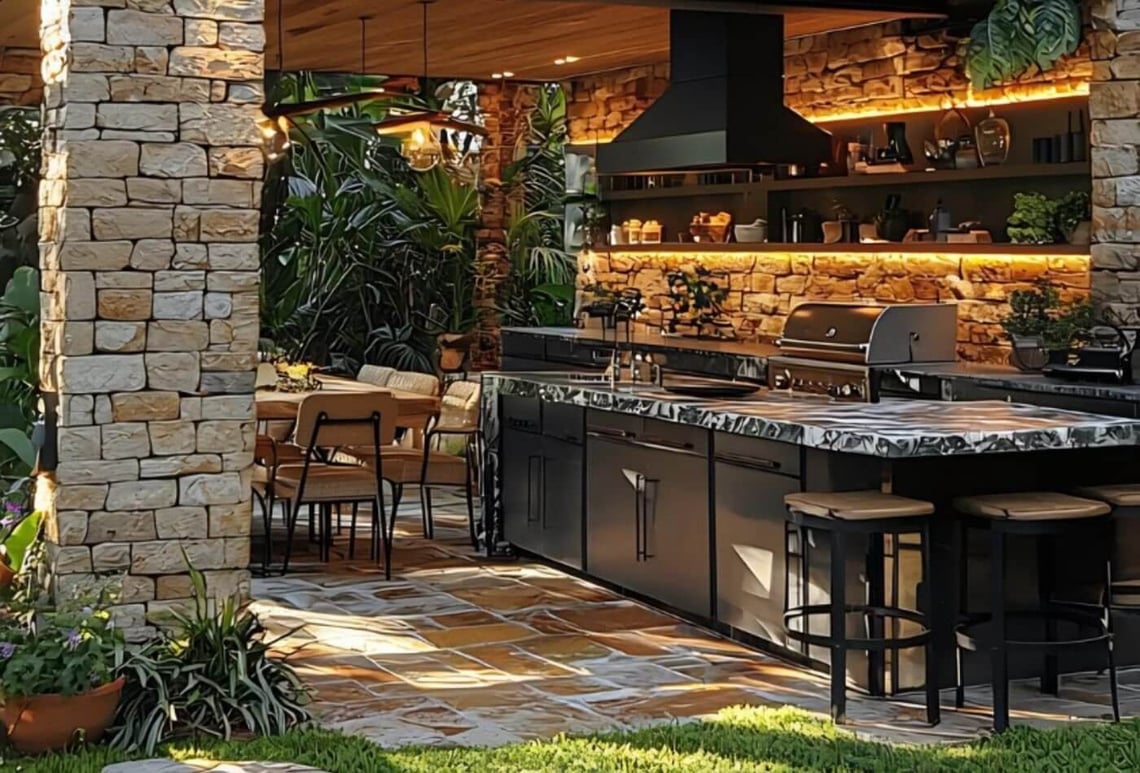
Children and outdoor kitchens need some thought. They're curious, they move fast, and they don't always respect the concept of a hot surface.
Keep the cooking zone defined. A step up or a change in paving material signals a different area without requiring you to police it constantly. Children understand boundaries better when they're physical rather than just verbal.
Sharp corners on worktops and structures are worth addressing at the design stage. Rounded edges or protective covers on corners at child height prevent the kind of minor injuries that happen when someone runs past at speed.
Storage at child height is a mixed blessing. On one hand, they can help carry things. On the other, they can also access things you'd rather they didn't. Think about what goes where. Cutlery, napkins, and unbreakable items can live low. Anything sharp, hot, or glass should be out of reach.
Think about what happens when you're cooking and children want to be involved. A lower section of worktop at their height lets them help with prep safely, which keeps them engaged and close rather than bored and wandering off into trouble.
Keep Maintenance Realistic
The outdoor kitchen that looks beautiful in photographs but requires an afternoon of treatment every spring is not the right choice for a family.
Be brutally honest about what you will and won't do. If the answer to "will you oil this timber every year?" is "probably not," choose a different material. Composite cladding on the outside of the units looks good, handles weather, and needs no maintenance. Porcelain worktops need nothing. 304-grade stainless steel for the sink and any metal elements handles damp and frost without corroding.
The same logic applies to the cooking equipment. A built-in gas BBQ connected to a permanent gas supply is more convenient and more reliable than managing gas canisters. You will not run out of gas halfway through cooking dinner for six children. It just works when you turn it on, which is exactly what you want.
Getting the spec right at the start is worth more than saving money on materials and regretting it two summers later.
It Doesn't Have to Be Big
The most common misconception about outdoor kitchens is that they need to be large to be worth having.
They don't. A well-specified two-metre run with a built-in grill, a worktop on either side, and storage underneath does everything most families need. It fits in gardens that are not enormous. It costs considerably less than a full outdoor kitchen setup. And if it's in the right position with the right materials, it gets used far more than a bigger, more complicated version in the wrong spot.
Start with what you need, not what you've seen on Instagram. A compact outdoor kitchen you actually cook on every weekend is better than a showpiece you use twice.
If you want to see what different setups look like in practice, this detailed guide to outdoor kitchen worktop ideas covers twelve different designs at various sizes and budgets, with practical build notes for each, including what works specifically in the UK climate.
The Payoff
Get this right and it genuinely changes how your family uses the garden.
Cooking moves outside. Mess stays out of the house. The garden becomes somewhere you go to do things, not just somewhere to look at. Children who eat outside regularly tend to stay outside longer, which means more fresh air and more time as a family rather than everyone drifting to separate screens.
It also makes hosting considerably more relaxed. When the cooking is outside, the cook is part of the group rather than stuck in the kitchen. Conversations happen. People help. It feels more like a gathering and less like a performance.
None of that requires an elaborate setup or a large budget. It requires being honest about what your family actually needs, choosing materials that will last, and putting the thing somewhere you'll genuinely use it.
The rest follows naturally.