Table of Contents
- Understanding Composite Stone Worktops
- Tools for Cutting Composite Stone Worktops
- How to Cut Composite Worktops Safely
- Step-by-Step: Professional Fabrication of Composite Stone Worktops
- DIY Vs Professional Stone Worktop Installation: What’s Worth It?
- Dust Control and HSE Rules in the UK
- When to Call in a Professional Worktop Cutting Service?
- Common Mistakes When Fabricating Worktops
- Final Thoughts - Choose Professional Stone Installers in the UK For Safety
- Frequently Asked Questions and Answers
Composite stone worktops like quartz, Silestone, Caesarstone, you name it — have become the go-to for modern UK kitchens. They’re tough, heat-resistant and look stunning. But when it comes to fabricating or resizing them, that toughness quickly becomes a challenge. Many homeowners think, “It’s just a straight cut — how hard can it be?” Well, anyone who’s tried will tell you: cutting composite stone isn’t like trimming wood. This guide runs through how to cut composite stone worktops properly, the tools involved, and why most professionals in the UK use specialised gear and dust-control systems rather than going the DIY route.
Understanding Composite Stone Worktops
“Composite stone” generally means engineered stone; a mix of ground quartz, resins, and pigments. It’s dense, non-porous and incredibly durable, which makes it ideal for busy kitchens. But those same resins and minerals are what make cutting it risky.
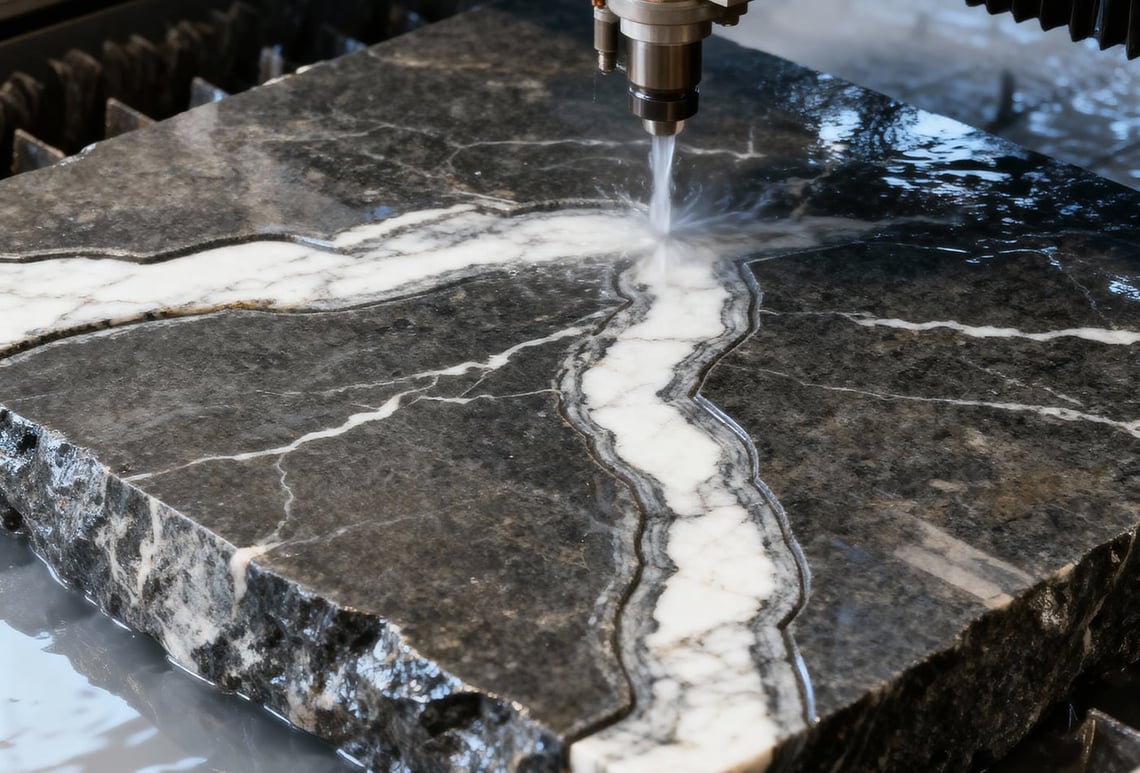
When you cut composite worktops dry, you release fine silica dust. Inhaling that dust can lead to serious respiratory issues, which is why the UK’s Health and Safety Executive (HSE) has strict guidelines about cutting engineered stone. Professional fabricators now use wet-cutting or water-suppressed systems that keep dust to an absolute minimum.
So before anything else: understand the material. It’s beautiful, but it bites if handled wrong.
Check Out Types of Composite Stone Worktops HERE
BOTTICINO QUARTZ

£334.25
Botticino Quartz has been manufactured to mimic Botticino Classico, one of the highest quality Italian marbles. It has a luxurious look with a series of gold stripes and veins on a beige base that combines seamlessly to produce a plain… read more
CASPER QUARTZ

£311.30
Casper Quartz is a polish finished greyish slab. It has a plain look but is patterned with numerous dots throughout the surface. This surface stone is suitable for all interior spaces. It makes the best interior designs. It comes in… read more
NERO MISTRAL QUARTZ

£338.54
Nero Mistral Quartz is an eye-catching interior design slab that features a black base with busy white veins. It is given a dazzling finish that makes a perfect addition in both residential and commercial settings. It is a dream come… read more
Tools for Cutting Composite Stone Worktops
If you’re wondering what you actually need to cut composite stone, the list is a bit more industrial than most DIY setups.
Professionals typically use:
Diamond-tipped circular saw blades designed for engineered stone
Water-cooled saws or bridge saws that reduce heat and dust
Angle grinders (with extreme care) for small adjustments
CNC or waterjet machines for precision sink and hob cut-outs
Even with these, accuracy comes down to experience — especially with sink openings, corners, and tight joins. A small mistake here means a visible chip or worse, a crack spreading across a £1,000 slab.
For a homeowner or builder without stone-cutting gear, the best option is to mark and measure precisely, then get a professional worktop cutting service to finish the job. As professionals are experts in how to cut composite stone worktops, going to them saves material, time and your lungs.
Your Next Read: Are Composite Worktops Expensive Vs Wood & Laminate
How to Cut Composite Worktops Safely
Safety isn’t optional when cutting engineered stone. Every UK stone fabricator knows the rules around silica dust exposure. Here’s how the pros keep safe:
Use wet-cutting equipment: Keeps the dust from going airborne.
Wear PPE: Proper respirator (not a paper mask), gloves, and eye protection.
Work outdoors or in a well-ventilated area: Never indoors, no matter how small the cut.
Support the slab properly: Stone can flex and snap if the weight’s uneven.
The difference between a clean cut and a ruined worktop often comes down to support and patience. Never rush through it.
You’ll sometimes see online videos of people cutting quartz with dry saws — don’t follow that. UK regulations are strict for a reason.
Step-by-Step: Professional Fabrication of Composite Stone Worktops
Here’s roughly how professional installers handle the process — not a DIY how-to, but so you understand what goes into it.
1. Measure twice, mark once.
Measurements are taken for sinks, hobs, or wall fitments. Masking tape often goes over the surface before marking to reduce chipping.
2. Secure and support.
The slab is laid flat on padded trestles or a bench, supported at all corners and along the cut line.
3. Set up wet-cutting gear.
Water feeds are connected, the blade checked for sharpness, and the RPM set low to avoid burning the resin.
4. Start from the edge, slow feed.
The blade is eased gently. Professionals use a continuous, steady motion — stopping mid-cut causes stress lines.
5. Polish and finish.
Once the cut is complete, the edge is smoothed with diamond pads and finished to match the factory sheen.
Each step on how to cut composite stone worktops takes skill, patience and the right kit. That’s why most installers won’t recommend DIY cutting beyond tiny trims on laminate — composite is another story.
Read Next: Sealing Granite Worktops - A Step-By-Step Guide
DIY Vs Professional Stone Worktop Installation: What’s Worth It?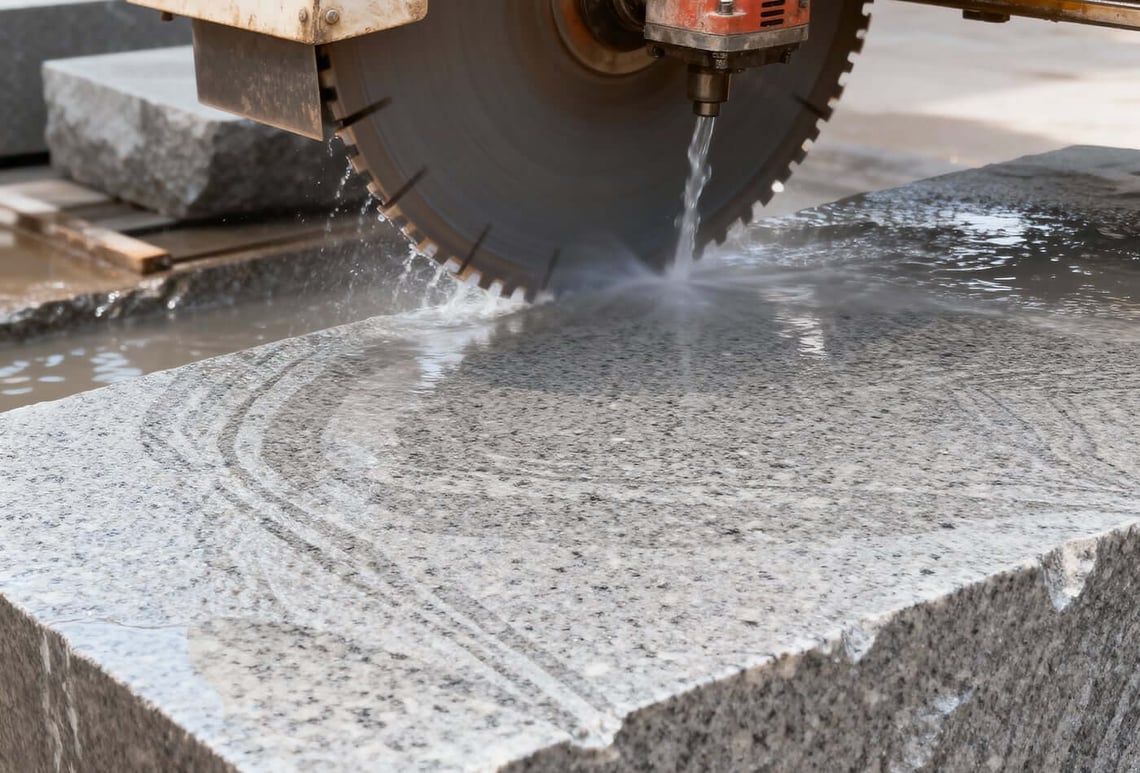
Let’s be honest. Can you technically cut a composite worktop at home? Possibly — with a diamond blade, plenty of water, and solid know-how. Should you? Probably not.
Here’s why:
Tool cost: Quality wet saws and diamond blades aren’t cheap.
Risk: One bad move and the surface chips, or the slab cracks.
Dust hazard: Silica dust is dangerous and hard to control indoors.
Finish quality: You’ll see the difference between a hand cut and a factory edge.
In the UK, most homeowners simply measure and template their worktop, then send it off for professional cutting and polishing. It’s faster, cleaner and insured. If you’re fitting a kitchen, it’s the most sensible route — you focus on fitting, not fabricating.
Check Out All Types of Stone Worktops For Your Kitchen
Dust Control and HSE Rules in the UK
The HSE treats silica dust the same way they treat asbestos — that’s how harmful it can be. Under UK law, if you’re fabricating or modifying engineered stone, you’re expected to have:
Local exhaust ventilation (LEV) or water suppression
RPE (Respiratory Protective Equipment)
Health surveillance for regular exposure
For a one-off kitchen cut, you don’t need a full system, but it drives home the point: dry cutting quartz or composite stone is a health hazard. If you’re only trimming a small corner, still do it outdoors, with water cooling and a proper respirator. How to cut composite stone worktops is not just about knowing what tool to use but also proper safety measures.
When to Call in a Professional Worktop Cutting Service?
If your worktop needs to be resized, have cut-outs made, or new joints polished, call a professional worktop cutting service near you. They use industrial saws and waterjets designed for precision.
Typical services include:
Cutting for sinks, hobs and corners
Jointing and edging for L-shaped kitchens
On-site trimming for tight installations
Repairs for chips or cracks
The best part? You can usually send your measurements or template, and the team will fabricate everything in their workshop, then deliver it ready to fit — clean, polished and perfectly aligned.
Across the UK, that’s the norm now. Even builders subcontract this part because of the equipment and health rules involved.
Check Out: Home Maintenance Checklist 2025
JAGUAR SEMI PRECIOUS

£4,060.25
Jaguar Semi Precious Stone Slab has a lovely visual appearance created by gems in white, brown, gold and grey that are bound together by resin. This lovely decorative stone slab is popularly used by both residential homeowners as well as… read more
PICASSO GEM SEMI PRECIOUS

£2,653.55
Picasso Gem Semi Precious Stone Slab creates a stunning visual appearance with its multicolour design featuring colours like pink, navy blue, brown, gold, black and translucent gems that are bound together by resin. This stunning decorative stone slab is popularly… read more
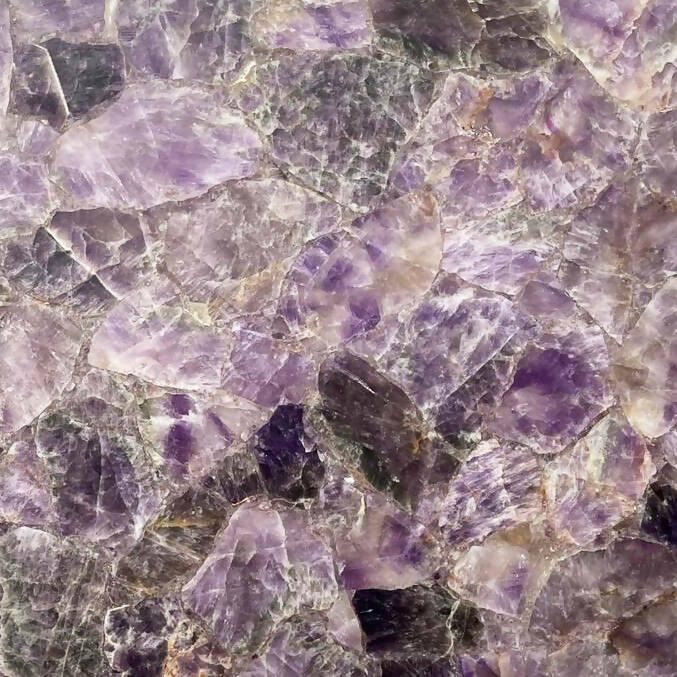
AMETHYST SEMI PRECIOUS
£2,654.00
Amethyst Semi Precious Stone Slab is a fantastic decorative stone slab that is popularly used by both residential homeowners as well as commercial property owners. It has a striking visual appearance that features repetitive designs created by varying shades of… read more
Common Mistakes When Fabricating Worktops

These are the things even experienced fitters sometimes trip on:
Rushing measurements: Forgetting to leave expansion gaps or overcutting sink openings.
Using the wrong blade: A wood or tile blade will chip quartz immediately.
Not supporting the slab: Gravity alone can crack the stone mid-cut.
Skipping polishing: Raw cut edges don’t just look rough — they can also attract grime and moisture.
Knowing how to cut composite stone worktops with a proper guide prevents costly mistakes.
Your Next Read: Which Kitchen Worktop Is Easier to Repair?
Final Thoughts - Choose Professional Stone Installers in the UK For Safety
Composite stone worktops are one of the most durable and stylish upgrades you can give your kitchen but How to cut composite stone worktops? Cutting them isn’t a simple DIY task. With silica dust hazards, precision requirements, and the risk of expensive damage, it’s one of those jobs best left to people with the right tools.
If you do plan to handle small adjustments yourself, always follow HSE safety advice: wet-cut only, wear a respirator, and work outside.
Otherwise, invest in a professional cutting and fitting service; your lungs, your kitchen, and your wallet will thank you in the long run.
Email us at info@work-tops.com or call 0330 113 5868 for the safest and best worktop installation service in the UK.
Frequently Asked Questions and Answers
Can I Cut A Composite Stone Worktop Myself?
You could, but it’s rarely worth the gamble. These tops are dense and brittle — one wrong move and you’re looking at a crack across the surface. The dust they give off is another issue; it’s not something you want floating around indoors. Most people mark their measurements and let a stone workshop handle the actual cutting. It saves time, lungs, and the worktop itself. In the UK, most fitters will cut to size in their workshop and bring it ready to install.
What Tools Do Professionals Use To Cut Composite Worktops?
Professionals typically use diamond-tipped saws, bridge saws, or CNC machines with continuous water cooling. The water keeps the dust down and the stone cool during cutting. For smaller adjustments, an angle grinder with a diamond blade might be used — but only with proper PPE and dust control.
How Much Does Professional Worktop Cutting Cost In The UK?
It depends on the job. A straight trim might cost less than a fancy hob or sink cut-out, because those need precision equipment. Some firms charge by the cut, others by the hour. The best way is to send a photo or sketch to a local fabricator — they’ll quote properly once they know the thickness, length and type of stone you’ve got.
Is It Safe To Dry-Cut Quartz Or Composite Stone?
Not really. When you slice into quartz or any engineered stone without water, it throws off a very fine dust that’s bad news for your breathing. Professionals always keep the blade wet or use extraction gear to stop that dust from spreading. If you’re only doing a small trim, do it outside and keep the surface damp — never dry-cut in a closed space. Know how to cut composite stone worktops from experts in this blog.
Can A Fitted Composite Worktop Be Resized Or Trimmed Later?
Yes, though it takes care and the right tools. If you’re swapping a hob or adding new units, a stone specialist can come in, mark up, and make the adjustment cleanly. They’ll usually wet-cut to keep dust down, then polish the new edge so it matches the rest of the surface. Doing it this way keeps the finish factory-sharp without risking cracks.