Table of Contents
Something is shifting in how UK homeowners approach kitchen renovations. After two decades dominated by engineered composites, laminate surfaces, and plastic window frames, the materials people are choosing for new kitchens are starting to look a lot more like the ones their grandparents had.
Natural stone worktops are seeing sustained demand. Granite, marble, and quartzite are turning up in kitchens where quartz composites would once have been the default. And alongside those surfaces, another natural material is quietly reclaiming its place in the kitchen: timber.
Not just in cabinetry and flooring, but in the frames of the windows that define how a kitchen looks and feels. The trend is not about nostalgia. It is about performance, longevity, and a growing awareness that the materials we surround ourselves with actually matter.
The Case Against All-Synthetic Kitchens
Engineered materials solved real problems. Composite worktops offered consistency. uPVC window frames eliminated the need for painting. Laminate provided an affordable entry point for kitchen upgrades. For years, the pitch was simple: synthetic means low maintenance.
But homeowners who installed all-synthetic kitchens in the early 2000s are now living with the results. uPVC frames have yellowed or warped. Laminate edges have chipped and swollen. Composite surfaces have lost their lustre in ways that natural stone never does. The promise of maintenance-free turned out to mean replacement-required.
The shift back to natural materials is partly a reaction to this. Homeowners are realising that a material requiring occasional care – a re-oil, a re-seal, a fresh coat of paint – can outlast one that demands nothing but eventually gives nothing back.
Natural Stone: Why Worktop Buyers Are Going Back to Basics
Granite remains the most popular natural stone for kitchen worktops in the UK, and for good reason. It is extraordinarily hard, heat-resistant, and available in a range of finishes from polished to leathered. Each slab carries unique veining and colour variation that no factory process can replicate.
Marble appeals to homeowners who want warmth and character. It is softer than granite and requires sealing, but its patina develops over time in a way that many find more attractive, not less. Quartzite sits between the two – offering the hardness of granite with the visual depth of marble.
What all three share is longevity. A properly sealed natural stone worktop will outlast the kitchen around it. And that durability is part of a broader shift in how people think about their homes: investing in materials that perform over decades rather than settling for surfaces that look good on installation day.
There is also the tactile quality. Stone feels different under your hands than any composite. The temperature, the weight, the subtle texture of a honed or leathered finish – these sensory details contribute to how a kitchen feels to use daily, not just how it photographs.
Bringing Design Cohesion to the Kitchen
One challenge with kitchen renovations is that decisions get made in isolation. The worktop is chosen at one showroom, the cabinetry at another, the tiles online, and the windows as an afterthought when the builder asks what frames to fit. The result is often a kitchen that has individually good components but no unifying material language.
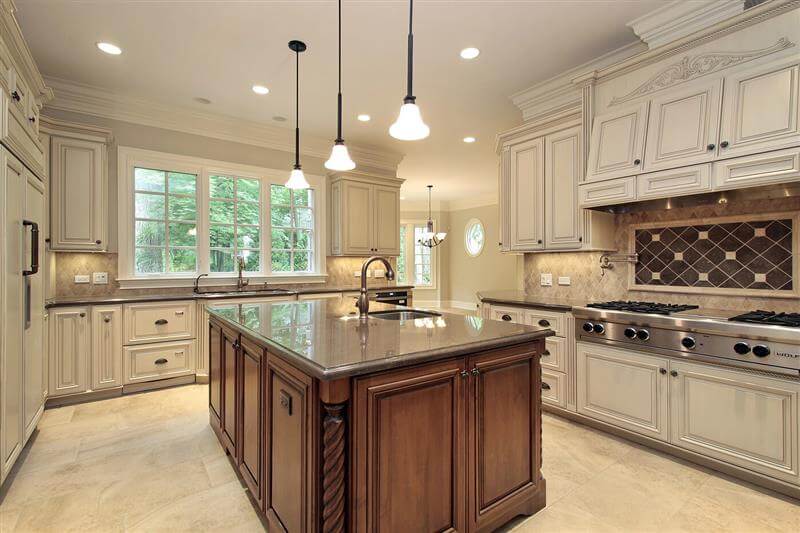
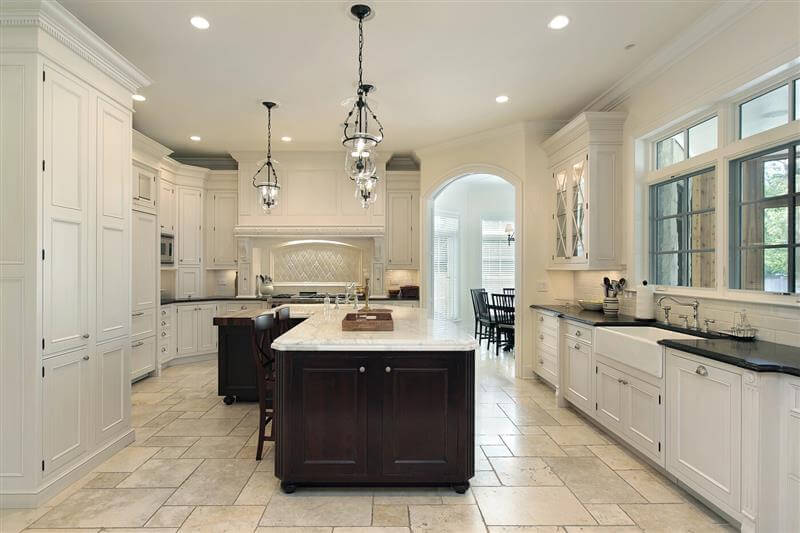
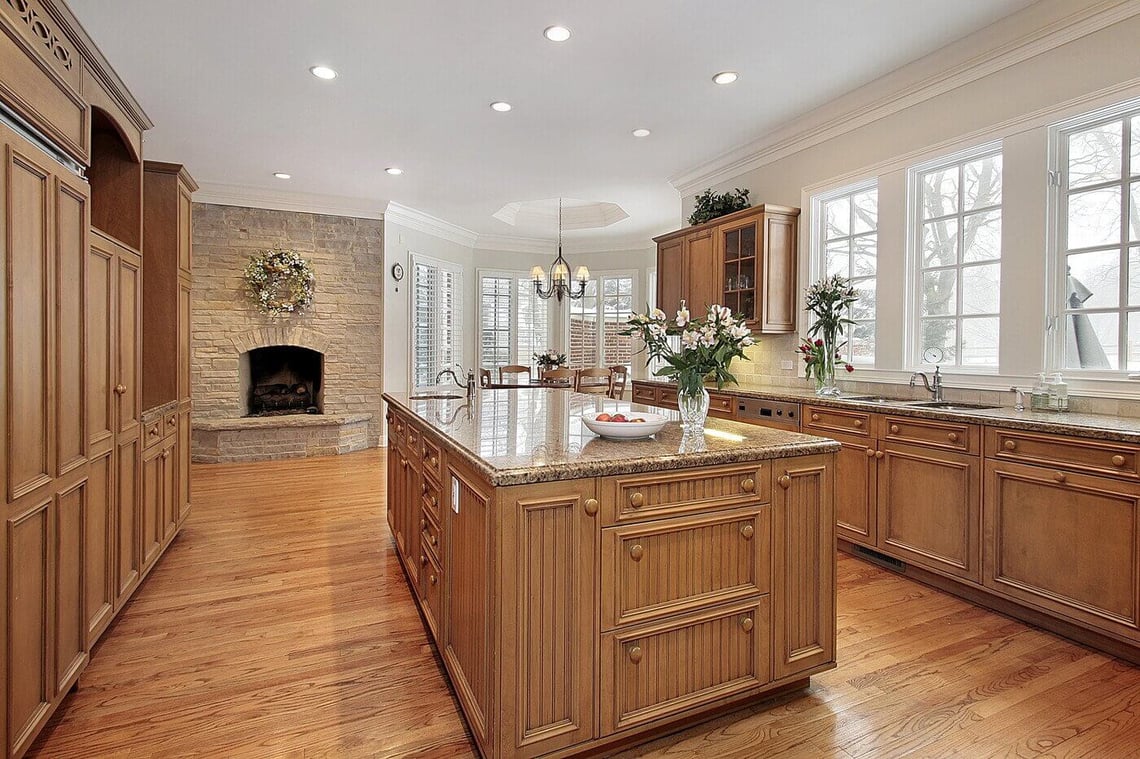
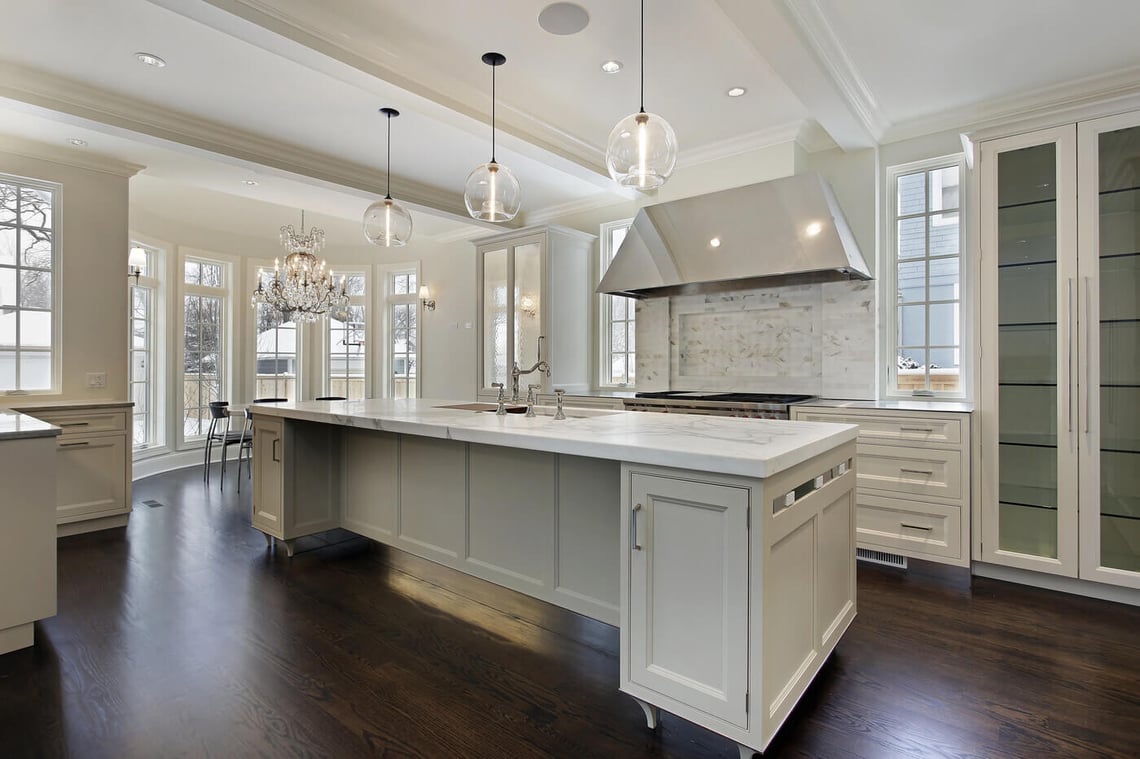
The resurgence of natural materials offers a simpler design framework: let the materials connect. A marble or granite worktop pairs naturally with timber cabinetry. Timber window frames echo the warmth of hardwood flooring. Handmade ceramic tiles complement the organic variation in natural stone. When the palette is rooted in real materials, cohesion happens almost automatically.
Timber Frames: The Missing Piece
Kitchens rely on natural light more than almost any other room. The window above the sink, the glazed door to the garden, the corner casement that catches morning sun – these are defining features of how a kitchen feels to use.
Yet window frames are often the last thing homeowners consider during a kitchen renovation. The default has been uPVC: functional, affordable, and visually unremarkable. Against a granite worktop, handmade tile splashback, and solid wood cabinetry, a plastic window frame looks exactly like what it is – a compromise.
Timber window frames bring the kitchen design together. The grain and texture of a hardwood frame complement natural stone surfaces in a way that no synthetic profile can. Slim timber sightlines let more light through. And the material itself ages alongside the stone, developing character rather than degrading.
UK suppliers such as Timber Windows Direct offer bespoke timber casement and sash windows made to measure, which is particularly relevant for kitchen renovations where standard sizes rarely fit existing openings. A properly specified timber frame meets Part L thermal requirements while preserving the aesthetic that makes a natural-material kitchen feel complete.
The Sustainability Argument
Beyond aesthetics and performance, the environmental case for natural materials is increasingly difficult to ignore.
Timber is renewable, biodegradable, and stores carbon throughout its installed life. FSC and PEFC certification schemes ensure that harvested forests are replanted, maintaining the supply chain sustainably. Manufacturing a timber window frame uses a fraction of the energy required to produce a uPVC equivalent.
Natural stone carries a different but equally compelling story. It requires minimal processing – quarrying, cutting, and polishing rather than chemical manufacturing. It does not off-gas. It does not degrade into microplastics. And at end of life, it can be repurposed rather than sent to landfill.
For homeowners who care about the environmental footprint of their renovation, choosing natural stone worktops and timber window frames is one of the most impactful decisions they can make.
Making the Investment Count
A kitchen built around natural materials costs more upfront. That is undeniable. Granite worktops, timber frames, and solid wood cabinetry carry a premium over their synthetic alternatives.
But the lifecycle economics tell a different story. A granite worktop lasts the lifetime of the home. A timber window, properly maintained, serves 60 years or more. These are materials you install once and maintain lightly, rather than replace every 15 to 20 years.
The comeback of natural stone and timber in UK kitchens is not a passing trend. It is a correction – a return to materials that were set aside too quickly and are now proving their value all over again. If you are planning a kitchen renovation, the surfaces you touch and the light you see through deserve the same quality as the food you prepare on them.