Table of Contents
- Why Terrace Floor Tiles Need To Be Tougher Than Indoor Tiles?
- Porcelain Vs Natural Stone Tiles: What Works Better for Outdoor Flooring?
- How To Choose Tiles That Don’t Turn Slippery?
- Weather-Resistant Garden Tiles: What To Check Before Buying?
- Low-Maintenance Outdoor Flooring: What Saves You Time in the Long Term?
- What Floor Colours Work Best For UK Terraces?
- Non-Porous Tiles For Terraces: Why They’re Worth It?
- Terrace Tiling Installation Mistakes You Should Avoid
- FINAL THOUGHTS
- Frequently Asked Questions and Answers
Most homeowners look at terrace tiles the same way they look at wall paint; “if I like the colour, it’ll do.” But outdoors doesn’t work like indoors. The tile that looks perfect in a showroom might start collecting algae, cracking in winter, or turning slippery after the first rain.
And because the UK gets more wet days than dry ones, everything you pick for your terrace has to deal with rain, frost, shade, and constant temperature swings.
This guide isn’t theory. It’s the same straight talk we give customers who want tiles for a terrace that won’t cause headaches later. Let’s break down what actually matters, what to avoid, and what you should expect long term.
Why Terrace Floor Tiles Need To Be Tougher Than Indoor Tiles?
Walk around any neighbourhood and you’ll spot at least one terrace with faded sandstone, cracked grout, or moss turning the surface green. Most of this isn’t poor installation; it’s using the wrong material outdoors.
GREY GALAXY QUARTZ

£293.71
Grey Galaxy Quartz has a surface that is predominantly dominated by grey much like the name suggests. The entire slab is patterned with various sized glass and mirrored flecks. It is a dream come true for kitchens, baths, entryways, laundry… read more
SHIVAKASHI GRANITE

£365.54
Shivakashi Granite is a Beige which is a yellow granite with a fine to medium-grained pinkish-beige tone that dazzles onlookers. The granite stone product is stylish and enticing, with light brown and red veins and spots. This South Indian stone… read more
AURA QUARTZ

£262.70
Aura Quartz is a shiny white countertop surface with contrasting grey tones throughout the slab. Aura Quartz is well-known in the industry for its complex style and light design. It has crystal spots that combine beautifully with the white background.… read more
Terraces in the UK live through:
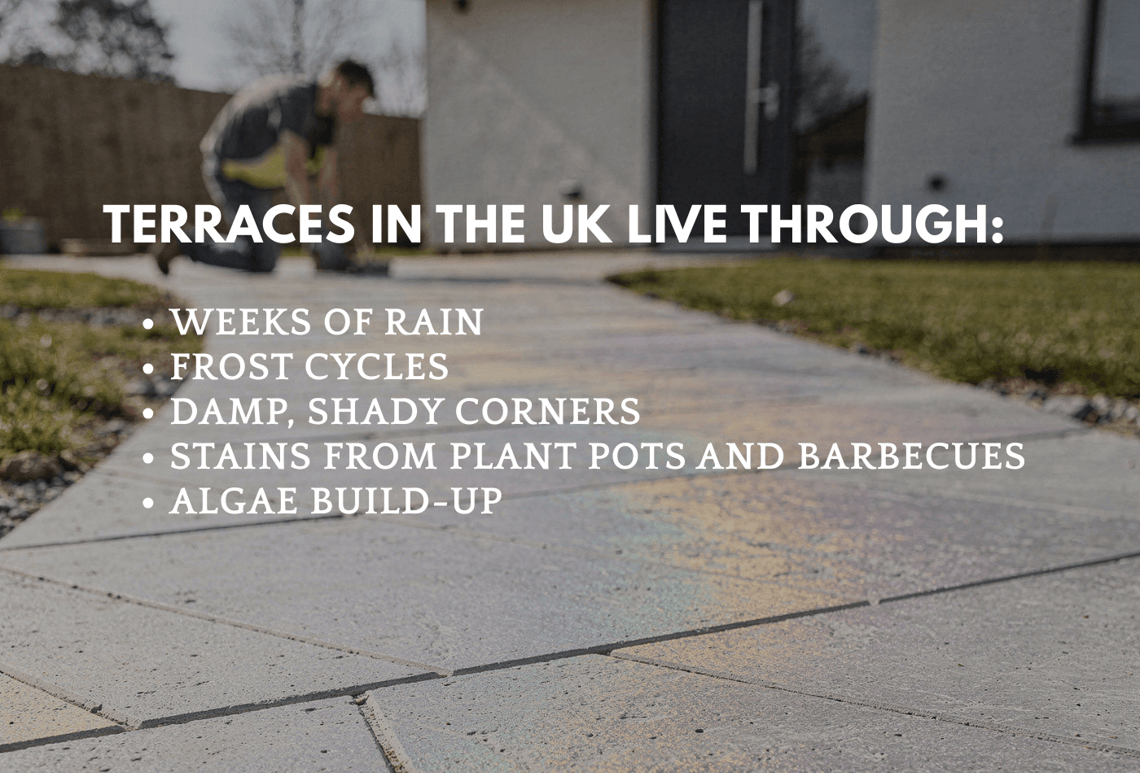
Weeks of rain
Frost cycles
Damp, shady corners
Stains from plant pots and barbecues
Algae build-up
To tackle all these, we should make sure that we choose terrace tiles that are weather-resistant, non-porous, and most importantly slip-resistant. Once those basics are covered, the rest is preference.
Read Next: Ideas for Installing Porcelain Paving in Terrace, Gardens & Patios
Porcelain Vs Natural Stone Tiles: What Works Better for Outdoor Flooring?
Porcelain Terrace Floor Tiles
If you want something you don’t have to babysit through every season, porcelain is the safest option.
Why?
It barely absorbs water (below 0.5%).
It’s incredibly durable.
It doesn’t fade under UV.
It doesn’t need constant sealing.
It’s naturally hard to stain.
Most importantly, it performs well during winter; no ugly cracks after frost.
Natural Stone Terrace Tiles
Stones look beautiful. It has character. But outdoors, it’s a commitment.
You’ll need:
Yearly sealing
Occasional deep cleaning
Extra care in areas with shade or trees
Sandstone and limestone are common, but both get slippery over time unless maintained well. If you want stone, go in knowing it’s more work than porcelain.
Next Read: Stones & Tiles for Waterproof Balcony Flooring
How To Choose Tiles That Don’t Turn Slippery?
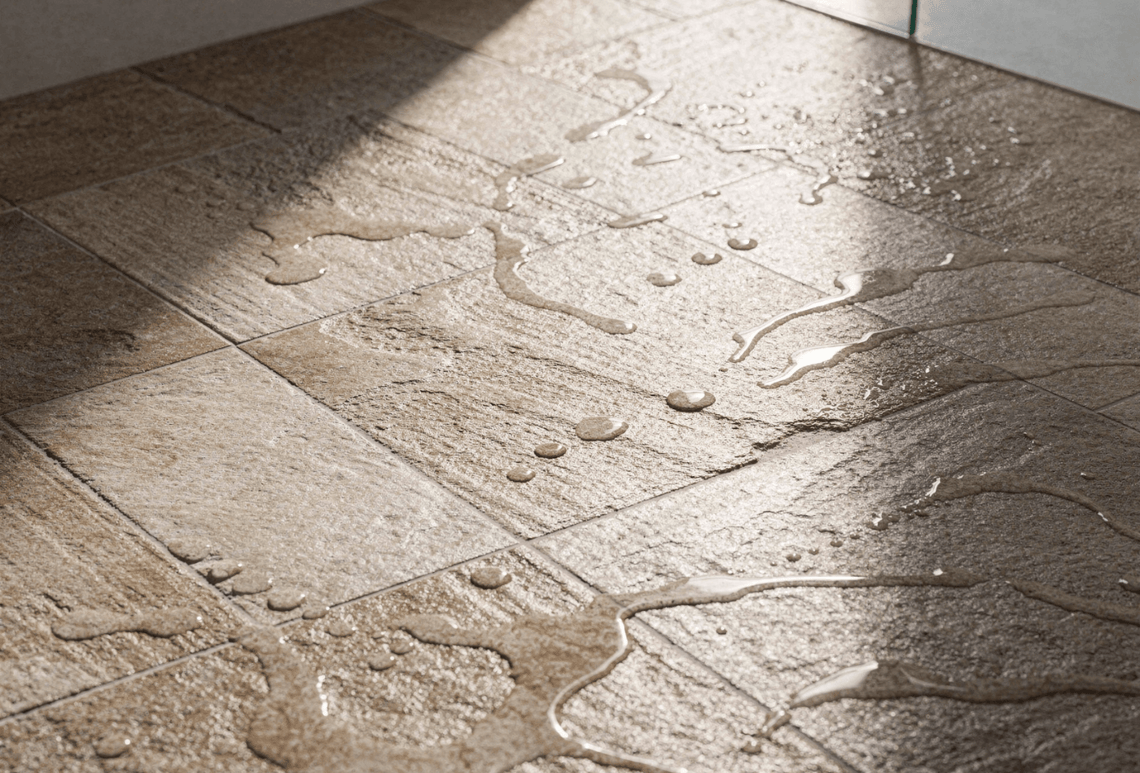
No one wants a terrace that feels like an ice rink after rain.
Look for:
R11 or R12 slip rating
Textured outdoor finishes
Grooved or grip-friendly surfaces
These small details matter more than colour. They decide how safe your terrace will be in winter, especially if the area is north-facing or shaded.
Call 0330 113 5868 to Order
Weather-Resistant Garden Tiles: What To Check Before Buying?
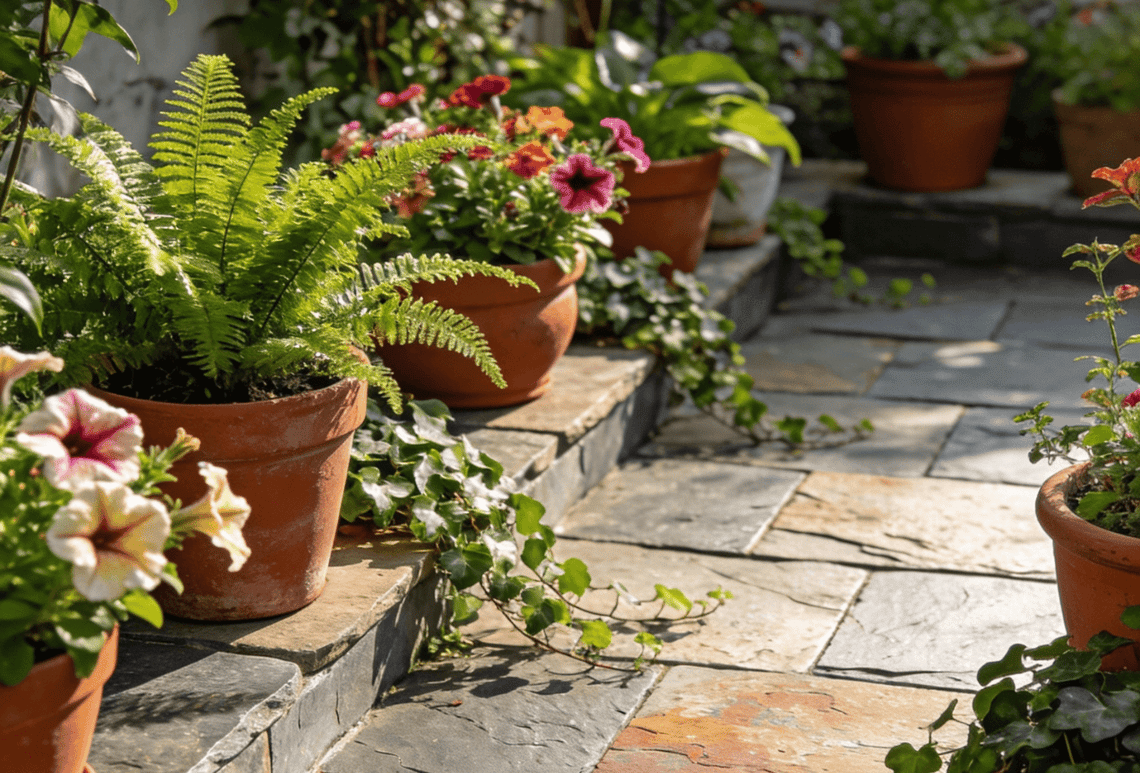
A good outdoor tile should handle four things well:
1. Frost Resistance
If water gets inside a tile and freezes, it expands, and that’s when cracks appear. Non-porous porcelain is usually the safest choice.
2. UV Stability
Cheap terrace tiles fade. Good ones don’t. This matters even more on terraces that get long hours of sun.
3. Stain Resistance
Plant pots, rust marks, BBQ spills — outdoor tiles see everything. Non-porous tiles keep the surface clean without constant scrubbing.
4. Thermal Movement
Some materials expand and contract too easily. Porcelain handles temperature changes well, which is why installers prefer it.
Low-Maintenance Outdoor Flooring: What Saves You Time in the Long Term?
If you’re someone who doesn’t want to be outside with a jet washer every two weeks, choose tiles that don’t need fussing.
Porcelain Wins Here
No yearly sealing
Minimal staining
Quick to clean
Doesn’t go green easily
A quick hose-down every now and then is enough.
Stone Needs More Work
Needs sealing
Picks up algae faster
Slightly more slippery over time
If you love the look of stone, be ready to maintain it.
What Floor Colours Work Best For UK Terraces?
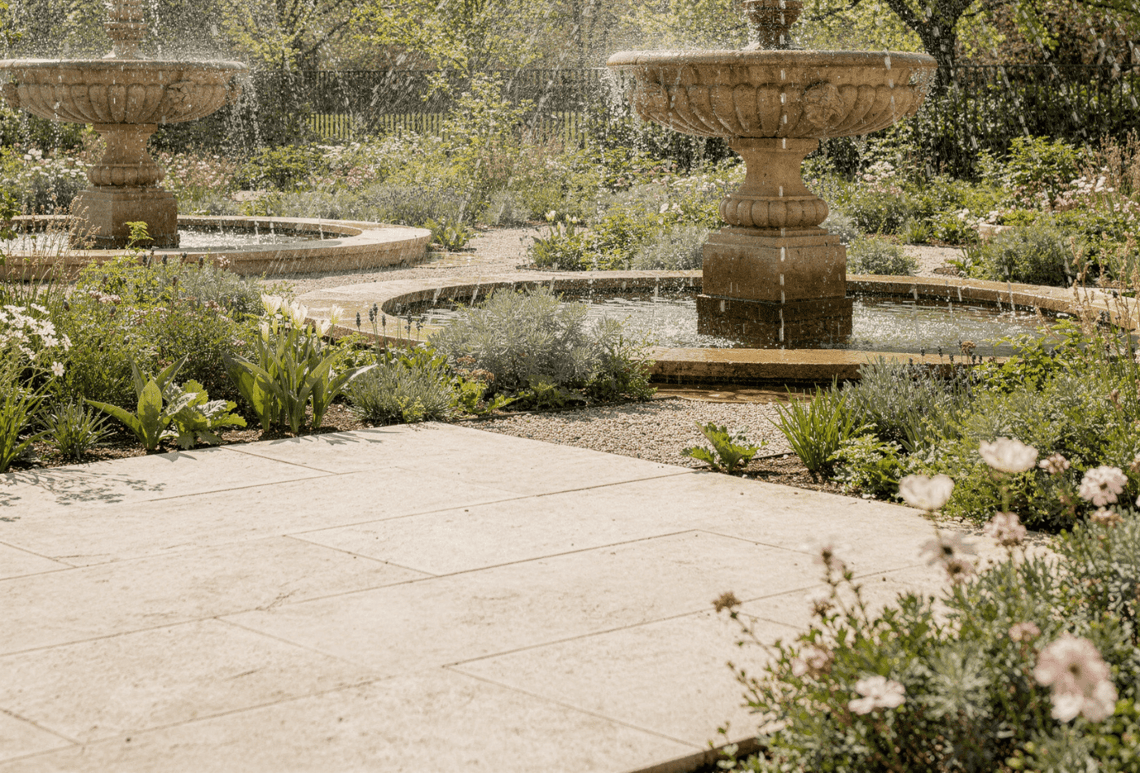
There’s no right or wrong, but here’s what usually works well in terrace flooring:
Grey Shades
Matches most British homes, hides dirt, and ages gracefully.
Beige And Warm Tones
Looks great with plants and wooden furniture.
Dark Charcoal
Modern and bold, but might show dust more easily.
The only thing to avoid: pale, glossy finishes outdoors. These terrace tiles show everything; dirt, stains, watermarks, all of it.
Also Read: Grey Porcelain Tile Outdoor for Patio
Non-Porous Tiles For Terraces: Why They’re Worth It?
A non-porous tile doesn’t absorb moisture, which means:
No expansion
No cracking
No deep stains
Less algae growth
It’s the difference between tiles that last 2–3 years looking tired and tiles that still look new after 10 years.
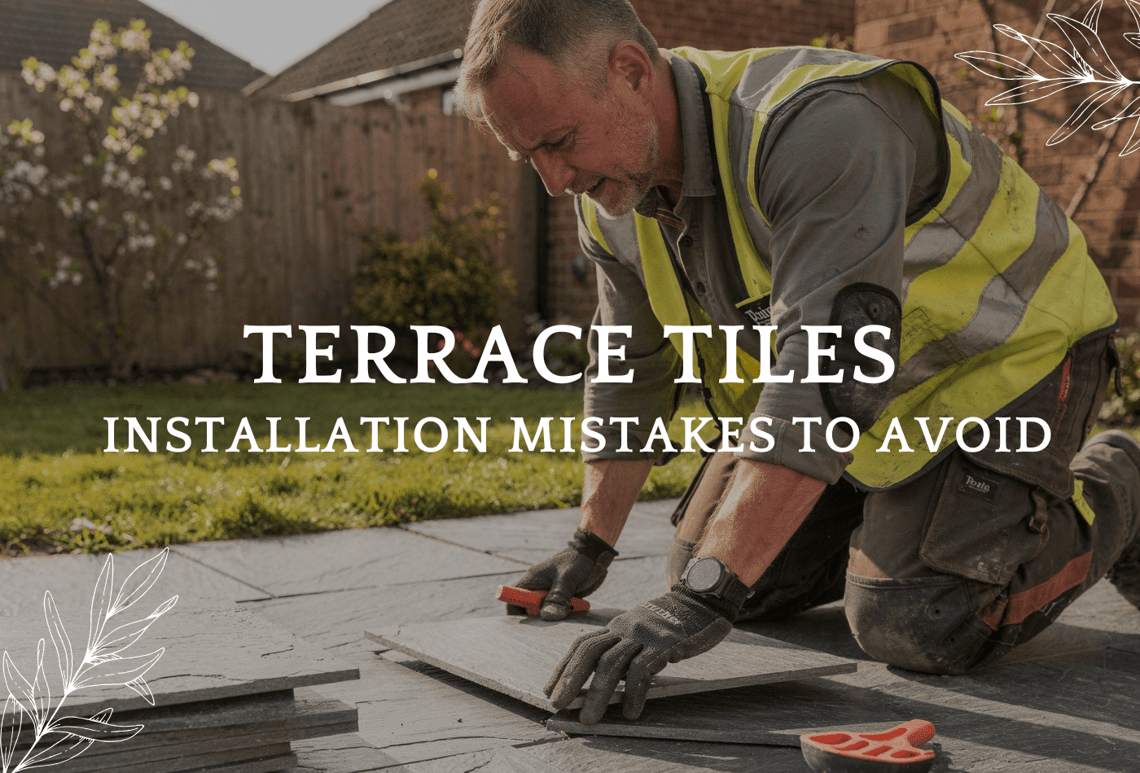
Terrace Tiling Installation Mistakes You Should Avoid
Even the best tile won’t survive poor installation. Keep an eye on these common issues:
Incorrect Sub-Base
Outdoor areas need a strong base to handle temperature shifts and heavy rainfall.
Not Using Proper Adhesive
Use adhesive rated for outdoor and porcelain tiles. Indoor adhesive won’t survive frost.
Poor Drainage
If water pools, everything else fails; tiles, joints, grout. Make sure water flows away naturally.
ROSE QUARTZ SEMI PRECIOUS

£2,372.75
Rose Quartz Semi Precious Stone Slab is a fantastic decorative stone slab that is popularly used by both residential homeowners as well as commercial property owners. It has a soft visual appearance that features repetitive designs created by colours like… read more
AMETHYST SEMI PRECIOUS
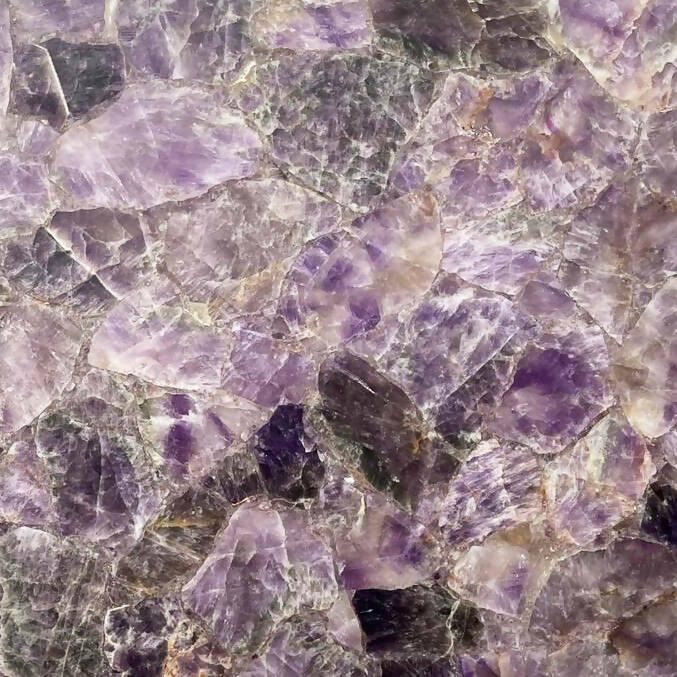
£2,654.00
Amethyst Semi Precious Stone Slab is a fantastic decorative stone slab that is popularly used by both residential homeowners as well as commercial property owners. It has a striking visual appearance that features repetitive designs created by varying shades of… read more
BLUE AGATE SEMI PRECIOUS

£2,372.75
Blue Agate Semi Precious Stone Slab is a fantastic decorative stone slab that is popularly used by both residential homeowners as well as commercial property owners. It has an enchanting visual appearance that features multiple pebble like designs in blue,… read more
FINAL THOUGHTS
Choose terrace tiles that will last every winter, each rainfall, and every BBQ spill because you won't be replacing them every single year. Porcelain is the most secure long-term option if you need something that just functions without requiring maintenance. If you love natural stone, go in knowing it needs care, and it’ll reward you with unique character in return.
Whatever you choose, make sure the tile is non-porous, slip-resistant, and rated for outdoor use; that’s what keeps a terrace looking good for years instead of months.
Call us today at 0330 113 5868 to Order. Or, send your enquiry here.
Frequently Asked Questions and Answers
Are Terrace Floor Tiles Different From Indoor Tiles?
Yes. Outdoor tiles are thicker, more textured, and designed for weather, moisture, and temperature changes.
Does the UK Need Slip-Resistant Patio Tiles?
Almost always. With constant rain, textured and slip-rated surfaces are the safest choice.
Can I Use Porcelain Tiles On A Terrace?
Absolutely. They’re one of the best options for outdoor areas due to low maintenance and high durability.
How Do I Clean Terrace Tiles?
A jet wash or hose is enough for porcelain. For stone, you may occasionally need a specialised outdoor cleaner.
Do Outdoor Tiles Fade Over Time?
Good-quality porcelain tiles don’t. Stone may lighten slightly depending on exposure.