Table of Contents
- What Is Sintered Stone?
- Is Sintered Stone Porcelain?
- Can Sintered Stone Be Used For Countertops In Daily Use?
- Is Sintered Stone Good for Kitchen Countertops?
- Sintered Stone Pros And Cons
- Is Sintered Stone Heavy?
- Sintered Stone Vs Quartz
- Is Sintered Stone Safe?
- Sintered Stone Price In The UK
- What Is The Downside Of Sintered Stone?
- Are Sintered Stone Countertops Expensive?
- FINAL THOUGHTS
- Frequently Asked Questions and Answers
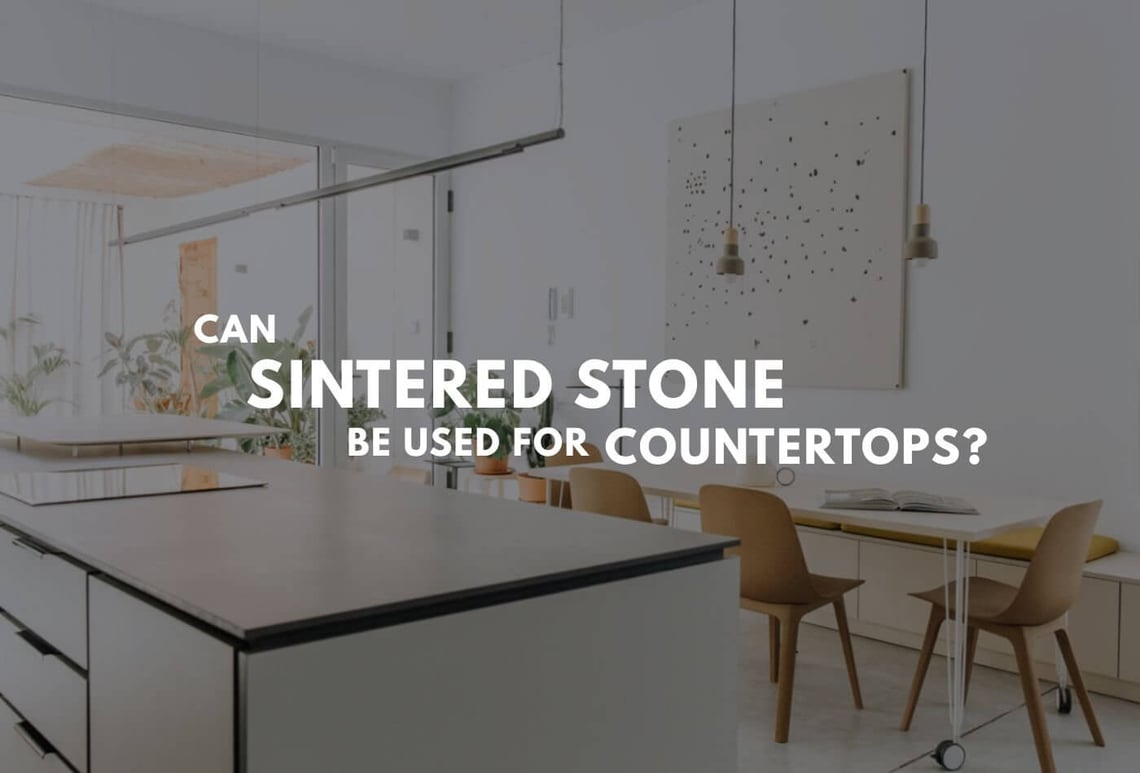
Can sintered stone be used for countertops, or is it just another trend? When we are checking out worktops for a kitchen or utility room, we all have probably seen sintered stone popping up everywhere. Even showrooms talk about it a lot these days. My supplier said it is a “next-gen” countertop. Let us see if that is true, but yeah, it can be used in the kitchen as a worktop for sure.
The longer answer is where things matter. That is what this blog is for.
What Is Sintered Stone?
Let’s start from the basics, without dressing it up. What is sintered stone? It is not natural stone pulled from the ground. It is made in a factory. In the earth there are some natural minerals like quartz, clay, feldspar, and oxides. These are collected and, in huge factories, pressed together under very high heat and pressure. Much higher than normal ceramics. The idea is to copy how stone forms naturally, but do it faster. That process creates a slab that is dense, hard, and sealed all the way through.


Is Sintered Stone Porcelain?
This gets asked a lot, especially in the UK. Is sintered stone porcelain?
Not exactly. Both do look quite similar, but they are not the same.
Feature | Sintered Stone | Porcelain |
Raw Materials | Mixed natural minerals | Mostly clay |
Density | Very high | High |
Slab Size | Large-format slabs | Usually smaller |
Use | Worktops, cladding | Tiles, floors |
Compared to typical porcelain kitchen worktops, sintered stone surfaces are normally tougher and thicker. Homeowners often become confused because certain brands consistently use both terms interchangeably.
Do You Want to Check Out Other Stone Countertops? Click Here
Can Sintered Stone Be Used For Countertops In Daily Use?
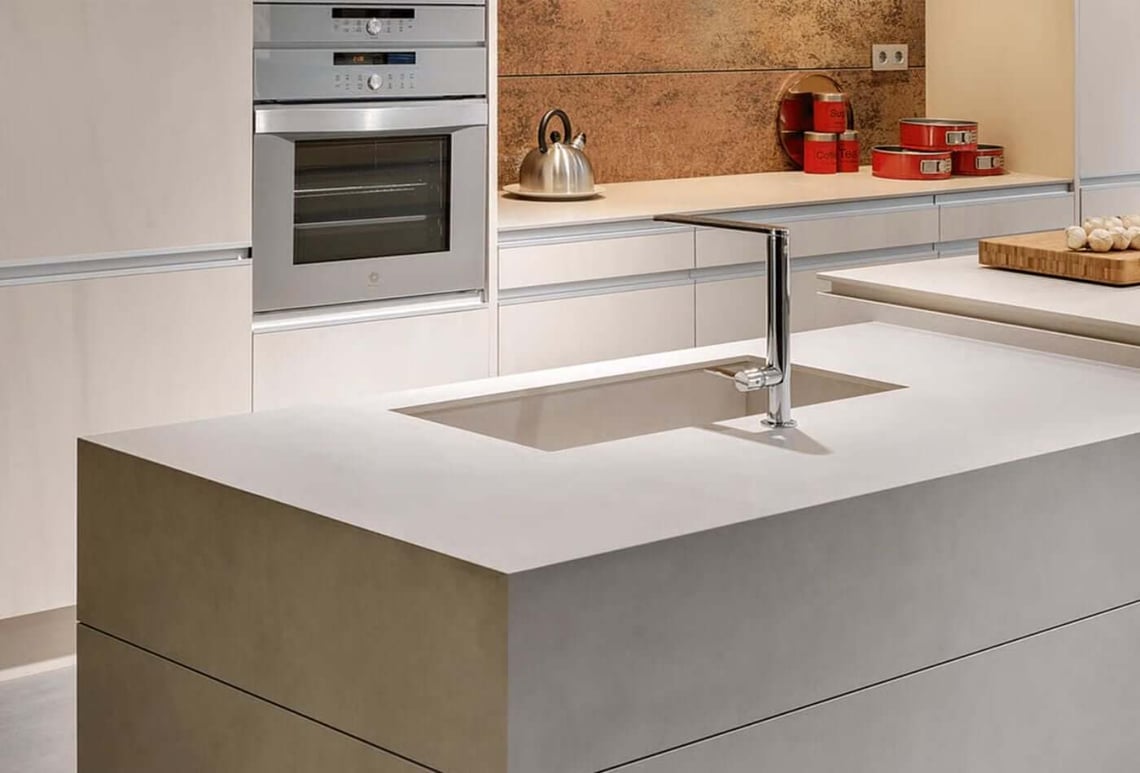
Yes, sintered stone countertops are made for daily use.
They handle heat well.
They do not soak up liquids.
They do not need sealing.
This makes them suitable for busy kitchens, rental homes, and utility spaces.
However, this only works if fabrication is done properly. Poor cutting or rushed fitting causes most complaints, not the material itself.
Is Sintered Stone Good for Kitchen Countertops?
For most modern kitchens, yes.
It works well if:
You cook often
You want low upkeep
You do not want to worry about stains
It suits flat, clean designs. Handleless kitchens. Large islands.
It is less forgiving if you expect a soft or warm feel. It is a hard surface. That is the trade-off.
Sintered Stone Pros And Cons
You now know the answer to "Can sintered stone be used for countertops?" but may be thinking, "What if it does not last long?"
No surface is perfect. Here is a clear look at the sintered stone pros and cons.
Pros
Heat resistant
Non-porous
Scratch resistant in normal use
No sealing needed
Colour stays stable in sunlight
Cons
Edges can chip if hit hard
Repairs are limited
Costs more than basic quartz
Needs skilled installers
Most issues come from impact damage, not wear and tear.
Is Sintered Stone Heavy?
Yes. And this matters.
Is sintered stone heavy? Very.
Heavier than quartz in most cases.
Material | Relative Weight |
Laminate | Light |
Quartz | Medium |
Granite | Heavy |
Sintered Stone | Very Heavy |
Your cabinets must be strong enough. Installers also need proper lifting gear. This adds to labour costs.
Sintered Stone Vs Quartz
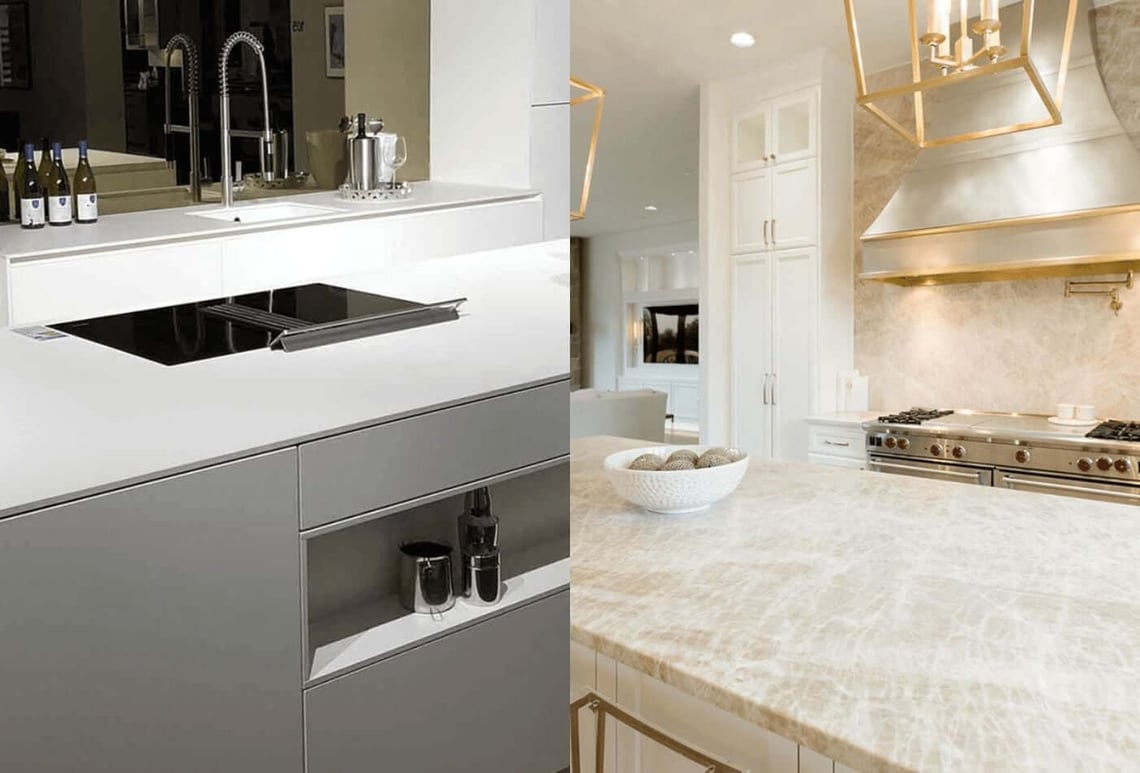
Feature | Sintered Stone | Quartz |
Heat Resistance | Excellent | Limited |
UV Resistance | Very good | Can fade |
Impact Resistance | Moderate | Better |
Maintenance | Very low | Very low |
Look | Sharp, modern | More varied |
Quartz is easier to fabricate.
Sintered stone performs better with heat.
Neither is “better” overall. It depends on use.
Now that we know the answer – yes, sintered stone can be used for countertops, but is it safe for daily use? Let us see.
Is Sintered Stone Safe?
Yes.
People ask if sintered stone is safe mainly because it is engineered.
It does not release toxins.
It does not absorb bacteria.
It is food-safe.
Once installed, it behaves like a solid, sealed surface. There is no ongoing health risk.
Sintered Stone Price In The UK
Now the part everyone wants straight answers on.
Sintered stone price in the UK varies a lot.
Type | Typical Price Range |
Entry Quartz | £200–£300/m² |
Premium Quartz | £350–£500/m² |
Sintered Stone | £400–£600+/m² |
Prices depend on:
Brand
Thickness
Finish
Cut-outs
Edge style
Installation usually costs more than quartz due to handling.
What Is The Downside Of Sintered Stone?
This is one of the most common “people also ask” questions.
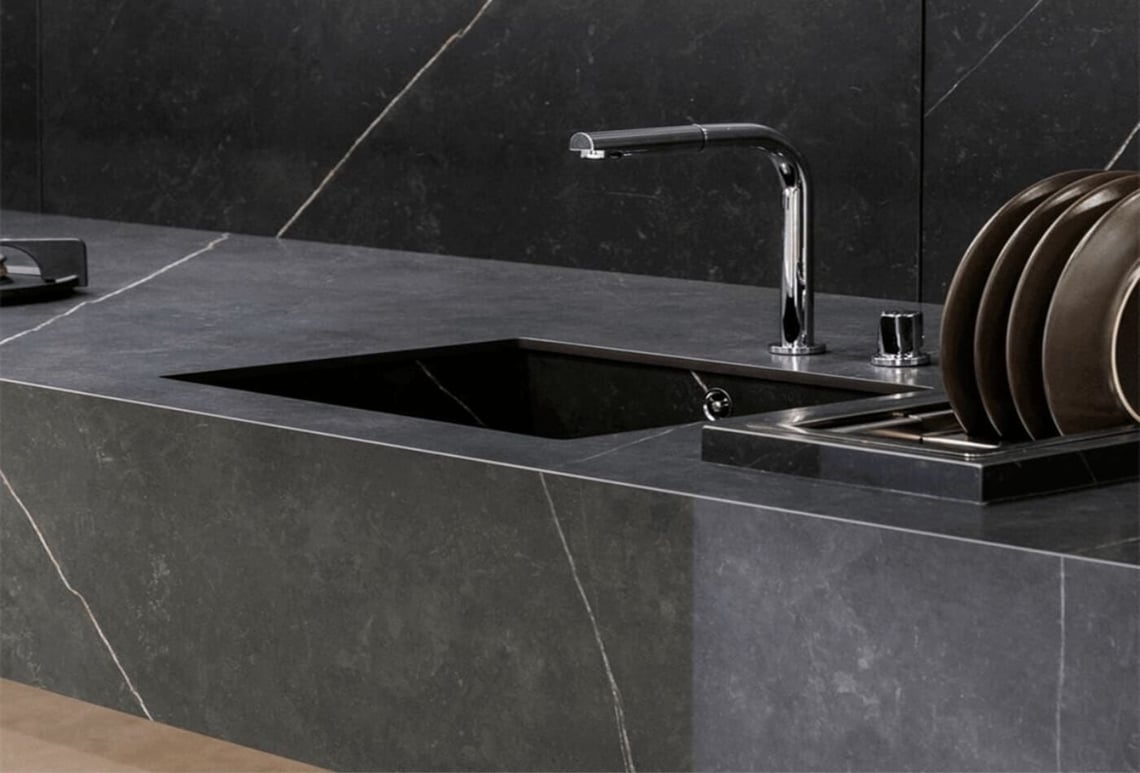
The main downside is brittleness on edges.
The surface itself is strong.
The edges are not flexible.
If something heavy hits a corner, it can chip. Not always repairable.
This does not mean it is fragile. It just means it needs respect during use and fitting.
Are Sintered Stone Countertops Expensive?
If you compare it with steel and acrylic worktops, of course sintered stone countertops are expensive because they perform better.
These countertops sit in the same bracket as premium quartz and some granites.
They are not overpriced.
They are priced for performance.
Are you on a tight budget? If yes, even quartz worktops perform the same and cost a bit less.
Next Read: What Countertops Are In Style In 2025 & 2026

CAPPADOCIA SUNSET SINTERED STONE

£438.27
The Cappadocia Sunset Sintered Stone embodies the static beauty of the natural scenery. It is a sophisticated grey tone enhanced with very warm, subtle hints and a tricoloured feel. Drawn from the Cappadocia region's distinctive rocky landscape, this fine-quality sintered… read more
FINAL THOUGHTS
So, can sintered stone be used for countertops?
Yes. Without question.
But it is not for everyone.
If you want something that is easy to maintain, does not get affected by hot pans and pots, and makes your kitchen look modern, then they make sense. If you want something that is softer, cheaper and even easier to repair, then other surfaces may suit you better.
The material is not the problem. Poor installation usually is.
Choose carefully. Ask questions.
That matters more than the brand name.
Call us today at 0330 113 5868 to clear more doubts. Or, send your enquiry here.
Frequently Asked Questions and Answers
Is Sintered Stone Good For Kitchen Countertops?
Yes, these sintered worktops are good for kitchens. You can install it in a modern kitchen, in a daily-use kitchen and in the ones where it sees regular heat too.
Can Sintered Stone Be Used For Countertops in a Busy Kitchen?
Of course, it is designed for heavy use. Talk about placing pans directly from the oven, moisture on countertops, and being long-lasting; it passes every doubt.
What Is The Downside Of Sintered Stone?
Edge chipping, higher installation cost, and limited repair options.
Which Stone Countertop Is The Best?
There is no single best choice, to be honest. Quartz, sintered stone, granite, and marble worktops are all good-quality kitchen worktop materials. But yes, you need to know how every material behaves and reacts. For example, marble is sensitive to acid but still adds more value to your home; a quartz worktop is easy to maintain but tolerates heat a little less than granite. So I would say the best pick goes down to our lifestyle choices.
Are Sintered Stone Countertops Expensive?
They are a premium surface. Price-wise, it will cost similarly to high-end quartz in the UK.