Table of Contents
- Why Do Most Composite Worktops Don’t Need Sealing?
- Can I Seal Composite Worktops?
- How To Look After Composite Worktops (Without Overthinking It)
- Composite Worktops vs Natural Stone: The Sealing Difference
- Do Composite Worktops Ever Absorb Stains?
- Cleaning & Maintenance of Composite Kitchen Worktops
- FINAL THOUGHTS
- Frequently Asked Questions and Answers
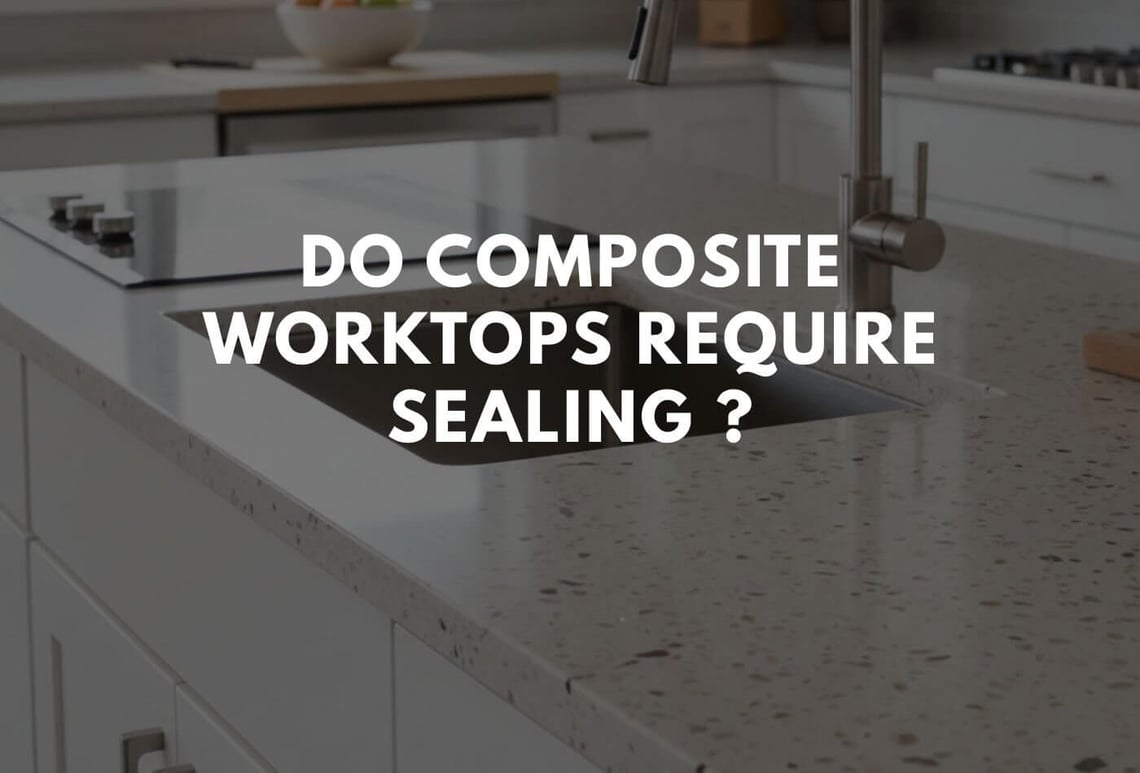
Let's now break through the clutter: do composite worktops require sealing. Sealing is not necessary for the majority of composite worktops. And that's just the way they're created; it's not marketing gibberish. Some may have pressured you into questioning do composite worktops require sealing, but in reality, these worktops do not require being sealed manually. They are made by mixing colours and resin with crushed quartz or a similar stone. Because the pores are filled, there is nowhere for liquid or bacteria to seep in. So while granite soaks things up like a sponge if it’s not sealed, composite stays solid and non-porous from day one.
Still, there’s more to the story, and depending on the finish and how you use your kitchen, there can be exceptions worth knowing.
Let’s walk through it properly.
Check Latest UK Collection of Composite Kitchen Worktops
Why Do Most Composite Worktops Don’t Need Sealing?
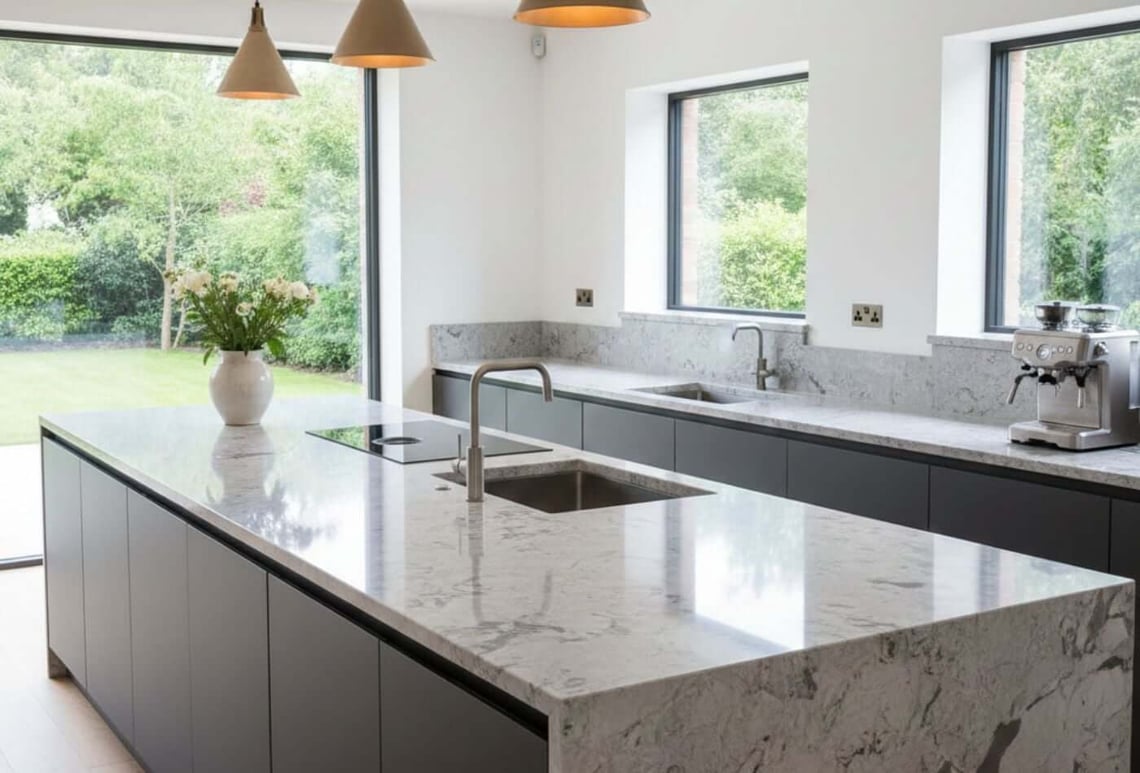
Composite surfaces like Quartz worktops are already sealed at a manufacturing level, not with a coating, but through their structure.
No visible pores
No natural cracks
No absorption points
That means everyday spills — coffee, tomato sauce, red wine (the one everyone panics about) — sit on the surface instead of sinking in.
A quick wipe and you’re done.
It’s one of the biggest reasons people choose quartz over marble or other natural stones: low maintenance without sacrificing the look.
Call 0330 113 5868 to Order Quartz Worktop!
BOTTICINO QUARTZ

£334.25
Botticino Quartz has been manufactured to mimic Botticino Classico, one of the highest quality Italian marbles. It has a luxurious look with a series of gold stripes and veins on a beige base that combines seamlessly to produce a plain… read more
ARABASCATO QUARTZ

£297.80
Arabescato Quartz is a favourite among designers due to its classic aesthetics and its long, black streaks. It was created using the Arabescato Marble as inspiration. A designer's fantasy, it has the look of genuine marble, a light grey background,… read more
MOCHA QUARTZ

£300.50
Mocha Quartz is a stunning, long-lasting quartz material that is inspired by the looks of Mocha marble. It has a brown face which is detailed with a golden-white vein pattern that adds dimension. It can be used to design your… read more
Can I Seal Composite Worktops?
Now, is it true that no composite worktop ever benefits from sealing?
Not entirely.
There are a couple of niche scenarios where homeowners consider it:
1. Textured or Matt Finishes
Polished composite behaves differently from honed or textured surfaces.
A matt finish can sometimes show marks more easily — not stains, just visible smudging.
Do composite worktops require sealing if they are matte finish? Well..some people try a sealant or surface protector to reduce that appearance. But it is not mandatory, rather a personal choice. For many, a simple quartz-safe polish works better than a sealant.
2. White or Very Pale Quartz in Busy Kitchens
A bright white composite worktop is gorgeous — especially in modern UK kitchens.
But in homes with heavy curry, coffee or red wine use (basically every normal house), some people prefer extra peace of mind.
Again, you’re not sealing pores; you’re just adding a topical protective layer.
It’s optional, not essential.
3. After Years Of Heavy Use
Sometimes surfaces that were perfectly fine for years develop tiny scratches from abrasive cleaning pads or extremely rough handling. Those scratches can create slightly dull patches
A sealant can give an even sheen back — but polishing is usually the better route.
Check Latest UK Collection of Quartz Kitchen Worktops
How To Look After Composite Worktops (Without Overthinking It)
Caring for composite worktops is refreshingly simple. Do composite worktops require sealing, how often to clean them, can they be scrubbed..etc etc, we think of many things before buying one. But it is a simple everyday care: wipe and move on.
Here’s a practical routine that makes your life easy:
Warm water and mild dish soap for daily cleaning
Microfibre cloth or soft sponge
Avoid abrasives like wired scrubbers or harsh scouring creams
Use chopping boards — not because of staining, but because knives can scratch resin
Use trivets for anything fresh off the hob (sudden heat can shock the material)
That’s it. No sealing calendar. No expensive products. No drama.
Composite Worktops vs Natural Stone: The Sealing Difference
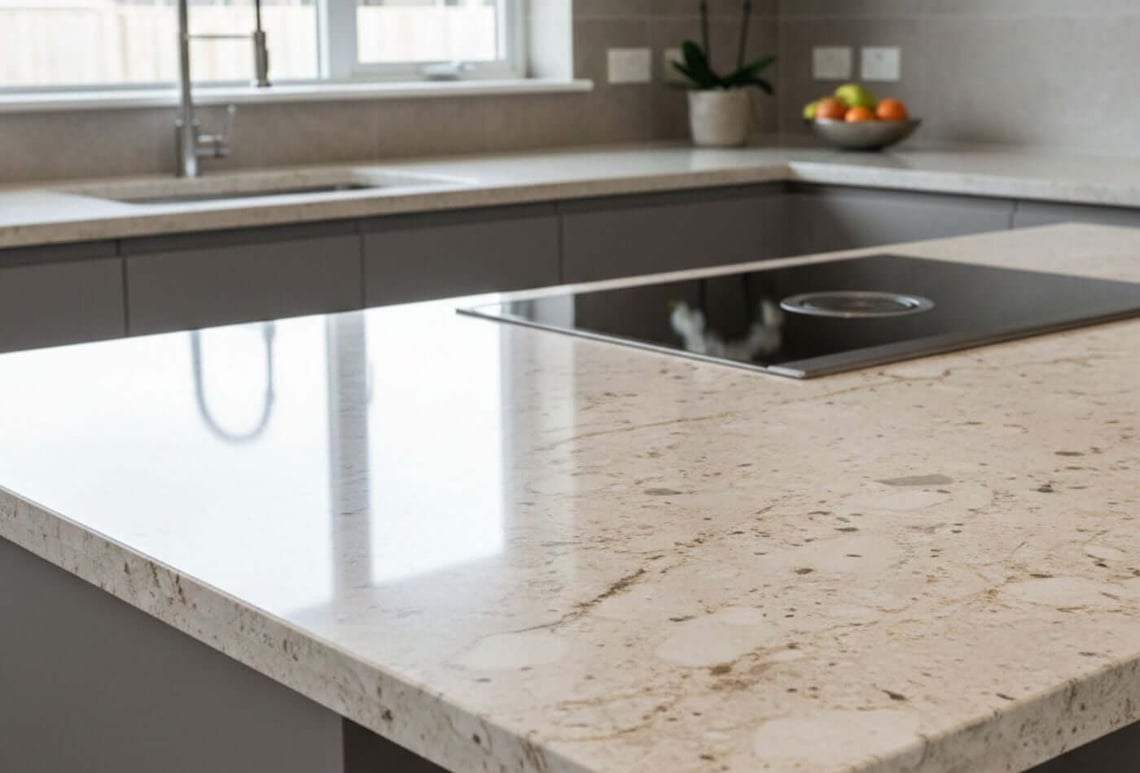
A lot of confusion comes from comparing composite with natural stone, because at first glance they look similar.
Here’s the reality:
Worktop Type | Needs Sealing? | Why |
Composite / Quartz | Usually no | Non-porous due to resin |
Granite | Yes | Naturally porous |
Marble | Yes | Softer and very porous |
Porcelain / Sintered Stone | No | Fully non-porous |
So if someone is worried about sealing, they're usually thinking about granite or marble care — not composite.
Do Composite Worktops Ever Absorb Stains?
Normally, no. But strong chemicals can leave marks.
Bleach, oven cleaner, nail varnish remover – anything aggressive can damage the resin.
If something like that spills, wipe it up instead of letting it sit.
Most stains people think are "absorbed" are actually surface-level chemical reactions or leftover residue — not true staining.
If you are looking for an answer to do composite worktops require sealing, it is no. Now let's look at the maintenance.
Read Next: What Are The Best Countertops For Home Value? High ROI
Cleaning & Maintenance of Composite Kitchen Worktops
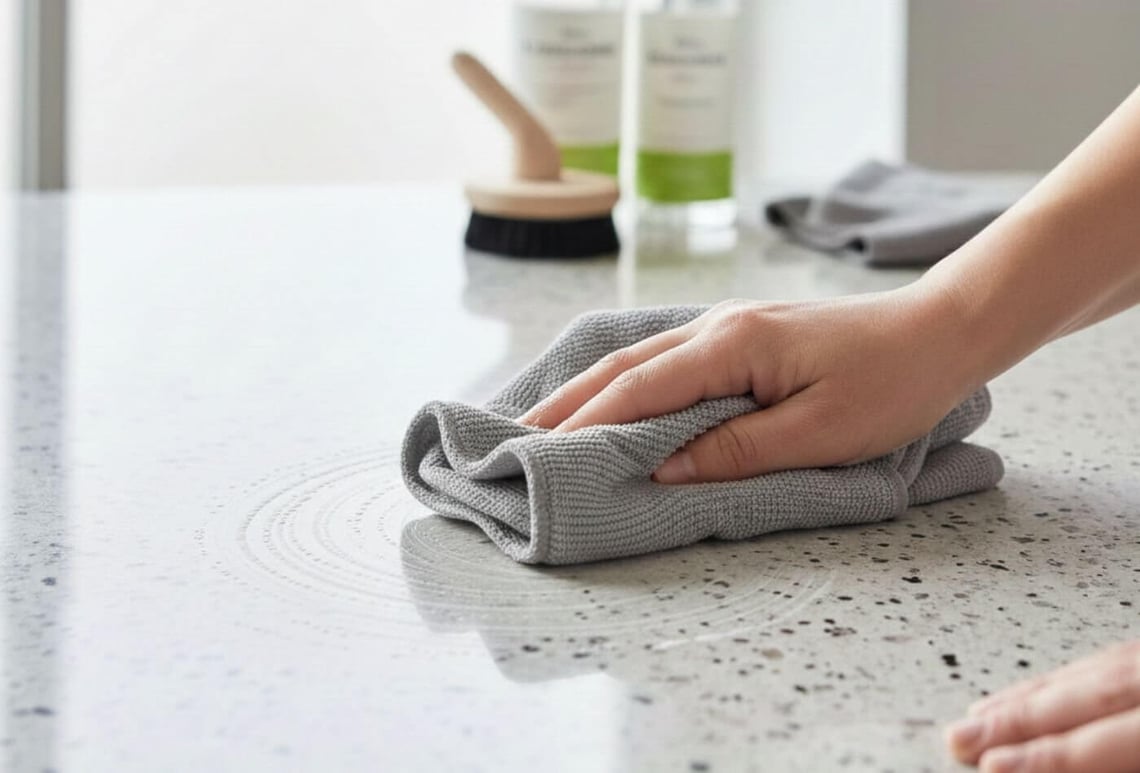
Most of the time, looking after composite worktops is just part of normal kitchen cleaning — nothing special. Wipe spills when you see them and that’s about it. The only spot that usually needs a bit more attention is around the sink. Water sits there longer, so you can get marks if you ignore it for days.
A few habits help without feeling like a chore:
If you see splashes or cloudy patches forming, just wipe them instead of letting them dry and turn into limescale.
Washing-up liquid and a soft cloth are usually all you need — anything strong or abrasive is overkill.
After rinsing pans, don’t leave them sitting wet on the surface (cast iron especially loves leaving marks if moisture sits underneath).
Every once in a while, run a cloth along the underside edge near the sink. It sounds fussy, but that’s where hidden droplets tend to settle.
If you live somewhere with hard water (which is most of southern England), a splash of vinegar mixed with water does a great job on limescale. Just rinse it off once you’re done — it works fast, and there’s no point leaving it sitting there.
Email here or call 0330 113 5868 for professional installation services in the UK.
Read Next: How to Warm Up a White and Grey Kitchen
ROSE QUARTZ SEMI PRECIOUS

£2,372.75
Rose Quartz Semi Precious Stone Slab is a fantastic decorative stone slab that is popularly used by both residential homeowners as well as commercial property owners. It has a soft visual appearance that features repetitive designs created by colours like… read more
JAGUAR SEMI PRECIOUS

£4,060.25
Jaguar Semi Precious Stone Slab has a lovely visual appearance created by gems in white, brown, gold and grey that are bound together by resin. This lovely decorative stone slab is popularly used by both residential homeowners as well as… read more
BLUE AGATE SEMI PRECIOUS

£2,372.75
Blue Agate Semi Precious Stone Slab is a fantastic decorative stone slab that is popularly used by both residential homeowners as well as commercial property owners. It has an enchanting visual appearance that features multiple pebble like designs in blue,… read more
FINAL THOUGHTS
Composite worktops are popular for good reason: they give you the feel of natural stone without the maintenance rules. In most homes, sealing just isn’t part of the care routine — and never needs to be.
If you love the idea of a stone surface but don’t want to worry about staining or yearly treatments, composite is a strong, practical choice.
Do composite worktops require sealing? No. Plus, they are simple to clean, durable enough for everyday life, and low-maintenance; that's the appeal.
You can also reach our team at info@work-tops.com or call 0330 113 5868 for advice, fitting help, or to get your design moving.
Frequently Asked Questions and Answers
Can I Apply A Sealant on Composite Worktops?
You can, but it rarely improves performance and sometimes leaves a cloudy finish.
How Do I Clean My Composite Worktops?
You will need warm soapy water and a soft cloth. Use these daily on your engineered quartz worktops. That is more than enough to keep them clean.
Are Composite Worktops Hygienic?
Yes — the non-porous surface helps prevent bacteria absorption.
Will Hot Pans Damage Composite Worktops?
When people see 'heat-resistant', they assume it is heatproof. But that is not true. Heat can damage your quartz countertops if you directly place hot pots and pans from the oven. So, use trivets and keep them looking newer for longer.
Do Composite Worktops Require Sealing At Installation?
No. They are non-porous from the start, so sealing isn’t needed.
Are Composite Worktops Difficult to Maintain?
Most days, you’ll just give composite worktops a quick wipe after cooking and carry on. The only place that tends to show neglect is around the sink — water sits there longer, so marks can build up if you ignore it. So they are not high-maintenance.