Table of Contents
- Why Do Tiles Crack?
- Where to Install Porcelain Tiles?
- Where to Install Ceramic Tiles?
- Where to Install Granite Tiles?
- Where to Install Marble Tiles?
- Where to Install Limestone Tiles?
- Where to Install Travertine Tiles?
- Where to Install Slate Tiles?
- Where to Install Mosaic Tiles?
- Where to Install Split-Face Tiles?
- So, Which Tile Is Most Resistant to Cracking?
- The Honest Summary – Which Tile is the Best?
- Contact Us for Safest Home Delivery of Tiles in the UK
- Final Thoughts
- Frequently Asked Questions and Answers
Tiles are one of those things most people never think about until one breaks. Then suddenly, it feels like a detective case: Why did it happen? Bad tile? Wrong type? Heavy impact? Underfloor heating? Or just bad luck? The question usually follows: “Which tile won’t crack?” or, more realistically, “what is the most crack resistant tile in real-world use?”
Let’s break it down based on performance, not marketing.
Why Do Tiles Crack?
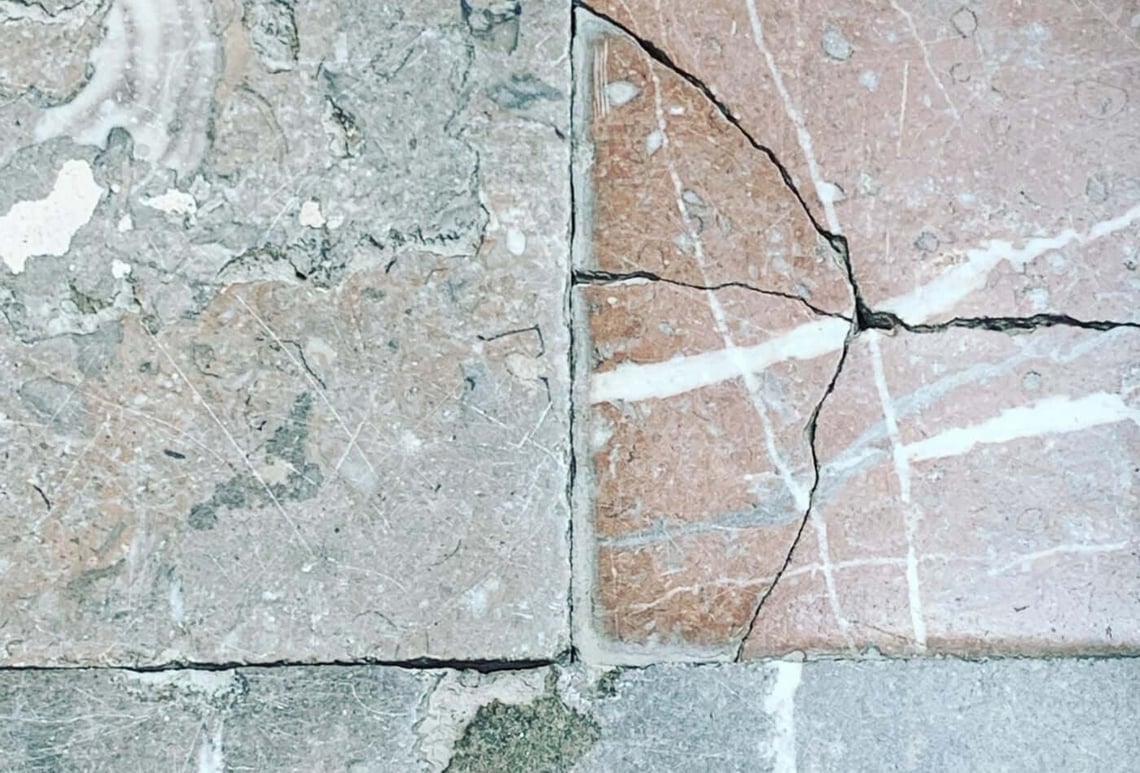
Before comparing tiling materials, it’s worth acknowledging something most installers will tell you: A strong tile can still crack if the foundation isn’t right.
Common causes in UK homes include:
Subfloors that flex (especially old timber floors)
Installing floor tiles directly onto floorboards without cement board
Impact from something heavy (cast iron cookware is a culprit)
Uneven adhesive bed
Rapid temperature changes with underfloor heating
So material matters — a lot — but installation and environment matter too.
Still, some tiles handle stress better than others. So let’s talk materials.
Also Read: What Countertops Are In Style
MYSTIC GOLD GRANITE

£360.44
Mystic gold is a medium grained granite cream granite with tightly packed mineral deposits of black and white. The cream granite is suited for countertops. It is recommended for interior and exterior projectsNatural stone Granite does not come in regularly… read more
BLACK BEAUTY GRANITE

£444.68
Specifications Stone Name: Black Beauty Granite Core material: Granite Nature: Natural Stone Base Colour: Black Pattern: Foam-like white streaks Hardness: 6 on the Mohs scale Uses: Indoor and outdoor Description This Indian granite features a black base surfaced with white… read more
HONEY GOLD GRANITE

£292.90
It looks gold in colour, really either for the entire piece of slab or very close patches through out. Thickness varies from 10 mm to 100 mm and customised and this gold is from India. The polished finishes are ideal… read more
Where to Install Porcelain Tiles?
If durability is the priority, porcelain consistently performs well.
It’s dense, hard-wearing and has very low water absorption. That makes it suitable for:
Hallways
Kitchens
Bathrooms
Utility rooms
Areas with underfloor heating
Busy family homes
It also resists chips better than standard ceramic. That’s why porcelain is often described as the safest “all-round” choice.
Not perfect. Not magic. But a reliable answer for what is the most crack resistant tile.
Where to Install Ceramic Tiles?
Ceramic tiles still have a place — mainly on walls.
They’re lighter, easier to cut and often available in decorative finishes that porcelain doesn’t offer. But because they’re softer, they’re more prone to cracks when used on floors, particularly in homes where things occasionally fall or where there’s movement in the flooring.
Use ceramic where weight and impact are low. Walls? Great. Heavy-use floors? Not ideal.
Where to Install Granite Tiles?
Natural stone varies a lot — but granite is one of the strongest stone options.
It’s:
Hard
Heat-resistant
Resistant to scratching
Suitable for kitchens and high-traffic areas
Granite tiles do require correct sealing, but in terms of resisting cracking under load, granite performs impressively well.
If someone wants a natural stone feel without babying it, granite is often the candidate.
Where to Install Marble Tiles?
Marble is chosen for looks. The veining, the polish, the tone — it’s timeless.
But marble isn’t the strongest stone or a common answer to what is the most crack resistant tile. It's softer than granite and can chip or hairline crack under pressure or if installed on an unstable subfloor.
It works beautifully in:
Low-impact bathrooms
Powder rooms
Feature floors
Spaces where it will be cared for
But it’s not the tile equivalent of armour.
Also Read: Which Lasts Longer, Marble or Granite?
Where to Install Limestone Tiles?
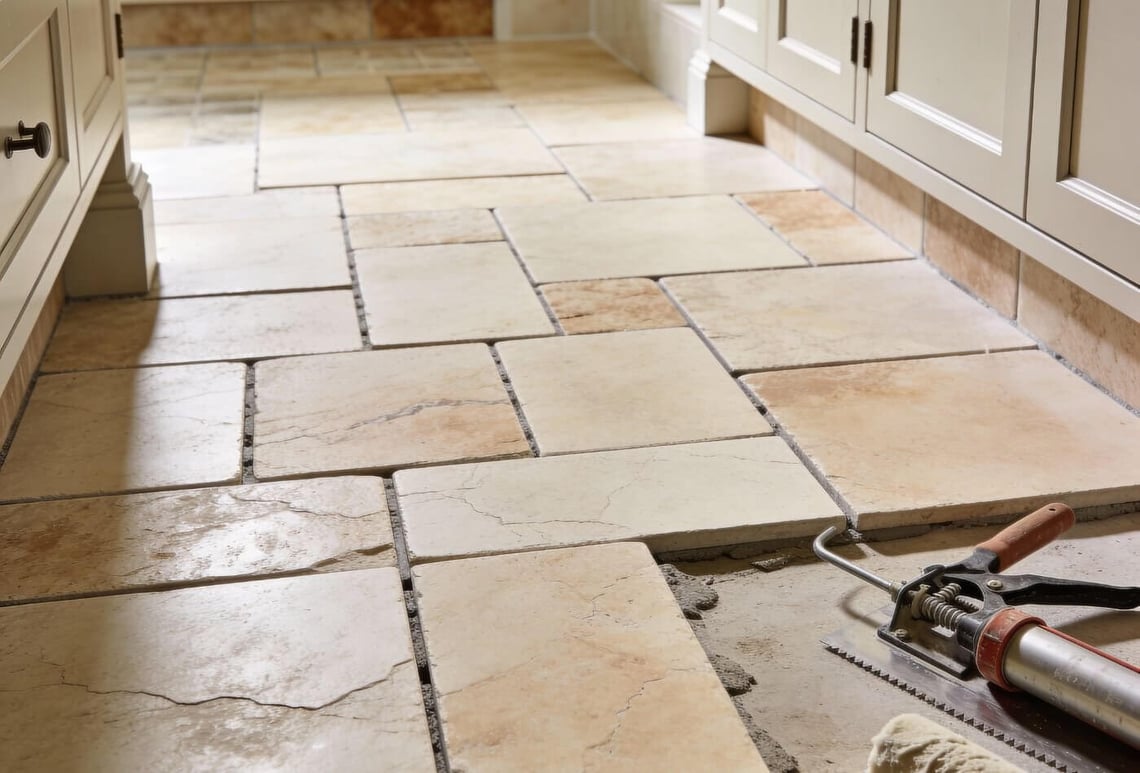
Limestone has a softer, warmer aesthetic. It feels natural and grounded — popular in cottage renovations and traditional homes.
But that softer feel comes with a reality: it’s not the most impact-resistant stone. It’s better suited to slower-paced spaces rather than hectic family kitchens.
Where to Install Travertine Tiles?
Travertine has character — natural pitting, texture, and earthy tones.
It sits in the same performance category as limestone: beautiful, strong enough for everyday use when sealed, but not the toughest option in terms of resisting cracking under impact.
It suits people who want “natural and lived-in”, rather than clinical perfection.
Where to Install Slate Tiles?
Slate earns a little respect in this conversation of what is the most crack resistant tile.
When cut properly and sourced well, slate is strong, stable and wears nicely. It performs well in UK homes because it handles temperature changes and moisture well.
It isn’t as hard as granite or porcelain, but it holds its own.
Where to Install Mosaic Tiles?
Mosaics aren’t a different material; they’re just smaller tiles held together on sheets.
Funny enough, because each piece is small, mosaics are less likely to crack individually — there’s less pressure across each unit. The grout often takes the stress.
So mosaics aren't about durability, but they rarely break from point load.
Where to Install Split-Face Tiles?
These are for walls only. They’re decorative, textured, and not intended to handle load-bearing pressure.
No one chooses a split face for practicality, it’s for visual impact. So you are likely to not hear of slate in response to your question of what is the most crack resistant tile.
Next Read: What Colour Kitchen Units Go With Grey Worktops?
So, Which Tile Is Most Resistant to Cracking?
Based on material strength and how they behave once installed, the rough ranking looks like this:
Porcelain
Granite
Slate
Well-supported mosaics
Travertine & limestone
Marble (depending on grade and finish)
Ceramic (as flooring)
Different installers may shuffle the last few positions depending on experience, but porcelain and granite consistently sit at the top for everyday resilience.
The Honest Summary – Which Tile is the Best?

If the goal is:
Low-maintenance
High durability
Best chance of avoiding cracks
Suitability for underfloor heating and busy floors then porcelain is the most practical first choice, especially for families, high-traffic areas, and kitchens.
If the goal is:
A natural stone look
Character over perfect uniformity
A bit of patina with time then granite or slate offer strength with authenticity.
And if the goal is:
Beauty first
A softer, luxury feel marble, travertine or limestone make sense — provided the user accepts maintenance and more gentle conditions.
Email us today if your query still stands regarding what is the most crack resistant tile.
NERO MISTRAL QUARTZ

£338.54
Nero Mistral Quartz is an eye-catching interior design slab that features a black base with busy white veins. It is given a dazzling finish that makes a perfect addition in both residential and commercial settings. It is a dream come… read more
DESERT PEARL LIMESTONE TILES

£59.85
Desert Pearl Limestone is a pleasant grey natural stone tile with the same durability as marble. These strong limestone tiles are suitable for both interior and exterior projects. Around swimming pools, on patios, and in living rooms and kitchens, Desert… read more
CARRARA WHITE HERRINGBONE MARBLE TILES

£60.00
Carrara White Herringbone Marble Tiles offer a classic twist with a geometric edge. Featuring the timeless beauty of Carrara marble, these tiles showcase a soft white background laced with subtle, natural grey veins that add depth without overwhelming the space.… read more
Contact Us for Safest Home Delivery of Tiles in the UK
Pick your material and contact us for the safest home delivery of your floor and wall tiles anywhere in the UK.
If you need help, we are available on email and call as well. Just dial 0330 113 5868
Final Thoughts
Tiles don’t succeed or fail on material alone. The combination of:
substrate
environment
material
installation decides how long they last. But if someone wants the simplest, most durable, least fussy choice?
Porcelain earns that title — not because it’s trendy, but because it survives real life.
Frequently Asked Questions and Answers
Are Porcelain Tiles Crackproof?
Porcelain tiles handle pressure, heat, kids, chairs scraping, and the odd accident. In actual kitchens, busy hallways, and bathrooms where kids drop shampoo bottles — porcelain survives better.
How To Prevent My Tiles From Cracking?
There are fewer chances of your floor tiles breaking if you have a level base, use the right adhesive and allow space between tiles during installation, especially with heat-based flooring.
Does Underfloor Heating Cause Cracks?
No matter what is the most crack resistant tile you choose is, if the prep is wrong and installation is not done correctly, underfloor heating can cause your tile to crack. So use qualified installers in the UK.