Table of Contents
- What I Noticed About Traditional Bathroom Vanity Tops Over Time
- Why Vanity Unit Materials Changed My Opinion Completely
- Freestanding Bathroom Vanity Units: The Turning Point
- Traditional Bathroom Vanity Units In Smaller UK Bathrooms
- What Clients Usually Worry About (And What Actually Matters)
- Styling Classic Vanity Tops Without Overdoing It
- How to Prepare for Installation of Traditional Stone Vanity Top
- Conclusion
I didn’t start out preferring traditional bath vanities. Like most people working around surfaces and interiors, I was drawn to clean lines, handleless drawers, and ultra-modern bathroom units. They looked impressive in catalogues and showrooms. They photographed well. Clients liked them — at least at first.
But over time, something kept happening.
Six months to a year after installation, I would hear the same comments. The bathroom felt cold. The vanity looked dated faster than expected. Minor chips or surface wear stood out far more than they should have. In contrast, the traditional vanity tops we installed around the same time seemed to settle into the space. They aged quietly. They still looked right.
That’s when I started paying closer attention.
What I Noticed About Traditional Bathroom Vanity Tops Over Time
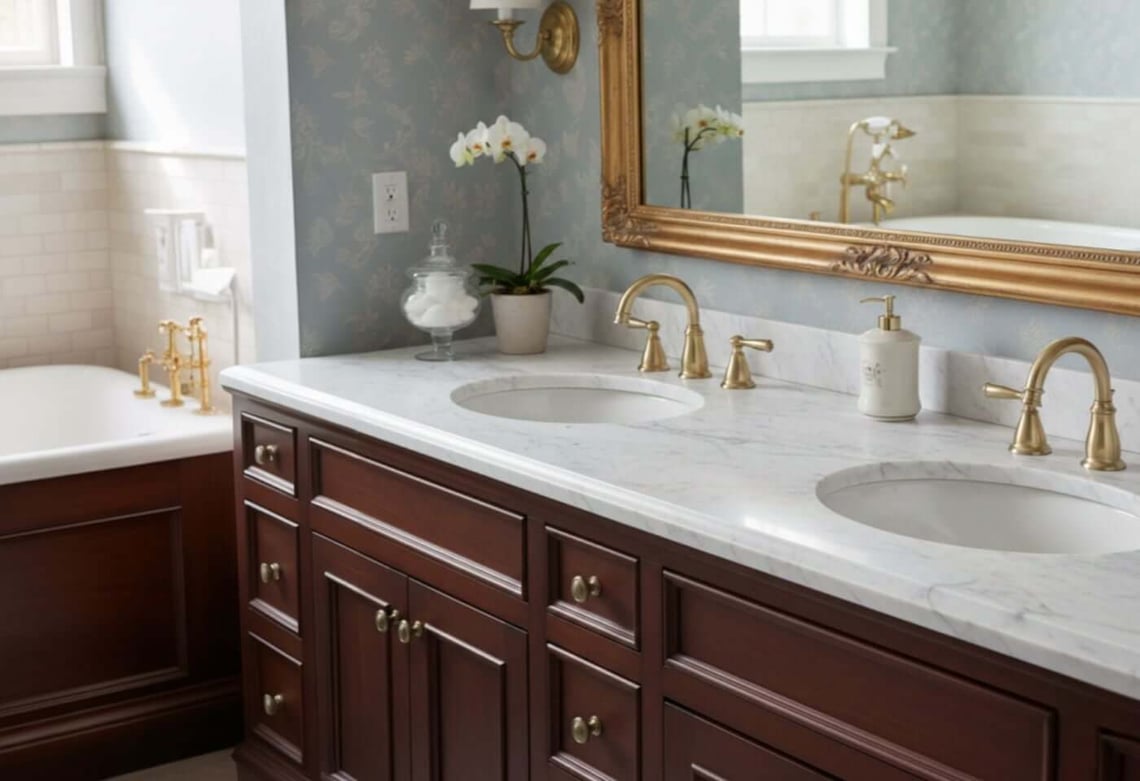
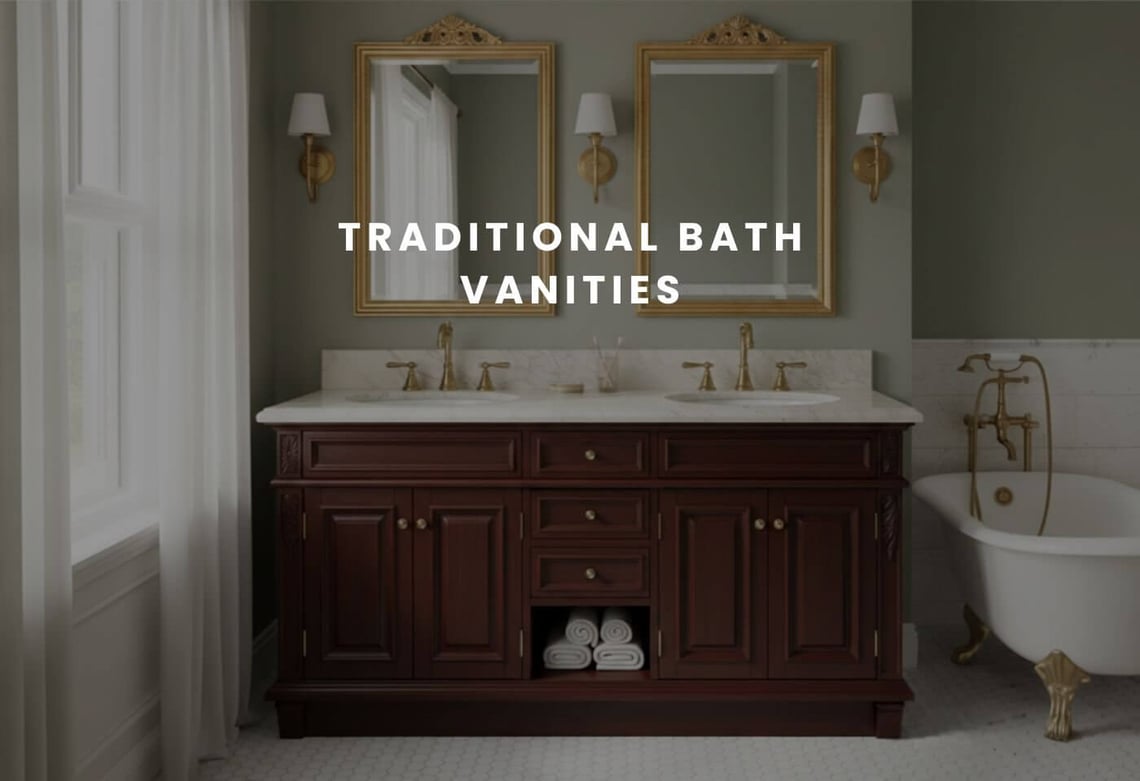
Traditional bathroom vanities don’t try to impress immediately. They don’t rely on sharp trends or glossy finishes. Instead, they lean on proportion, weight, and materials that already feel familiar in UK homes.
In period properties, this makes obvious sense. In newer builds, it’s more subtle. Traditional bath vanities add balance to rooms that might otherwise feel flat or overly engineered.
What stood out to me most was how forgiving these vanities were. Small marks didn’t ruin the look. Minor wear didn’t scream for attention. The vanity didn’t need to be perfect to still feel right.
That matters in real homes, not staged ones.
MOCHA QUARTZ

£300.50
Mocha Quartz is a stunning, long-lasting quartz material that is inspired by the looks of Mocha marble. It has a brown face which is detailed with a golden-white vein pattern that adds dimension. It can be used to design your… read more
MIDNIGHT ( BLACK TINY SPARKLE ) QUARTZ

£308.60
Midnight Black Tiny Sparkle Quartz, as captivating as the night sky, creates a dramatic statement ideal for making long-lasting black quartz backsplashes, countertops, accent walls, even floors, and shower surrounds. The deep black backdrop is strewn with sparkles and mirrors,… read more
BLACK METALLIC QUARTZ

£327.50
Black Metallic Quartz is an eye-catching interior surface slab that features a black base with shiny, reflective, metallic flecks. It is given a dazzling finish that makes a perfect addition in both residential and commercial settings. It is a dream… read more
Why Vanity Unit Materials Changed My Opinion Completely
If cabinetry gives a vanity its shape, the surface gives it its honesty. I’ve worked with enough finishes to know which ones hold up and which ones quietly disappoint.
A stone-top bathroom vanity behaves differently from synthetic or thin laminate surfaces. It carries weight — visually and physically. When installed, it doesn’t feel like an add-on. It feels intentional.
Marble, for example, isn’t flawless. It marks. It develops character. But in a traditional setting, that imperfection becomes part of the story rather than a flaw. Granite and quartz offer more consistency and less maintenance, which many UK homeowners prefer, especially in family homes.
The point is this: traditional bath vanities don’t hide materials. They rely on them.
Freestanding Bathroom Vanity Units: The Turning Point
I used to think freestanding bathroom vanity units were impractical. Less storage. More cleaning underneath. Aesthetic over function.
I was wrong.
In older UK homes, especially those with uneven walls or awkward layouts, freestanding vanities solve problems rather than create them. They don’t fight the building. They work with it.
They also change how the bathroom feels. A freestanding vanity introduces negative space. The room breathes better. Suddenly, the vanity isn’t glued to the wall like an afterthought, it’s a piece of furniture that belongs there.
That shift alone explains why freestanding bathroom vanity designs pair so naturally with traditional styles.
Traditional Bathroom Vanity Units In Smaller UK Bathrooms
One common assumption I hear is that traditional designs only work in large bathrooms. That hasn’t been my experience.
Many traditional bath vanities are narrower than modern equivalents. Their designs prioritise vertical proportions instead of deep drawers. This makes them surprisingly suitable for compact UK bathrooms where every centimetre counts.
The key is restraint. Overly ornate detailing can overwhelm a small space. But a simple shaker-style cabinet with a stone top often looks more composed than a sleek unit trying too hard to look minimal.
What Clients Usually Worry About (And What Actually Matters)
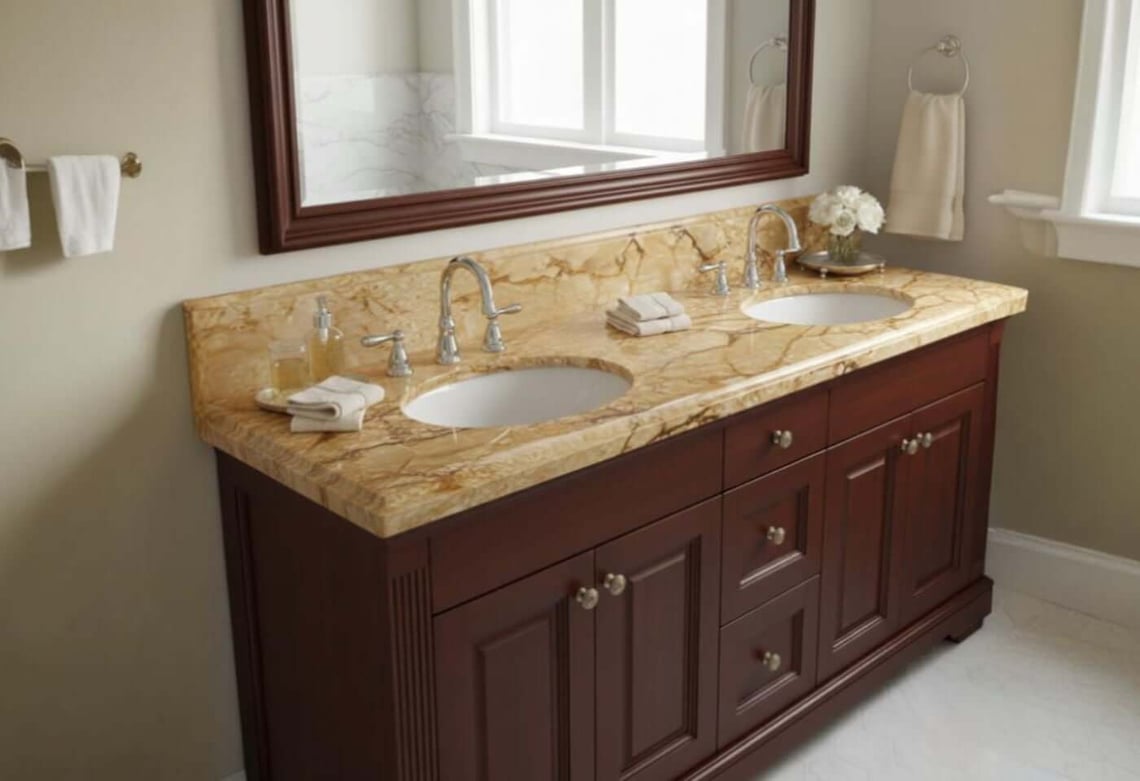
When people consider traditional bathroom vanity units, their concerns are usually the same:
Will it feel old-fashioned?
Is maintenance harder?
Will it limit future resale appeal?
In practice, none of these turn out to be real issues.
Classic bathroom vanities don’t lock you into one style. They act as a neutral base. Taps, mirrors, and lighting — those elements can shift the look without replacing the vanity itself.
Maintenance depends far more on material choice than design style. And resale? Buyers respond to bathrooms that feel complete, not trendy.
Traditional designs tend to photograph better over time, not worse.
Contact Us to See In-stock Stone Collection
Styling Classic Vanity Tops Without Overdoing It
One mistake I see often is over-styling. Traditional bath vanities don’t need excessive accessories to justify their presence.
A framed mirror. Warm-toned taps. Balanced lighting. That’s usually enough.
Let the cabinet and surface speak. When everything else tries to compete, the space loses cohesion. Simplicity is what keeps traditional designs from feeling theatrical.
How to Prepare for Installation of Traditional Stone Vanity Top
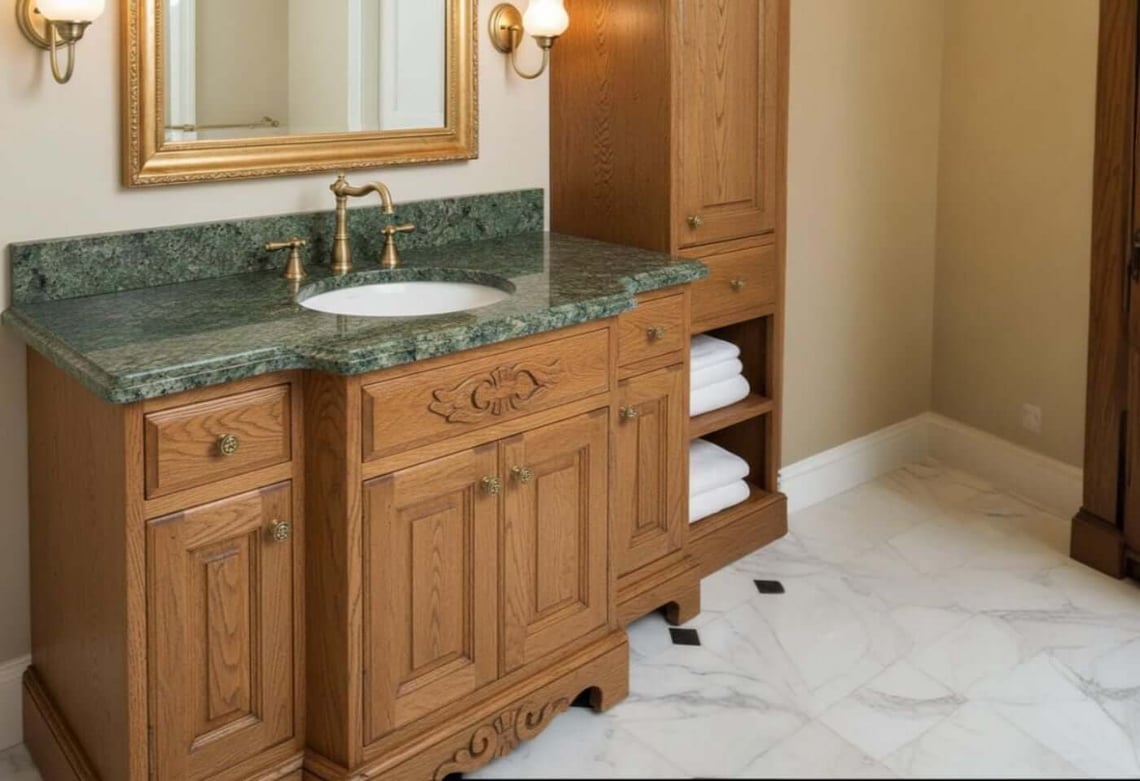
One thing I always flag early on is installation tolerance, especially when it comes to classic and period-style stone worktops and other furniture.
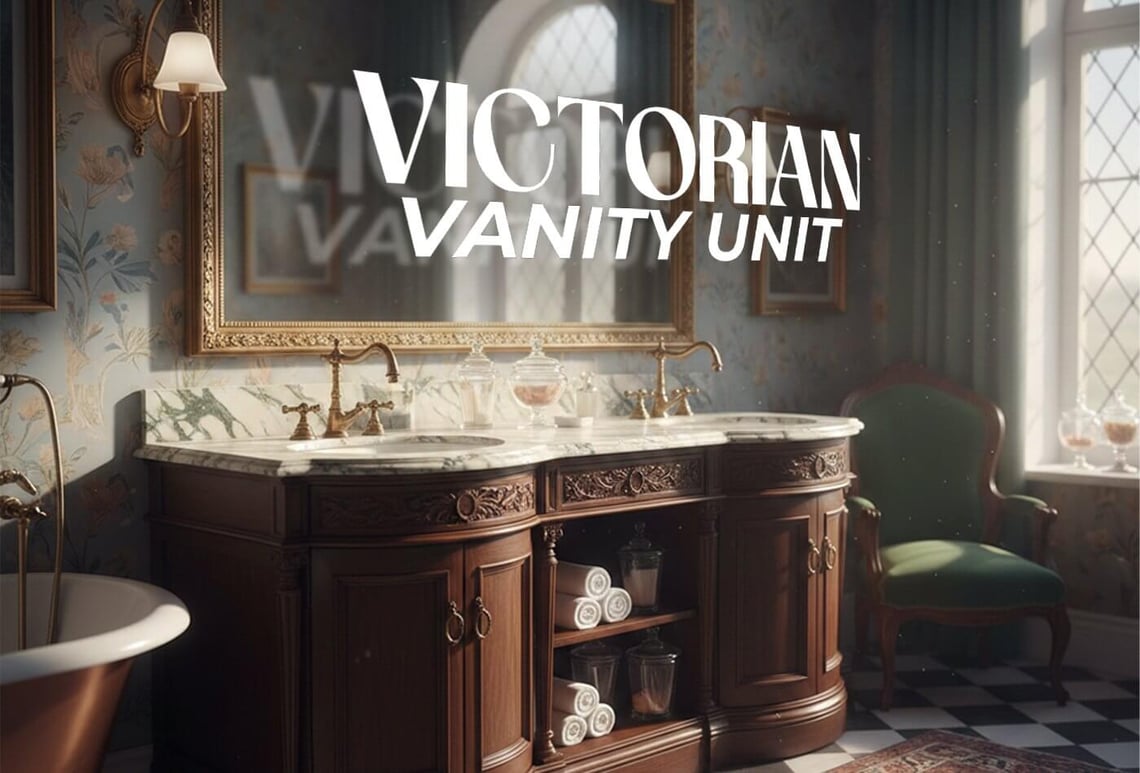
Older British homes rarely have perfectly level floors. You don’t notice it until a freestanding or Victorian vanity unit arrives, and suddenly the gaps become visible. Unlike wall-hung or modern fitted units, traditional-style furniture doesn’t disguise uneven surfaces.
If the floor isn’t properly levelled before the vanity installation is booked, installers usually won’t proceed. That’s not them being difficult. Reputable teams work to tight standards, and fitting a traditional vanity into an unprepared space almost always leads to long-term issues.
The result is usually a rescheduled appointment and an avoidable extra cost.
It isn’t a flaw in the vanity or the installation team. It’s simply part of working with traditional bathroom furniture, where craftsmanship and precision matter more than forcing a quick fit.
Check out our Stone Installations
ROSE QUARTZ SEMI PRECIOUS

£2,372.75
Rose Quartz Semi Precious Stone Slab is a fantastic decorative stone slab that is popularly used by both residential homeowners as well as commercial property owners. It has a soft visual appearance that features repetitive designs created by colours like… read more
PICASSO GEM SEMI PRECIOUS

£2,653.55
Picasso Gem Semi Precious Stone Slab creates a stunning visual appearance with its multicolour design featuring colours like pink, navy blue, brown, gold, black and translucent gems that are bound together by resin. This stunning decorative stone slab is popularly… read more
AMETHYST SEMI PRECIOUS

£2,285.00
Amethyst Semi Precious is one of the most beautiful stone slabs and is available in purple colour with wonderful lines drawn on it. Thickness is available in 20mm. Perfection of its smooth face is of a high professional level and… read more
Conclusion
Traditional bath vanities aren’t about nostalgia. They’re about balance. They respect materials, adapt to real homes, and don’t punish you for living in space.
After seeing how different vanities perform beyond the showroom — in actual UK bathrooms — it’s hard not to recommend traditional designs. They don’t demand attention. They earn it slowly.
And in my experience, that’s exactly why they last.
Check out materials here or Call 0330 113 5868 to directly connect for available stock for your classic stone furniture.
Next Read: Traditional Tiles | Exclusive Collections | Affordable Cost