Table of Contents
- Origin of Victorian Style Vanity Units
- What Actually Makes A Vanity Unit Victorian In Style?
- Victorian Vanity Unit Vs Modern Vanity Unit (Real Difference)
- Are Victorian Bathroom Vanity Practical In 2026 UK Bathrooms?
- Stone And Marble Tops
- Choosing The Right Victorian Vanity Worktop (What I Tell Customers)
- Victorian Style Vanity Worktop In Period Homes Vs New Builds
- Vanity Installation Realities People Don’t Expect
- Caring For A Vintage Vanity Tops Long-Term
- Conclusion
- Frequently Asked Questions and Answers
When customers first ask us for a Victorian vanity unit, it is usually because they’ve seen one online. But they aren’t sure whether it’s a genuine style or just a marketing label. Trust me, I had the same confusion early on when working with traditional bathroom projects, especially in older UK homes.
So in this blog I’m trying to simplify what a Victorian vanity is, what things you should know before placing an order, and how to select one.
Because after seeing these units installed in real bathrooms, I’ve learned that understanding the context matters more than the name.
Origin of Victorian Style Vanity Units
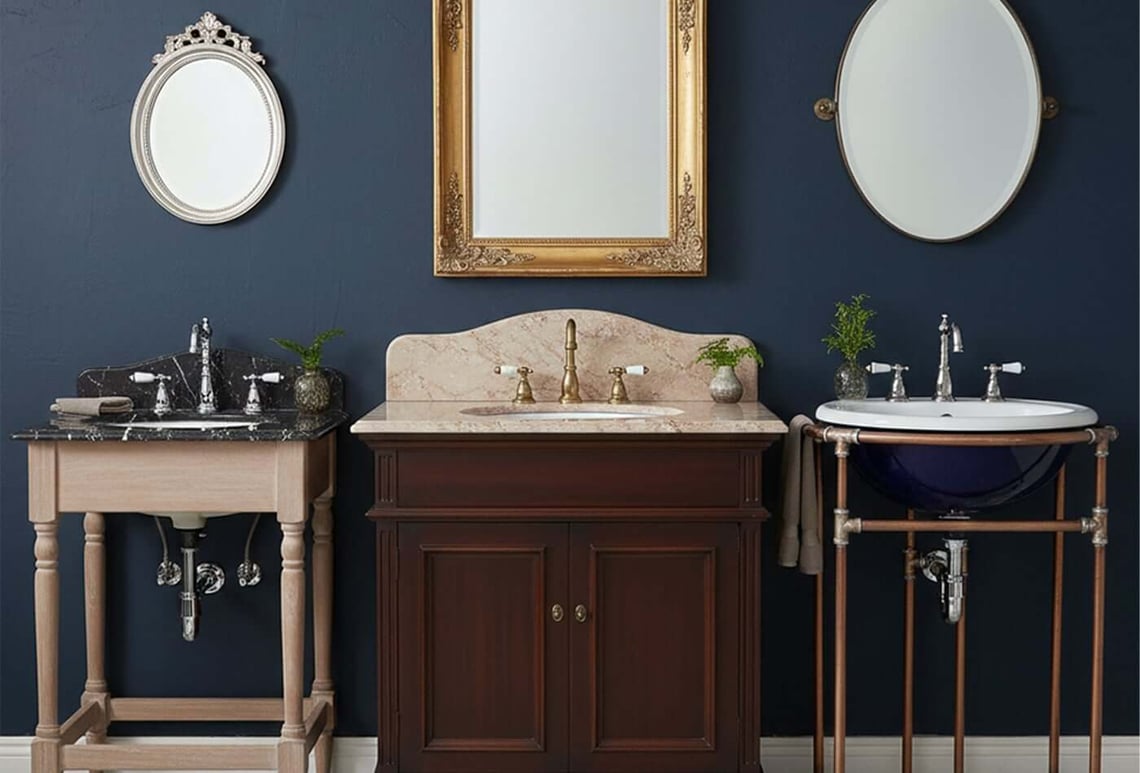
The first Victorian vanity top I worked around wasn’t in a showroom. It was in a renovated terraced house where the homeowner wanted to keep the “feel” of the property without turning the bathroom into a museum.
The unit stood on legs, had a ceramic basin, and a stone top that wasn’t perfectly polished like modern slabs. It immediately felt different from wall-hung units. It anchored the space.
That’s when it clicked for me: Victorian vanity units are about presence, not just storage.
STRATA ARGENTUM CLASSTONE SINK

£1,140.00
Strata Argentum Classtone Sink ranks as one of the world's most durable kitchen worktop materials. This neutral-colored model replicates several layers of Italian Silver Travertine with thin horizontal veining and light grey tones. The result is an ultra-realistic textured that portrays… read more
IRON FROST SINK

£1,140.00
Iron Frost Sink offers a metallic look porcelain worktop with a bright white tone that makes designing a warm and cosy environment easier. Its delicate swirls of metallic shine on a white base with wispy pale grey enhance any interior… read more
JUST WHITE COLORFEEL SINK

£1,140.00
By the intelligible presence of a Just White Colorfeel Sink the space is imbued with an aura of luxury. It is brought out in the gloriously subdued white nuances. One of the most beneficial additives to any cooking area in… read more
What Actually Makes A Vanity Unit Victorian In Style?
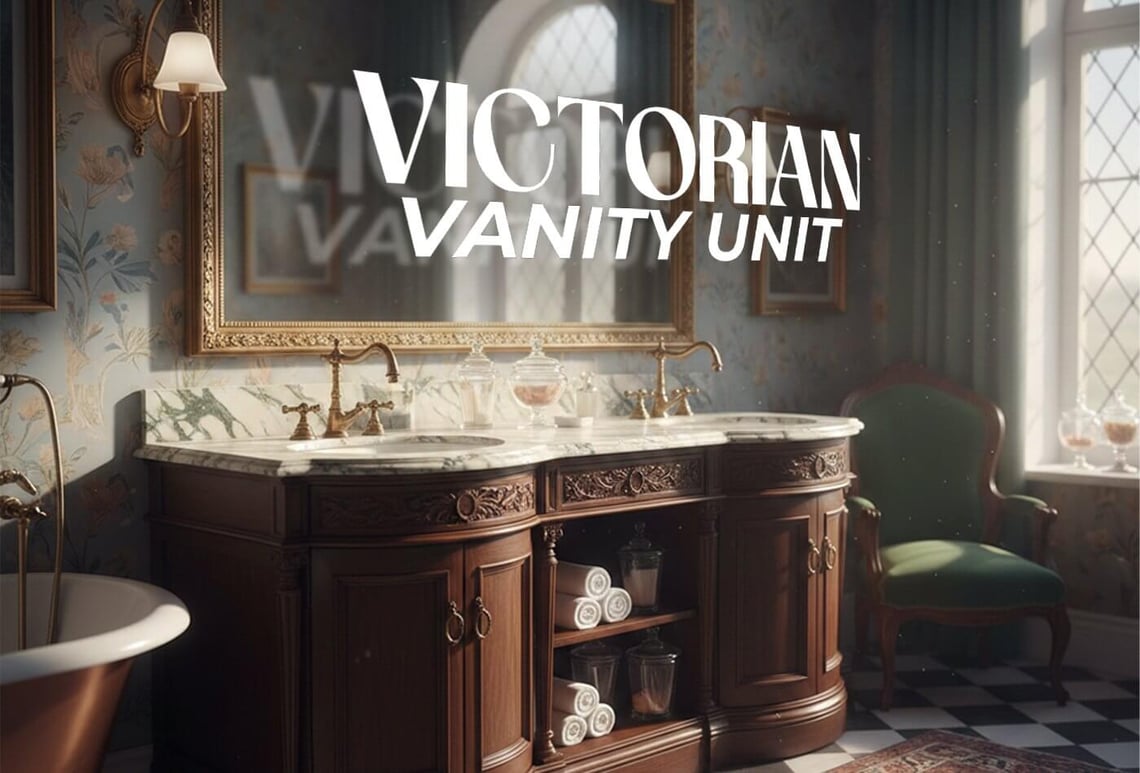
From what I’ve seen across multiple projects, a Victorian style vanity top usually shares these traits:
A freestanding or furniture-style form
Visible legs or a plinth base
Subtle decorative details rather than sharp lines
Traditional handle and tap pairings
A basin that doesn’t disappear into the worktop
It’s not about copying the Victorian era perfectly. Most modern versions are adapted for today’s plumbing and daily use. But the visual language is unmistakably traditional.
Victorian Vanity Unit Vs Modern Vanity Unit (Real Difference)
Modern vanity units are designed to disappear. They float, hide pipework, and blend into tiled walls.
Victorian style vanity tops do the opposite. They announce themselves.
In projects where the rest of the bathroom already had character — older tiles, stone flooring, taller ceilings — the Victorian unit usually looked like it belonged there. In very sleek, minimal bathrooms, it stood out more, sometimes intentionally, sometimes awkwardly.
This is where honest judgement matters. Not every bathroom benefits from one.
Are Victorian Bathroom Vanity Practical In 2026 UK Bathrooms?
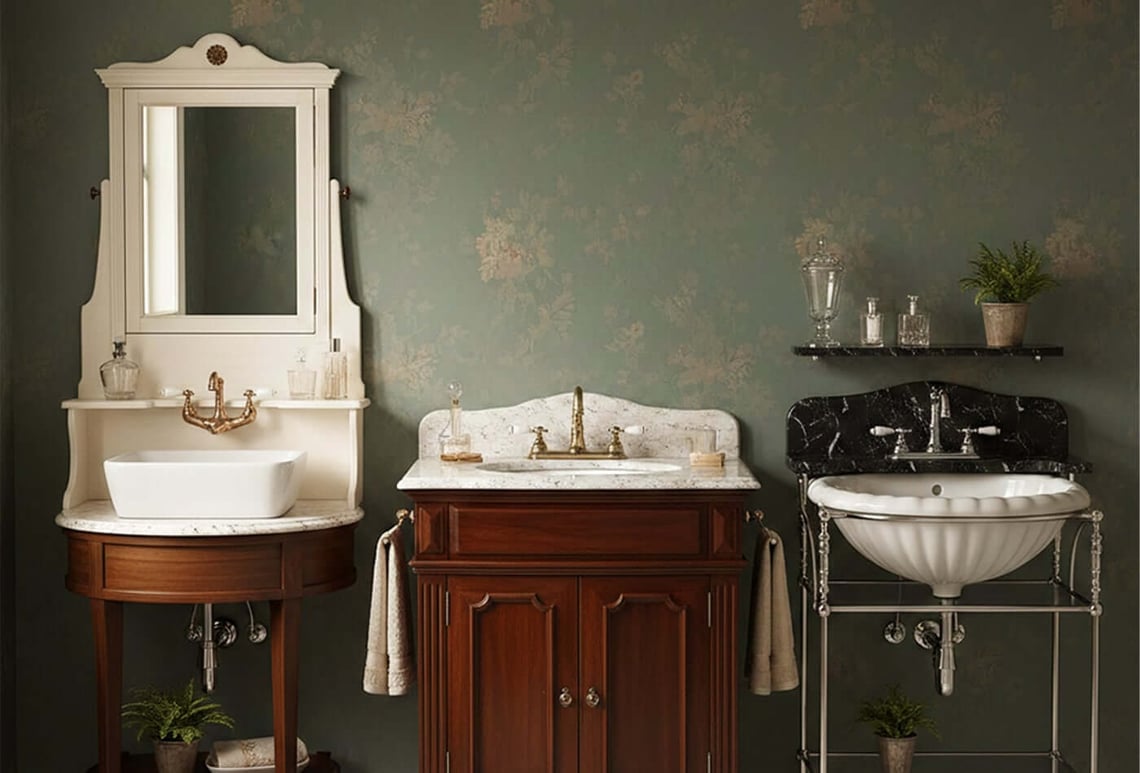
This is where customers hesitate, and rightly so.
From experience, Victorian-style vanity worktops are practical, but only if expectations are realistic.
Older UK homes often come with:
Uneven walls
Pipework that doesn’t run neatly
Slightly awkward room proportions
A freestanding vanity unit doesn’t hide those issues the way a modern fitted unit does. That can be a problem, or it can be part of the charm, depending on the homeowner.
Storage is usually adequate but rarely generous. If someone needs maximum drawer space, I usually advise them to think twice.
Vanity Unit Materials I’ve Seen Used Most Often
Stone And Marble Tops
Stone vanity tops are common on Victorian vanity units, especially marble. They add weight and authenticity. They also require care. I’ve seen beautiful tops damaged simply because the owner treated them like quartz.
Painted Timber Cabinets
Painted finishes dominate this category. White and soft neutral tones are popular, but darker colours can work well in larger bathrooms.
Ceramic Basins
Ceramic remains the most reliable choice. It fits the style and holds up well over time.
Contact Us to See In-stock Stone Collection
Choosing The Right Victorian Vanity Worktop (What I Tell Customers)
Do you want something that blends in or stands out? This is exactly what I ask my customers. Because if they have a small bathroom, a big bulky vanity unit can overwhelm it. And unless and until I know what my customer needs, I cannot deliver the best for them.
Even in your case, make sure you share each and every detail with your installer—what your daily routine looks like, what style you prefer, how good you are with time management for daily cleaning, and other similar points that you may think are irrelevant.
In the above case where the bathroom is smaller, one should install slimmer traditional designs. Lighter colours also help keep the space open.
I also advise people to think about daily use. Doors, drawers, and basin height matter more than ornamentation once the novelty wears off.
Victorian Style Vanity Worktop In Period Homes Vs New Builds
In period homes, Victorian vanity units often feel like the obvious choice. They align naturally with the rest of the property.
In new builds, they’re more of a statement. I’ve seen them used very successfully to soften modern bathrooms. But of course everything has to be done in the right way to result in the best. If you have a vintage home, pair your Victorian vanity worktop with stone tiles or traditional brassware. Something that complements it. Don't ever mix it with something ultra-modern. Your bathroom vanity can feel out of place.
Vanity Installation Realities People Don’t Expect
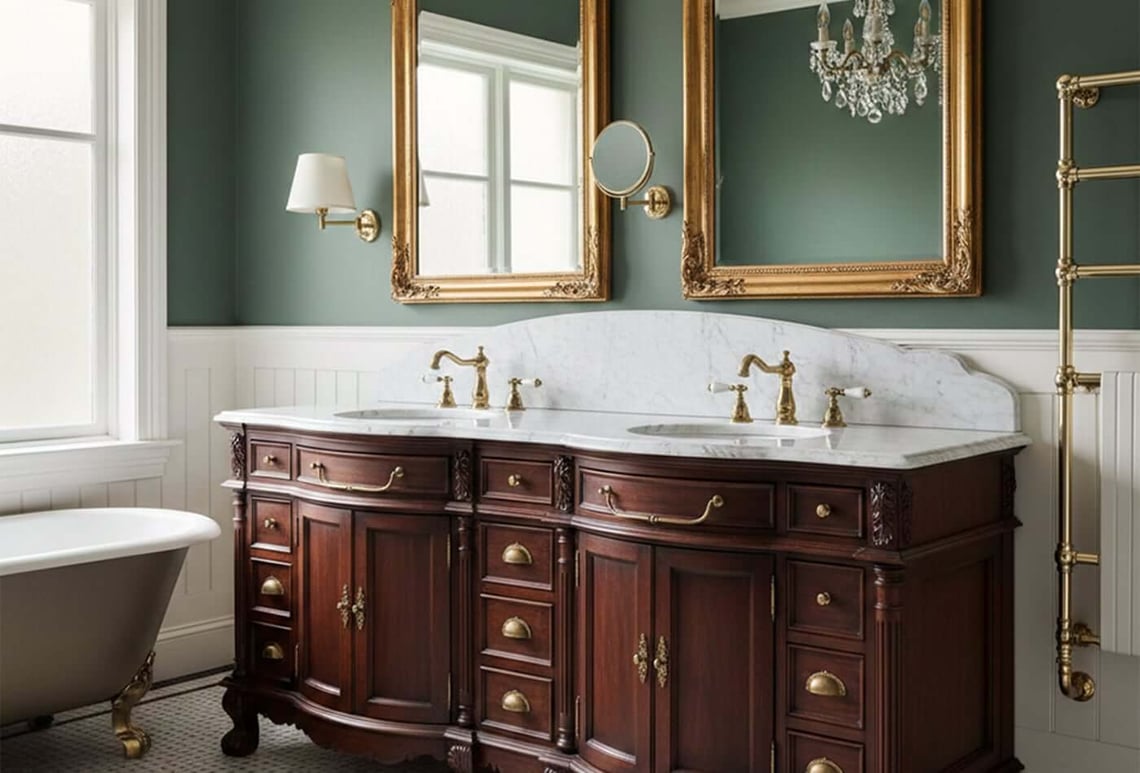
One thing I always mention is installation tolerance.
Floors aren’t always level in older homes. Freestanding units make that obvious. So if your floors are unlevelled, make sure you correct that first before booking a vanity installation. Otherwise you would just end up paying a rescheduling fee because renowned teams do not agree to install when the space is not fully ready. This isn’t a flaw. It is just part of working with traditional-style furniture like a Victorian vanity unit.
SHIVAKASHI GRANITE

£365.54
Shivakashi Granite is a Beige which is a yellow granite with a fine to medium-grained pinkish-beige tone that dazzles onlookers. The granite stone product is stylish and enticing, with light brown and red veins and spots. This South Indian stone… read more
NERO FANTASY GRANITE

£438.20
This granite is from South Africa. The textures run across like flowing water and like clouded patches – capable of inspiring you to design with it. It is also described to be strands of Angel feathers left in the world,… read more
FONTAINE TAP

£104.50
Fontaine Tap is designed for ease of use and durability, making it perfect for everyday use in any kitchen. Crafted with a single lever for effortless control and adorned with a stylish chrome finish, this tap brings both functionality and… read more
Caring For A Vintage Vanity Tops Long-Term
Are you already worried that maintenance is complicated? It is not, but it does require awareness.
If you go for a stone bathroom vanity, you will need resealing once every two years or so. You need to be using only gentle cleaners during regular maintenance. Painted finishes don’t respond well to harsh chemicals. Regular checks around joints help avoid water damage.
When cared for properly, these units age well. I’ve seen them look better after years of use than many modern alternatives.
Next Read: Luxury Home Interior with Stones
Conclusion
Writing about what a Victorian style vanity worktop is from real experience isn’t just acceptable — it’s more believable. Customers don’t want textbook definitions. They want to know how something actually behaves once it’s installed in a UK home.
When written honestly, with small imperfections and real considerations, this kind of content attracts the right buyers — the ones who know what they’re getting into and value quality over trends.
Order your waterproof bathroom vanity today
Check out materials here or Call 0330 113 5868 to directly connect for available stock.
Frequently Asked Questions and Answers
What Is A Victorian Vanity Top In Simple Terms?
It’s a traditional, furniture-style bathroom unit inspired by Victorian-era design, adapted for modern use.
Are Victorian Vanity Tops Old-Fashioned?
Not necessarily. When chosen correctly, they feel timeless rather than dated.
Why Do People Still Choose Victorian Vanity Units Today?
Because they add character and a sense of permanence that modern units often lack.
Can I Use A Traditional Vanity Unit In A Small Bathroom?
Yes, but size and colour choice are critical. Not all designs suit compact spaces.
Do Period Vanity Units Work With Modern Plumbing?
Yes. Most are designed to accommodate contemporary plumbing standards.