Table of Contents
A worktop sample is a seductive little thing. You hold the offcut of quartz up to the light in the showroom, fall for the veining, and the decision feels made. Then it arrives as forty square feet of surface in your actual kitchen — beside cabinets a shade you chose on a different afternoon, under lighting nothing like the showroom's, next to flooring it has to live with for the next fifteen years — and the slab that looked perfect in your hand reads quite differently across the whole room.
The slab is only one part of the kitchen decision. The trouble is that worktops, of all the choices in a kitchen, are among the least forgiving to get wrong: they're expensive, they're cut to fit, and they are not coming back out without a fight.
The Worktop is Part of the Whole Room
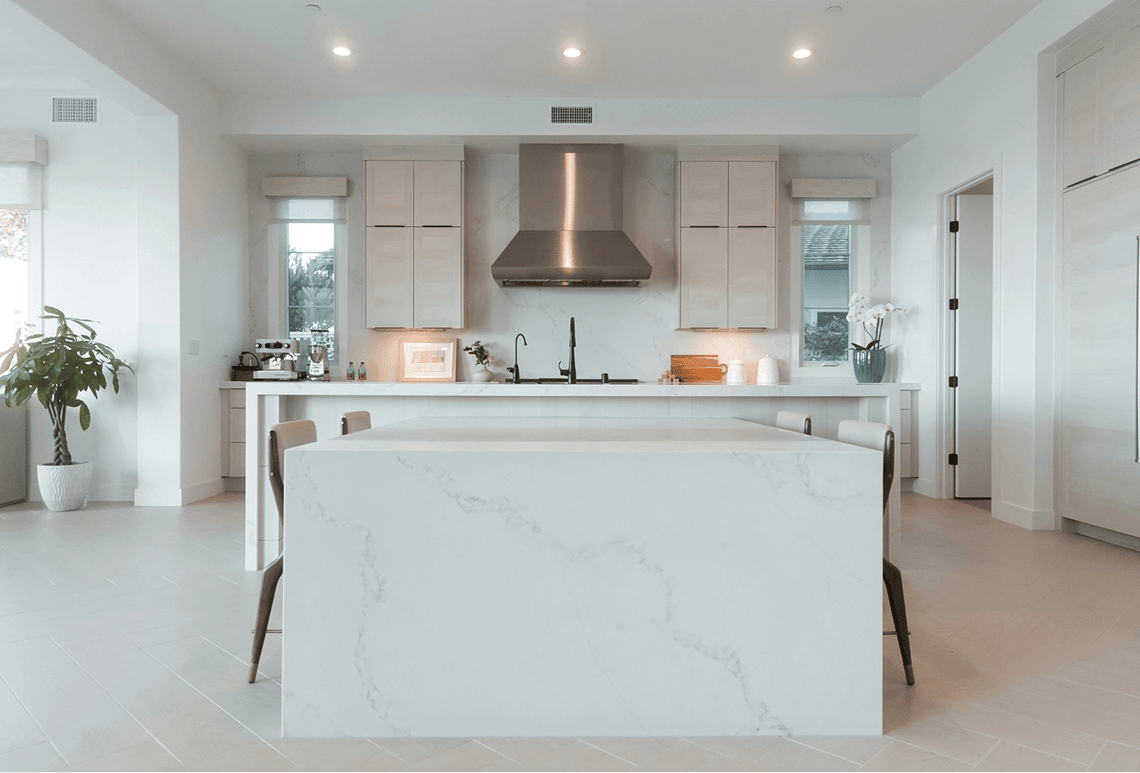
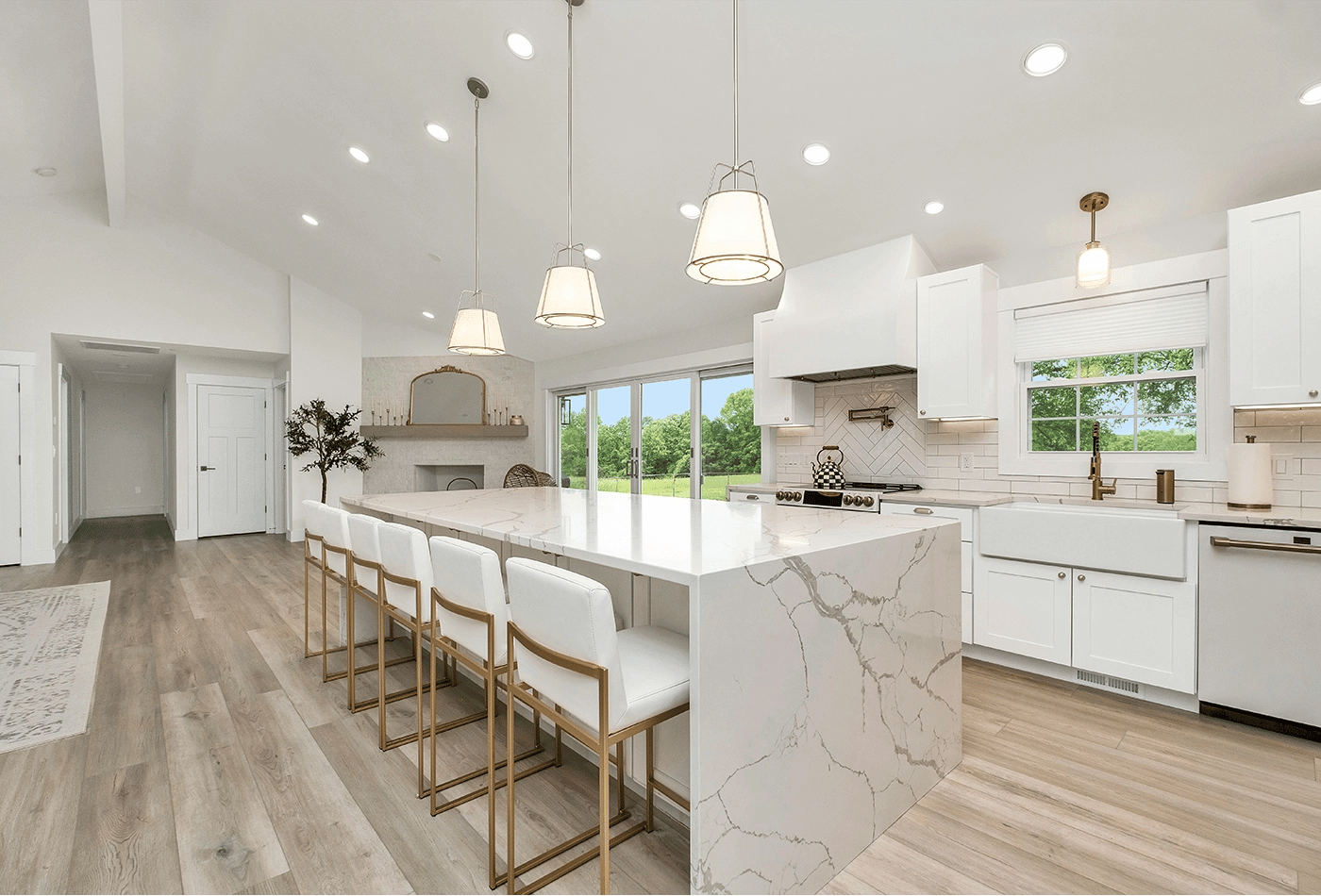
A worktop is never really chosen on its own, even though it tends to be shopped for that way. It has to agree with the cabinets, the island, the splashback, the sink and taps, the flooring, the wall colour, and the finish of the appliances standing next to it.
This is where a lot of kitchen regret is born — in a beautiful surface picked in isolation that then has to negotiate with everything else after the fact. A dramatic dark granite that looked commanding as a sample can swallow a small kitchen with dark units. A bright white quartz that seemed clean and fresh can read clinical against cool grey cabinets and cool flooring. With the range of surfaces available now — granite, marble, quartzite, engineered quartz, porcelain, Dekton, Silestone, terrazzo — the material decision is rich, but it's only ever half the question. The other half is what it's sitting beside.
Compare Materials Before You Commit, Not After
The fix is to see the surfaces together, in context, before anything is ordered or cut.
For homeowners and designers comparing worktop colours, cabinet finishes, sinks, taps, and island layouts, 3d product rendering services can help show how surfaces and fitted products may look together before final decisions are made. Beyond renders, the same instinct applies with physical samples: bring the worktop offcut home, lay it against the actual cabinet door, look at it by daylight in the morning and by your kitchen lights at night, and judge the things a small swatch hides. The scale of the veining matters — a marble effect that's elegant on a sample can look busy across a whole island. The finish matters — polished bounces light and shows everything, honed is softer and more forgiving. The edge thickness changes the whole character of the run. None of these are visible in a quick showroom glance, and all of them are easier to change before the slab is templated than after.
Plan the Furniture, Not Just the Surface
A worktop sits on something, wraps around something, and overhangs something — which means the fitted furniture beneath it is part of the same decision, not a separate one to settle later.
The cabinets and their colour. The island base and how far the worktop overhangs it for seating. The breakfast bar and whether knees actually fit under it. The open shelving, the utility-room storage, the fitted bench in the corner, the bathroom vanity if the project runs that far. Each of these interacts with the surface above it, and each is its own scale-and-clearance puzzle. A kitchen designed surface-first, furniture-afterthought, tends to produce the islands that are an inch too deep to walk around and the overhangs that don't quite take a stool.
Custom Pieces Are Worth Testing Before They're Built
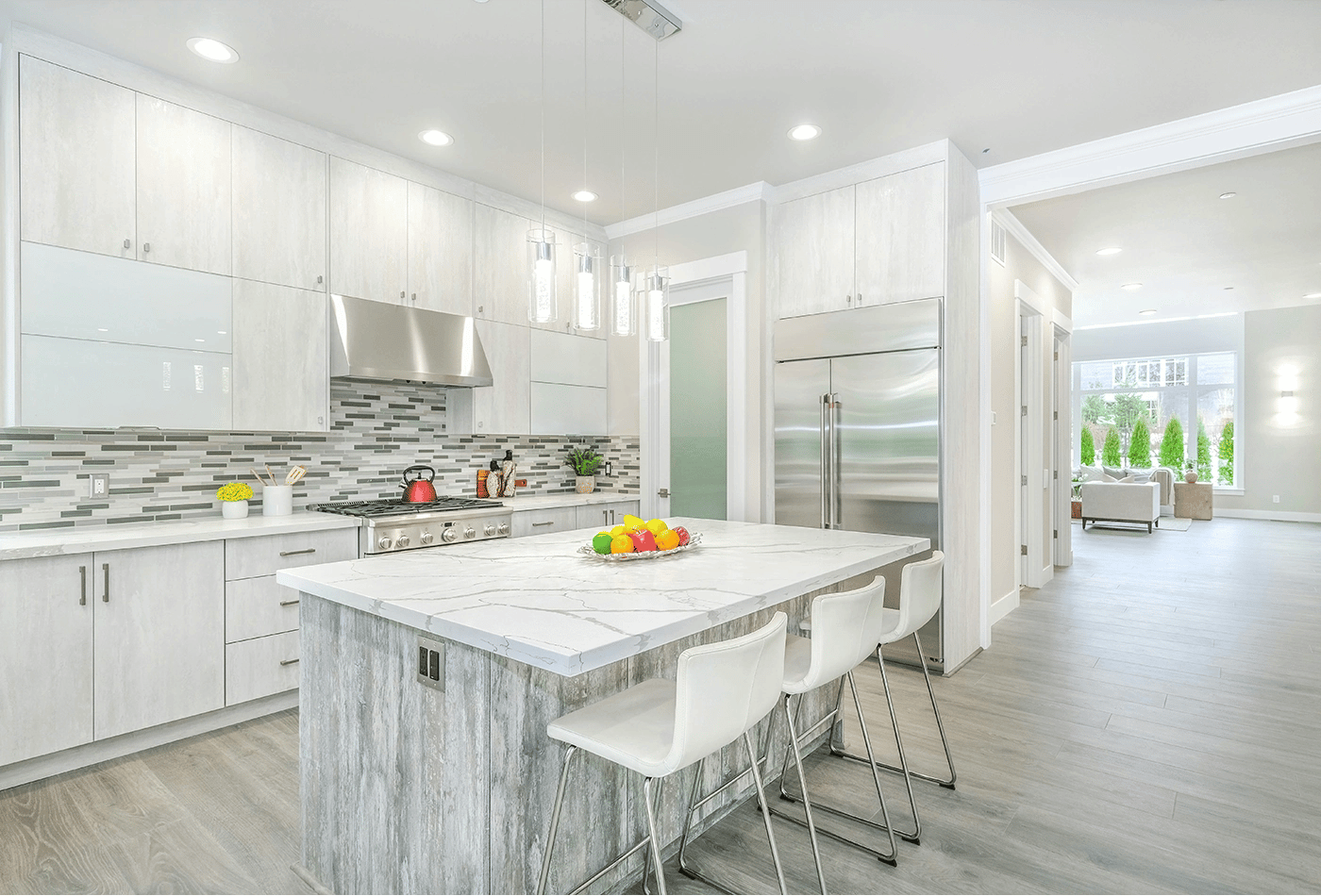
The bespoke elements — a one-off island, fitted cabinetry sized to the room, a custom vanity, a built-in bench — carry the most risk, because there's no returning a piece made to measure that turns out wrong by an inch.
When a project includes custom islands, fitted cabinets, benches, vanities, or storage units, furniture virtual prototyping can help teams test proportions, material combinations, usability, and design changes before production or installation. The things worth testing before committing are exactly the ones that hurt most when they're wrong: the island's footprint against the walking space around it, the overhang against real stool height, the cabinet openings against the appliances going into them, the sink position against the worktop cutout, the storage access against where you'll actually stand. Catch a clearance problem on a model and it's a quick edit. Catch it after the island is fabricated and installed, and it's a much longer conversation with a much larger invoice.
Finish Sets the Mood More Than Colour Does
Two worktops in the same stone can feel like completely different surfaces depending on how they're finished — and homeowners often choose the colour carefully and barely consider the finish.
Polished stone is glossy, reflective, and shows the room in it; it reads more formal and more demanding to keep looking pristine. A honed or matte finish is quieter, warmer, more relaxed, and kinder to fingerprints and water marks. A heavily veined marble or marble-effect porcelain makes a statement that a plain surface never will. Dark surfaces ground a kitchen and hide less; pale ones lift it and show more. A porcelain that mimics marble gives much of the look with different maintenance. And running the same surface up as a seamless splashback creates a very different, more continuous effect than breaking it with tile. The colour gets the attention; the finish quietly decides how the kitchen actually feels to stand in.
The Unglamorous Practicalities Decide a Lot
Style gets the early excitement, but the questions that determine whether you love the worktop in three years are mostly practical ones.
How does this material want to be cleaned, and can you live with that? Is it heat-resistant enough for how you actually cook, or does it need trivets and caution? How does it handle the things that get spilled in a real kitchen — wine, oil, lemon, coffee — and is it prone to staining or etching? How durable is the chosen edge profile against daily knocks? Where will the seams fall on a large run, and are you happy with where they land? And the one people forget until installation day: can the slab physically get into the property — round the tight hallway, up the stairs, through the door? A surface that's perfect in every way except that it can't be carried to the kitchen is a problem best discovered early.
A Checklist Before You Order
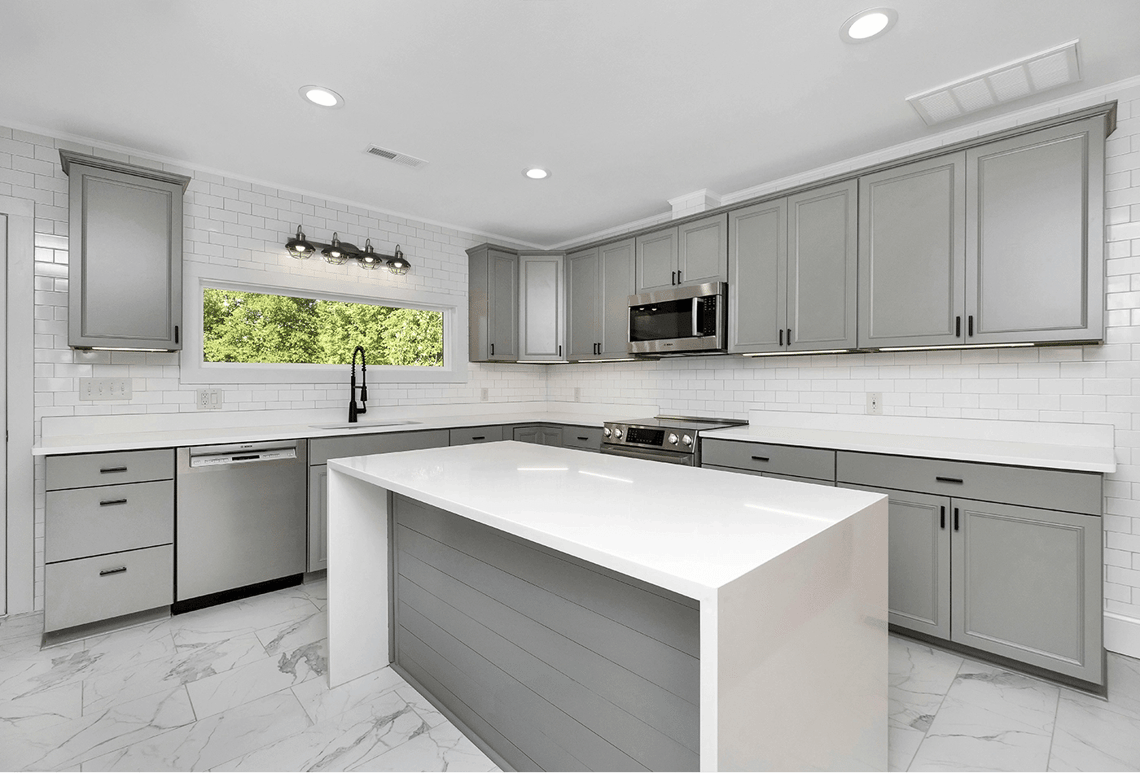
Worth confirming before anything is ordered or cut:
Have you measured the room properly?
Have you checked the worktop sample against the actual cabinet colour, in your own light?
Have you planned the sink and tap positions and their cutouts?
Have you settled the splashback material so it works with the surface?
Have you checked edge profiles and thickness against the look you want?
Have you tested the island size against the walking space around it?
Have you looked at the surface in morning and evening light?
Have you confirmed what the material's upkeep actually involves?
Have you checked delivery and installation access into the property?
And does everyone involved — designer, fabricator, fitter — have the same visuals and references to work from?
A box left unticked here is a question. The same question discovered on installation day is usually a delay, and sometimes a re-order.
A kitchen worktop has to be beautiful, but it also has to work — with the cabinets it meets, the island it crowns, the light it sits under, and the cooking and spilling and gathering that happen on it every day. Visual planning, whether through proper samples seen in context or renders that show the whole room together, is how those decisions get made while they're still cheap to change. The best kitchen choices are nearly always made before anything is cut, ordered, or installed — which is the one stage where changing your mind costs nothing but a little time.