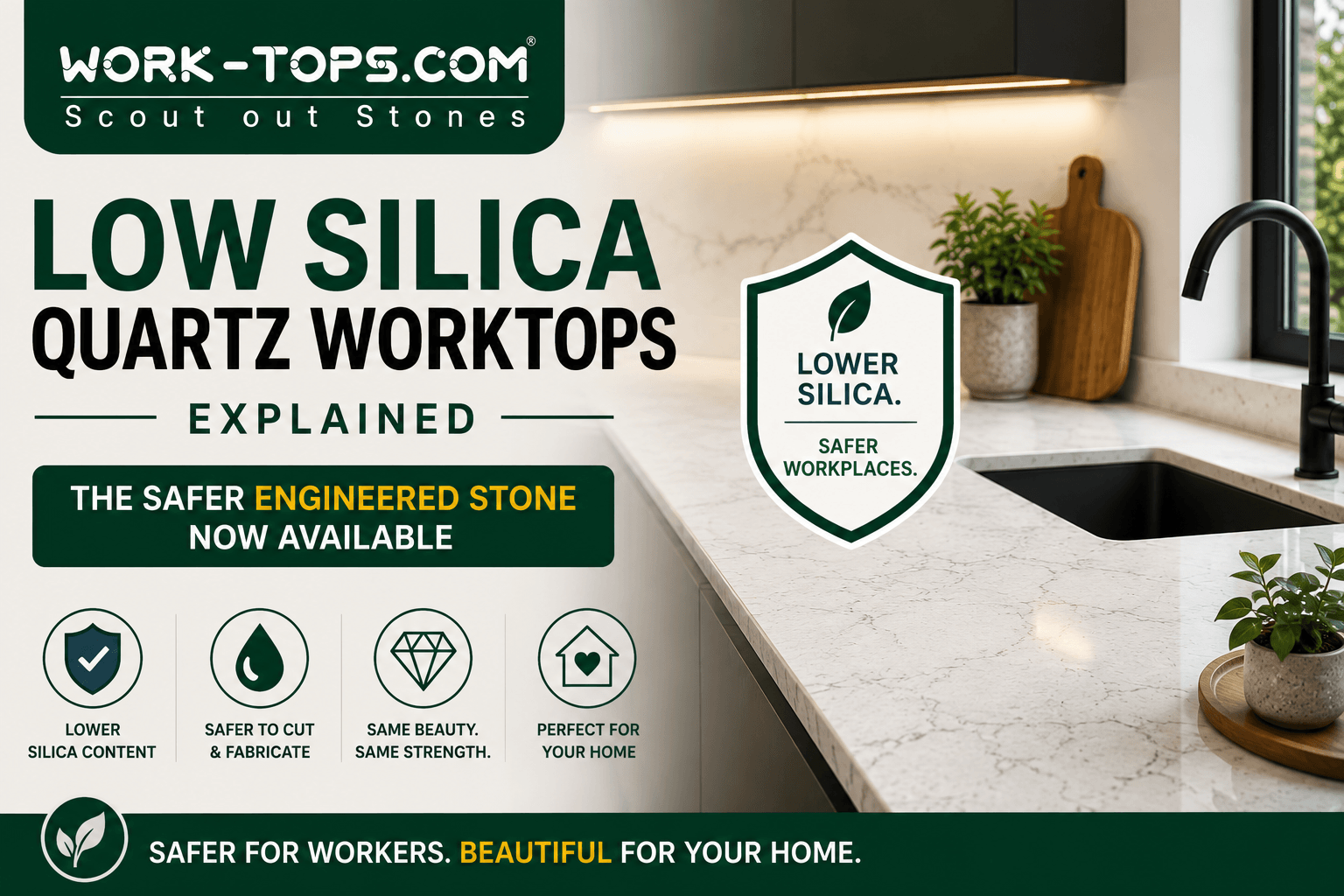
Low silica quartz worktops are a newer breed of engineered stone, built with far less crystalline silica so they’re much safer to cut and fabricate, and without giving up the looks or toughness that made quartz a kitchen favourite in the first place. If you caught any of the 2026 headlines about silica dust and worker safety, this is the bit of the story worth getting your head around.
So in this guide I’ll cover what low silica quartz worktops actually are, why they’ve blown up this year, how they stack up against the traditional stuff, and what to check before you buy. I’ll flag a cracking natural alternative too. No jargon for its own sake, just the honest view from someone who’s hands on with these surfaces most days.
What Are Low Silica Quartz Worktops?
It’s easier to explain once you know what “ordinary” quartz is. Classic quartz worktops are crushed natural quartz held together with resin, and the crystalline silica in them can run frighteningly high, up to 95% in some slabs. That silica is exactly what turns into hazardous dust the moment the stone gets cut, ground or polished on the workshop floor.
Low silica quartz worktops flip that. They’re engineered to hold dramatically less crystalline silica, often less than half the old level, and some lines drop right down into single figure percentages. The trick is that makers swap in other minerals and binders, so what you end up with still looks and behaves like the quartz everyone’s used to.
A quick reality check on the numbers, though, because “low silica” isn’t a regulated label. One brand’s low silica quartz worktops might sit around 40% silica, another’s under 10%, and both can legitimately use the term. That’s not a reason to be suspicious, it just means the actual percentage is the thing to ask about, rather than the marketing word on the brochure. A good supplier will have that figure to hand.
Put simply: same gorgeous, hard wearing worktop, far safer for the people who fabricate it. Want a wider background on how man made and natural surfaces differ? Our guide to natural stone versus engineered stone is a solid primer.
Why Low Silica Quartz Matters Now
This category jumped from niche to mainstream on the back of one big safety shift in 2026. After confirmed silicosis cases, an incurable lung disease, and the deaths of young fabrication workers in the UK, the Health and Safety Executive brought in landmark guidance.
The HSE was blunt: dry cutting engineered stone is unacceptable, and it pushed the trade hard towards lower silica products. The part that really moved the needle? The regulator found lower silica engineered stone now comes at the same quality, which knocks out any excuse a business had for sticking with the high silica stuff. That one finding is why low silica quartz worktops became the talking point of the year.
For homeowners the message is calming. That silica risk has only ever lived at the cutting and fabrication stage in a workshop, never in the finished, sealed worktop in your kitchen. But going for low silica quartz worktops means you’re backing a safer supply chain right from the start.
How Low Silica Quartz Compares to Traditional Quartz
So how does the new stuff measure up against the classic? In pretty much every way that touches you day to day, it’s a close match:
Looks: The same broad spread of colours and patterns, marble effect veining, solid tones, the lot.
Durability: Still hard, still scratch resistant, still non porous, so daily care doesn’t change.
Maintenance: Like any quartz, no sealing needed and it wipes down in seconds.
Safety: Here’s the real gap, far less silica means far less dangerous dust when it’s being made.
The honest trade offs are choice and price. Being newer, the range can be a touch narrower, and premium low silica lines sometimes carry a small premium. But the choice is widening fast, and it’s worth remembering that once the slab is in your kitchen, a traditional quartz worktop and one of the low silica quartz worktops are, to you, identical in daily use. The difference is entirely about how safely each one was made. If budget’s on your mind, our 2026 quartz worktops cost guide gives a realistic steer on what to expect.
What to Look For When Buying
Decided low silica quartz worktops are your thing? Here’s how to buy without second guessing yourself:
Ask for the silica percentage: Any supplier worth their salt will tell you the crystalline silica content of a product straight away, no dodging.
Check how they cut: Even with low silica stone, water suppression and proper dust control should be the norm, not an extra.
Look at the full colour range: Don’t assume “low silica” means slim pickings, plenty of big brands now run extensive collections.
Buy from an established supplier: A business that takes safety seriously gives you peace of mind on every level.
One last tip: get the specifics in writing. A short line on the quote confirming the product name and its silica content costs the supplier nothing and means everyone’s clear on exactly what’s being fitted. Reputable sellers won’t blink at the request, and it’s a good, quiet test of who’s genuinely on top of this.
A Natural Low Silica Alternative: Slate
If this whole silica conversation has nudged you towards a naturally low silica surface, it’s worth looking past engineered stone entirely. Slate is a brilliant natural option with a completely different makeup to quartz, and it carries a deep, understated character that works in contemporary and country kitchens alike.
A grey slate worktop gives you a soft matte finish, genuinely good heat resistance and a tactile, honest surface that only gets better with age. Those muted tones are endlessly versatile too, sitting as happily against crisp white units as bold, moody colour. For anyone drawn to a robust, distinctive slate grey worktop with real natural appeal, it earns its place on the shortlist next to quartz, granite and marble. Our natural stone worktops collection shows the finishes worth exploring.
Just be clear eyed about the trade: slate is softer than quartz, so it can scratch and chip more easily, and it likes an occasional wipe of stone safe oil to keep its depth. Some people adore that it wears in and tells a story, others want a surface that looks identical in ten years. Neither’s wrong, it’s just a different deal to the near indestructible finish of low silica quartz worktops.
The Bottom Line on Low Silica Quartz Worktops
So, are low silica quartz worktops worth a look? Honestly, yes. They hand you everything people love about quartz, the looks, the toughness, the low upkeep, while backing a safer, more responsible way of making it that lines up with the 2026 HSE guidance. That’s a genuine win the whole way down the chain, from the workshop to your kitchen.
At Work Tops we keep a close eye on all this, buy from quality suppliers, and stock everything from engineered quartz to beautiful natural stone, so you can choose with real confidence. Planning a kitchen upgrade and after an honest steer on the right material? Have a browse through our worktop range and get in touch, we’re always glad to help you land on the right one. Whatever you land on, you’ll be choosing from a market that’s in a far better place than it was a year ago.
Frequently Asked Questions
What is low silica quartz?
Low silica quartz is engineered stone made with far less crystalline silica than traditional quartz, so it’s much safer to cut and fabricate while keeping the same looks and durability.
Are low silica quartz worktops as durable as regular quartz?
Yes. Low silica quartz worktops stay hard, scratch resistant and non porous, so they behave just like traditional quartz in everyday use and need no sealing.
Why are low silica quartz worktops becoming popular in 2026?
After new HSE guidance on silica dust and worker safety, the trade was pushed towards lower silica products, which the regulator confirmed now come at the same quality.
Do low silica quartz worktops cost more?
Some premium low silica ranges carry a small premium as a newer category, but choice is expanding quickly and prices are getting more competitive.
What natural alternatives have low silica?
Natural stones like slate, marble and many granites hold far less crystalline silica than traditional engineered quartz, which makes them appealing low silica alternatives.