Table of Contents
- Why reused industrial materials work so well in modern projects
- 15 smart ways to reuse industrial materials in modern projects
- 1. Turn reclaimed steel into structural or statement features
- 2. Reuse old brick for feature walls and façades
- 3. Use salvaged timber for cladding, ceilings, and joinery
- 4. Crush old concrete, brick, or ceramics for sub-base and landscaping
- 5. Repurpose warehouse-style glazing and metal-framed windows
- 6. Convert salvaged piping and ducting into furniture and fittings
- 7. Reuse industrial mesh, grating, or perforated metal as screens
- 8. Turn pallets into temporary or event-build furniture
- 9. Use reclaimed stone or concrete elements in outdoor projects
- 10. Repurpose industrial doors, shutters, or panels as statement pieces
- 11. Turn old tanks, drums, or vessels into planters or installations
- 12. Reuse factory or workshop lighting in contemporary interiors
- 13. Create modular spaces from repurposed shipping containers
- 14. Use salvaged materials in mixed-material office and retail fit-outs
- 15. Integrate reused industrial materials into landscape and public-realm design
- Which reused materials work best for different project types?
- For homes and interiors
- For offices and retail
- For outdoor and public-facing projects
- What to consider before reusing industrial materials
- Why reuse is about more than sustainability
- More material, more possibilities
- Frequently Asked Questions and Answers
Reusing industrial materials is no longer a niche move confined to experimental eco-builds. In modern architecture, interiors, retail, and landscape design, reclaimed steel, brick, timber, concrete, and modular industrial structures are being turned into assets: materials with genuine character and commercial relevance that standard new-build equivalents cannot replicate.
The shift is partly sustainability-driven, but the design case is equally compelling. A reclaimed brick wall has texture that no newly fired facing brick achieves. A patinated steel beam tells a story. A converted industrial shell carries weight and identity that a prefabricated building envelope rarely does.
What follows is a practical list of fifteen ways these materials appear in modern projects, from structural statements to lighter-touch fit-out ideas, across a range of settings and budgets.
Why reused industrial materials work so well in modern projects
The industrial-modern aesthetic has remained commercially durable for longer than most design trends. Part of the reason is that it is not really a style choice in the way that, say, a colour palette is. Reused materials carry real history. They have been made, used, and aged in ways that give them visual weight that new materials take decades to develop.
Beyond aesthetics, the practical case for reuse is strong. Industrial materials are typically over-engineered for their original purpose, which means they still have structural and functional life left when repurposed. Steel made for heavy industrial use does not lose its load-bearing capacity when it moves into a conversion project. Brick that has survived decades of weathering will survive more.
The fifteen ideas below cover the full range, from high-impact structural applications to simpler, more accessible reuse ideas for smaller projects.
15 smart ways to reuse industrial materials in modern projects
1. Turn reclaimed steel into structural or statement features
Works well in: Office conversions, hospitality spaces, mixed-use developments, and private homes. |
2. Reuse old brick for feature walls and façades
Works well in: Retail interiors, restaurants, offices, residential extensions, and garden walls. |
3. Use salvaged timber for cladding, ceilings, and joinerySalvaged timber, whether from old warehouse floors, demolished agricultural buildings, or decommissioned industrial structures, brings warmth and grain depth that new timber needs decades to develop. The denser growth rings of older-growth timber also mean it is often structurally superior to modern equivalents. Works well in: Homes, studios, offices, hospitality interiors, retail fit-outs |
4. Crush old concrete, brick, or ceramics for sub-base and landscaping
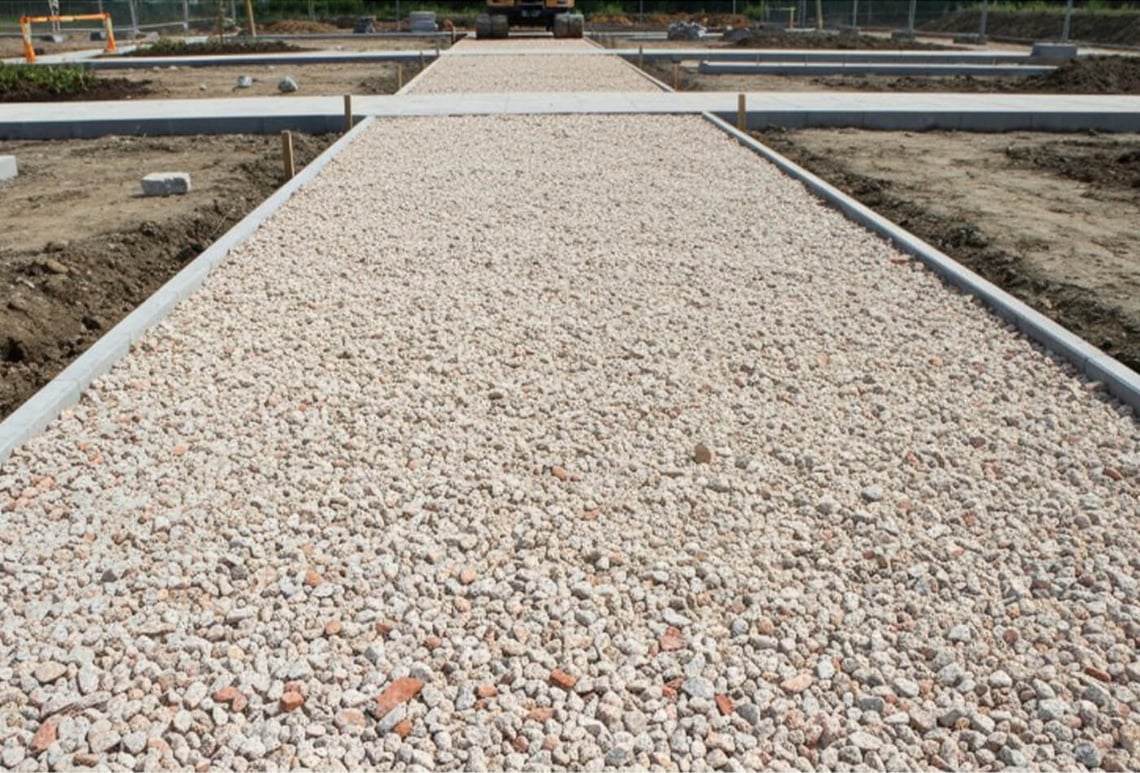
Crushed masonry aggregate is one of the least glamorous forms of material reuse and one of the most practically useful. Not every reuse application is about visual impact. Crushed brick, broken concrete, and ceramic waste are routinely processed into aggregate for sub-base layers, drainage courses, and permeable pathway materials. In landscaping and public-realm projects, recycled aggregate reduces the demand for quarried stone and can be specified with verifiable recycled content. Some designers go further, using larger broken concrete sections or ceramic fragments as decorative paving accents or mosaic elements in outdoor surfaces. The material is honest about what it is, which suits projects that want to make a point about material provenance. Works well in: Landscaping, public realm, car parks, drainage systems, garden paths. |
5. Repurpose warehouse-style glazing and metal-framed windows
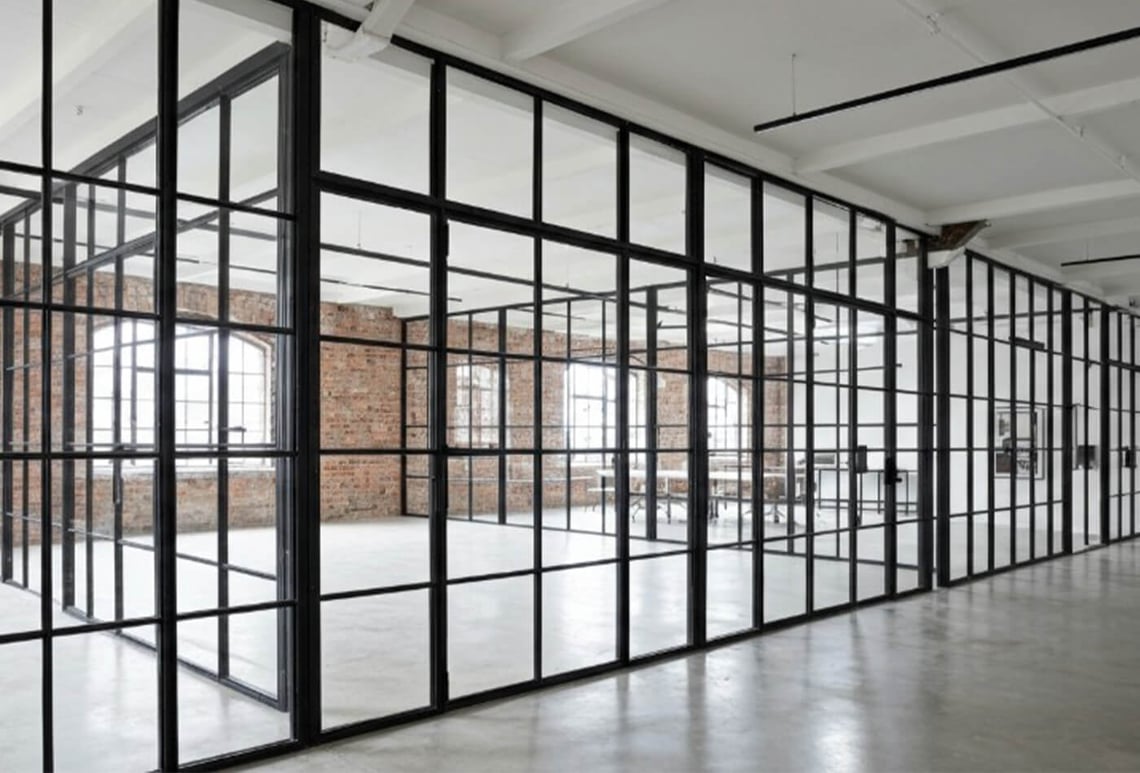
Steel-framed glazing divides space with real presence in a way that lightweight aluminium partitioning cannot approach.
Where original warehouse glazing is unavailable, the aesthetic has spawned a category of purpose-made Crittall-style steel glazing, but genuine reclaimed units carry a robustness and profile depth that reproductions rarely match. They also come with the marks of prior use that make them design assets rather than generic components. Works well in: Offices, studios, retail spaces, hospitality, residential extensions |
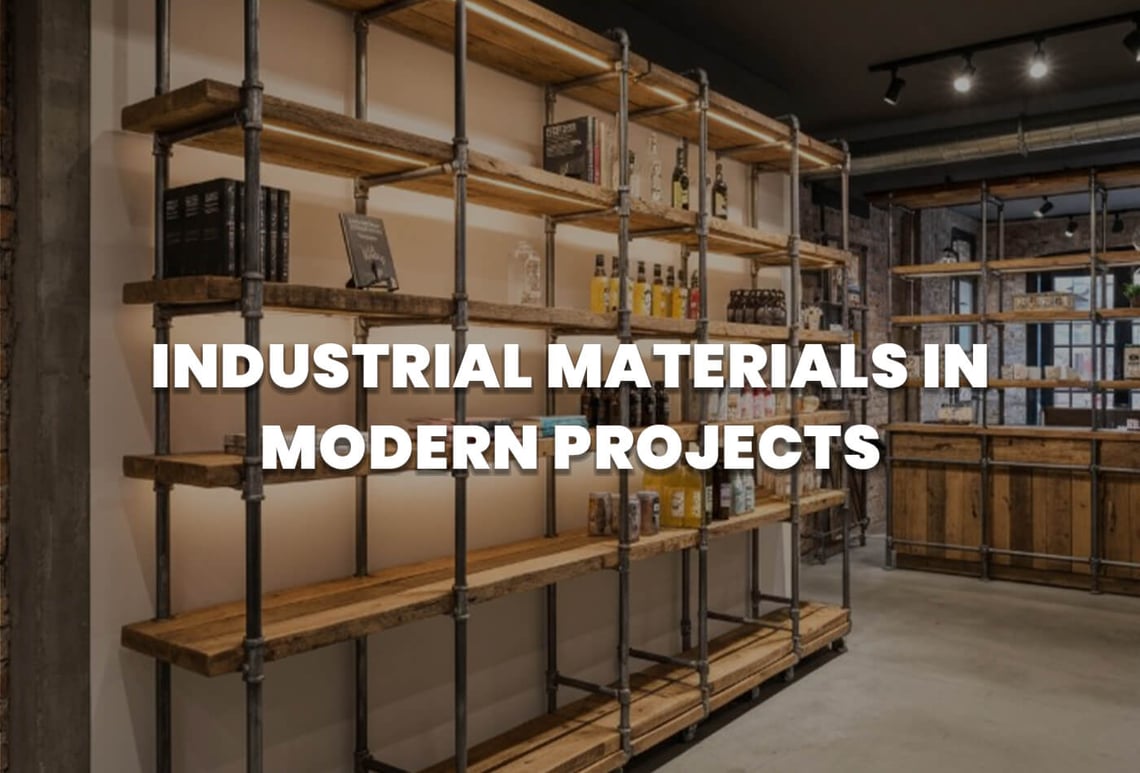
6. Convert salvaged piping and ducting into furniture and fittingsPipe-frame furniture is one of the most accessible industrial reuse ideas — the components are widely available, and the aesthetic scales from rough to refined.
Works well in: Retail, hospitality, studios, home interiors, and pop-up spaces. |
7. Reuse industrial mesh, grating, or perforated metal as screens
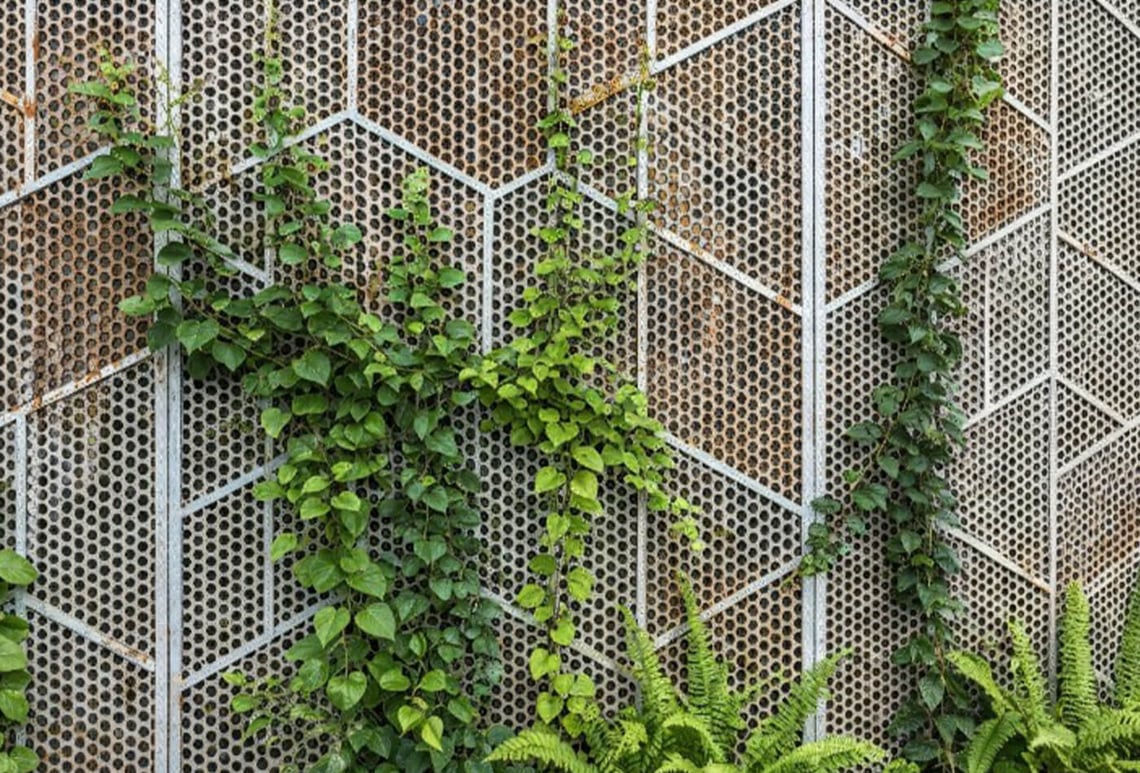
Perforated and mesh steel screens filter light and create visual interest in a way that solid panels cannot, while retaining genuine material weight. Industrial steel mesh, expanded metal, perforated sheeting, and floor grating all translate surprisingly well into architectural screens, privacy panels, balustrades, and garden partitions. The visual effect depends on perforation pattern and finish: raw or patinated steel reads as industrial; powder-coated or painted panels read as more refined. In garden and landscape projects, mesh screens also double as plant supports, creating a gradual softening effect as climbing plants establish. In interior applications, perforated metal as acoustic panelling or staircase balustrade infill adds both function and texture. Works well in: Gardens, balustrades, commercial exteriors, acoustic fit-outs, and staircases. |
8. Turn pallets into temporary or event-build furniture
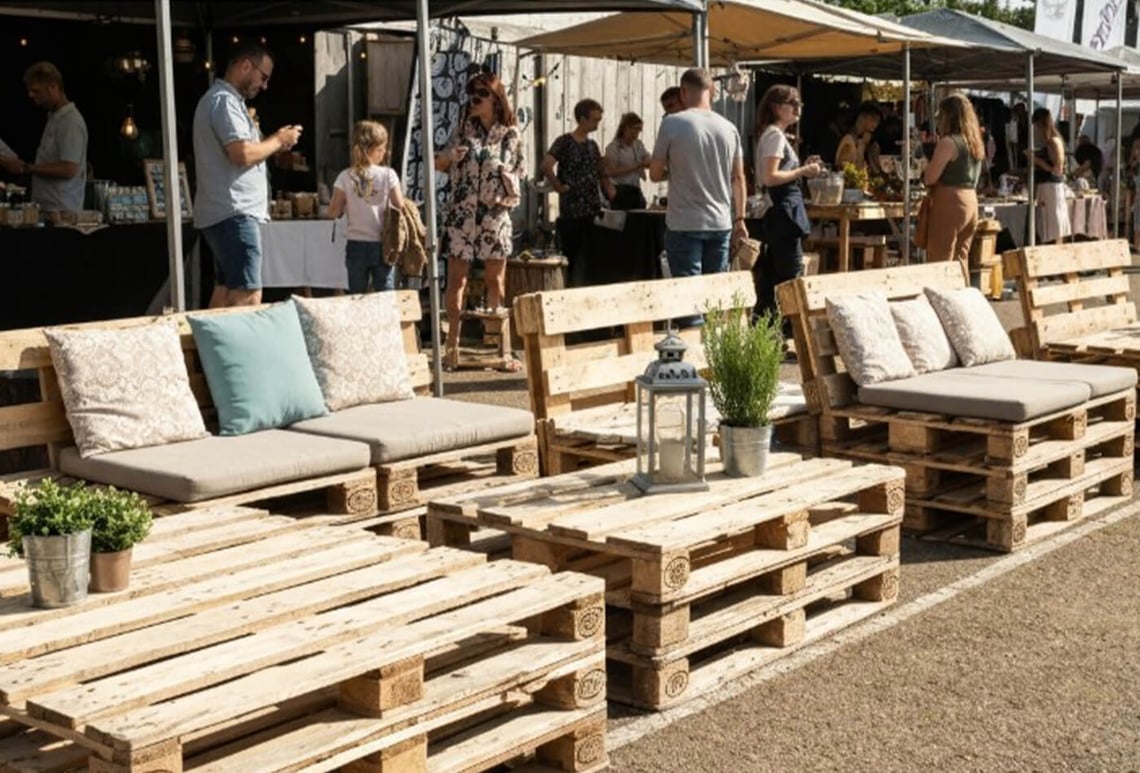
Pallet furniture works best when it is framed as intentional and temporary rather than as a permanent solution trying to look like something else.
The pallet-as-furniture aesthetic has been done enough that it can feel obvious if treated carelessly. The projects that make it work are ones with strong colour, a clear spatial logic, and a brief that fits the material. A pop-up market stall built from pallets is an honest and effective solution. A permanent bar interior built from pallets usually is not. Works well in: Events, pop-up retail, festivals, temporary outdoor spaces |
9. Use reclaimed stone or concrete elements in outdoor projectsReclaimed stone kerbs, setts, paving slabs, and large concrete elements removed from demolition projects have strong applications in landscape and public realm design. Their scale and material density give them a visual presence that poured concrete or cast paving does not achieve, and their prior life is evident in a way that adds authenticity rather than detracting from it.
Works well in: Public realm, gardens, landscaping, regeneration projects, and outdoor seating. |
10. Repurpose industrial doors, shutters, or panels as statement pieces
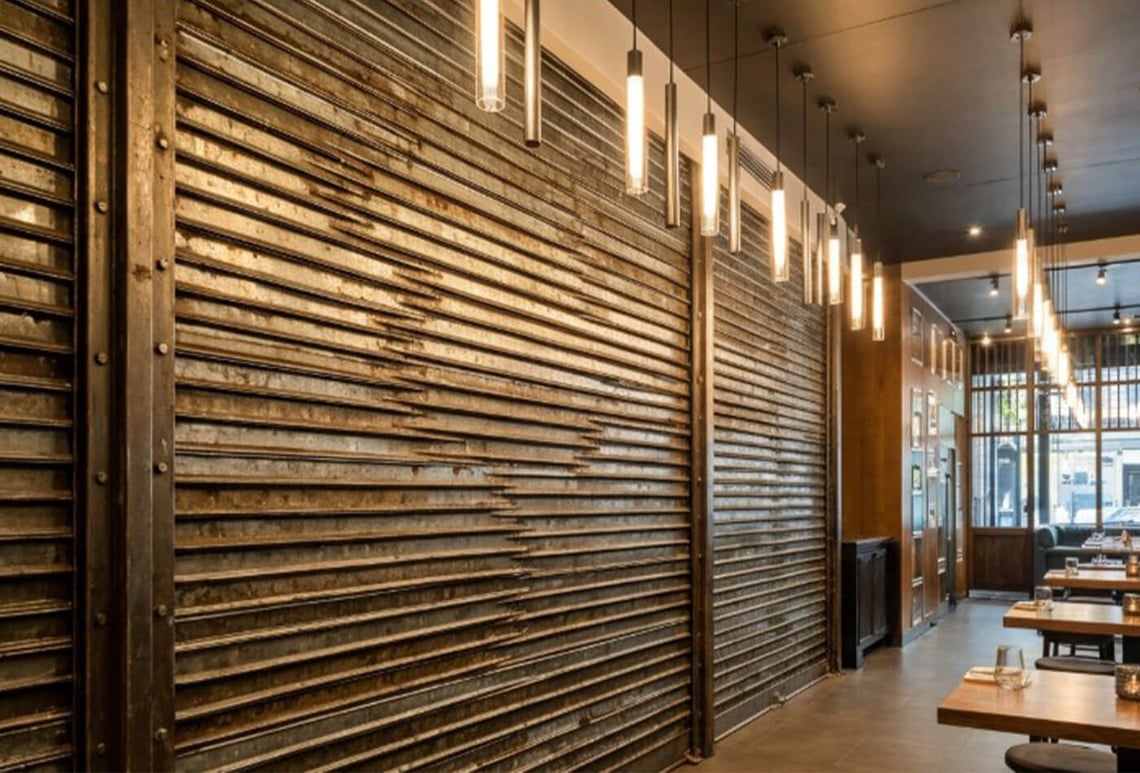
Large industrial doors and shutters work because they introduce scale into interiors in a way that most designed elements cannot. An oversized sliding factory door as a room divider, a set of repurposed industrial shutters as a bar backdrop, or salvaged metal panels as a retail wall system all work because they introduce material scale and history that the surrounding finishes cannot provide. The trick is restraint: one element of this kind is a feature. Several become a theme. Works well in: Bars, restaurants, retail, studios, and creative workspaces. |
11. Turn old tanks, drums, or vessels into planters or installationsLarge industrial vessels, oil drums, chemical tanks, and metal barrels have found a consistent role in garden, courtyard, and public-realm projects as oversized planters and sculptural elements. Their round or cylindrical forms contrast well with the geometry of hard landscaping, and the patination of aged steel develops a warm visual relationship with plant material over time.
|
12. Reuse factory or workshop lighting in contemporary interiorsFactory and workshop lighting, including large enamel-shaded pendants, explosion-proof fittings, cage-guarded bulkhead lights, and old machinist task lamps, has become a design staple in hospitality, residential, and commercial interiors. The original fittings carry a weight and material quality that reproduction versions approximate but rarely match.In practical terms, salvaged industrial lighting is worth specifying where the fitting needs to be both a light source and a visual object. A cluster of reclaimed factory pendants over a bar counter or kitchen island creates a deliberate focal point. The aged metal, visible hardware, and oversized proportions contribute in a way that a catalogue fitting with an industrial look does not.
|
13. Create modular spaces from repurposed shipping containers
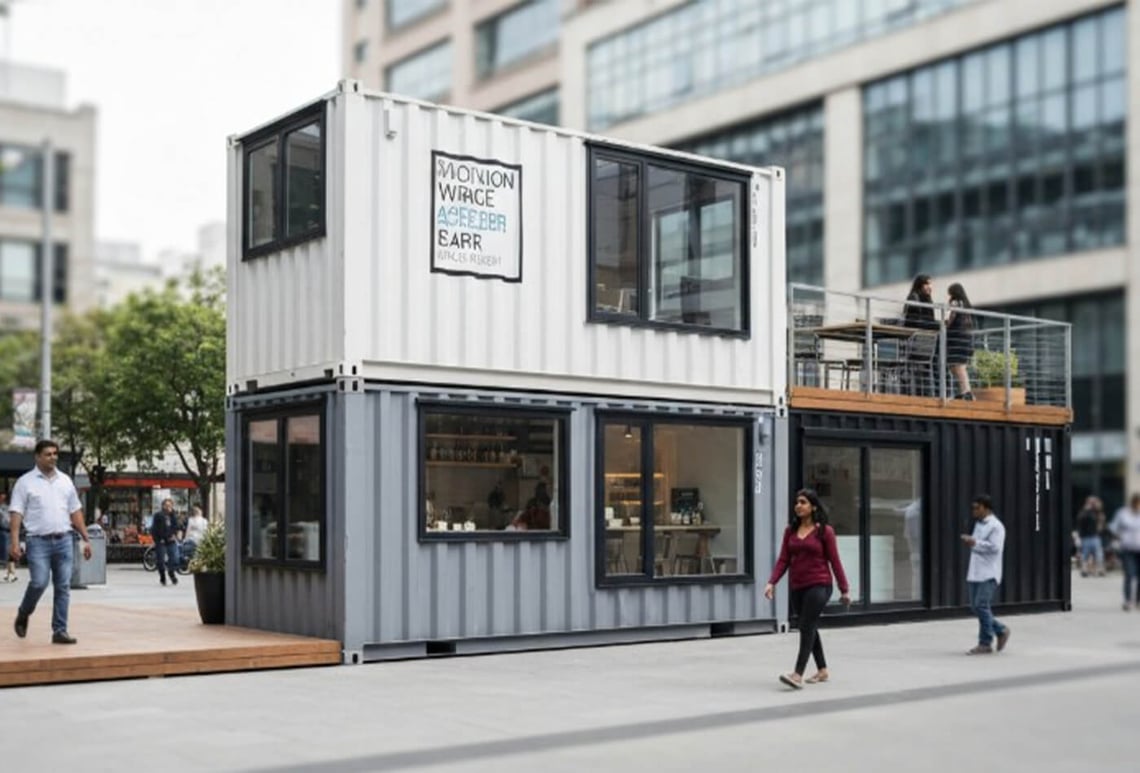
Containers work as modular structures because the engineering is already done. The starting point is a tested, durable shell rather than a blank site. Shipping containers represent one of the clearest examples of industrial reuse at a structural scale. They are designed to stack six high fully loaded and survive ocean voyages, which means the steel shell that arrives on site already has more structural integrity than most purpose-built single-storey structures. The range of applications is wide: pop-up retail units, site offices, workshop spaces, garden studios, and conversion-led homes have all used containers as their base structure. The material reuse case is strong: a container repurposed into a workspace has extended its useful life by decades and displaced the need for a new-build structure. Works well in: Pop-up retail, workspaces, garden offices, events, storage, and hospitality. |
14. Use salvaged materials in mixed-material office and retail fit-outs
The most convincing mixed-material fit-outs are the ones where the reused elements feel found rather than specified, even when they were specified very deliberately. Some of the strongest commercial interiors of the last decade have been built around combinations of reused materials: reclaimed timber shelving against exposed brick, steel framework alongside salvaged concrete surfaces, and vintage factory fittings in an otherwise minimal space. The common thread is that the reused elements do the visual work that new materials would need significant styling to achieve. In retail especially, material provenance has become part of brand communication. A shop fit-out built around reclaimed materials signals a set of values that matters to certain audiences in a way that a generic fit-out cannot. The reused material is not just a design choice; it is part of what the space is saying. Works well in: Retail, offices, hospitality, showrooms, brand-forward commercial spaces |
15. Integrate reused industrial materials into landscape and public-realm designLandscape and public-realm projects offer some of the most interesting applications for reused industrial materials, partly because the scale and weathering qualities of industrial materials translate well outdoors and partly because outdoor contexts tend to reward material honesty more than interior ones.
Works well in: Public realm, parks, regeneration projects, urban squares, commercial exteriors |
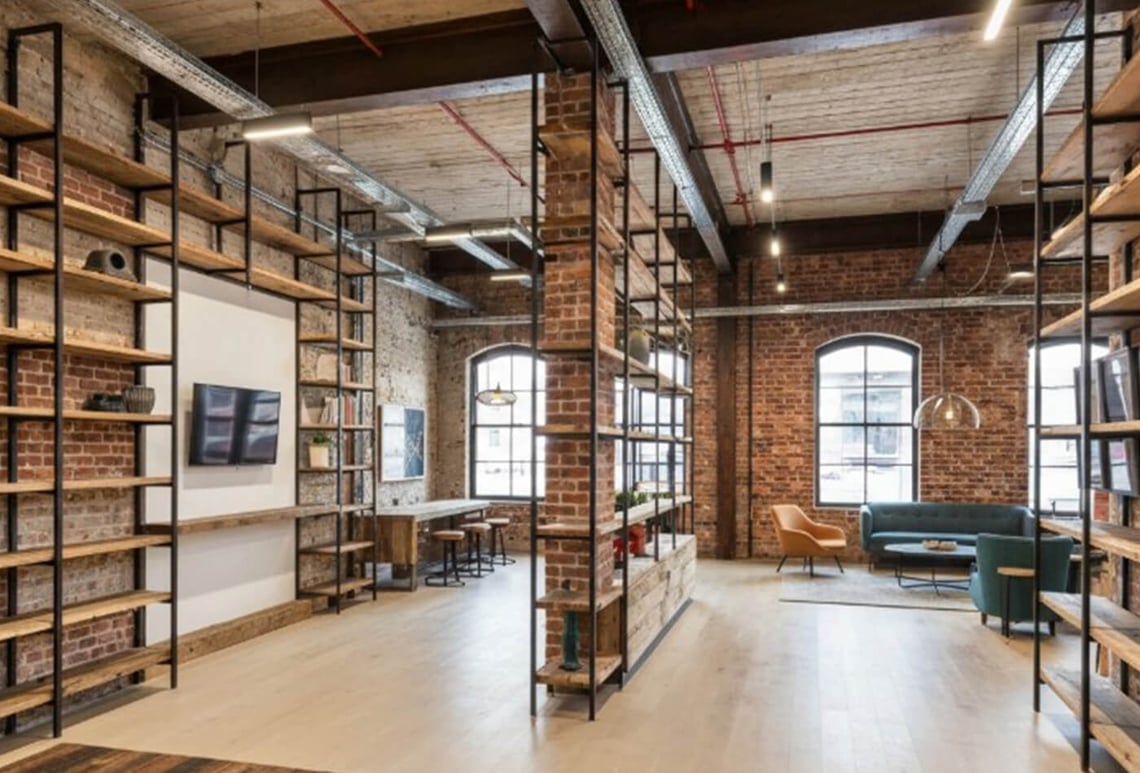
Which reused materials work best for different project types?
For homes and interiors
Reclaimed timber, salvaged brick, industrial lighting, and metal-framed glazing are the most consistently useful starting points. They work across a wide range of interior styles and are available in most urban markets. Timber, in particular, ages and adapts well in residential contexts.
For offices and retail
Reclaimed steel, industrial partitioning, salvaged factory doors, and mixed-material fit-out elements work well in commercial settings where visual identity and material storytelling are part of the brief. These are also the settings where the investment in sourcing and specifying reclaimed materials is easiest to justify commercially.
For outdoor and public-facing projects
Crushed masonry aggregates, large concrete and stone elements, containers, Corten steel, and industrial mesh all suit outdoor applications. They are robust enough to handle exposure and tend to improve rather than deteriorate as they weather, which makes them particularly well suited to public realm and landscape contexts.
What to consider before reusing industrial materials
The practical case for reuse is strong, but a few questions are worth working through before committing to a material:
Condition: Has the material been cleaned, assessed for structural suitability, and tested where relevant?
Compatibility: Does it suit the new application in terms of scale, weight, and weathering behaviour?
Preparation: Some reclaimed materials need treatment, de-nailing, or surface preparation before use
Safety: Older materials may contain substances, including lead paint or asbestos, that require proper handling
Source Documentation: For commercial projects, knowing where a material came from and how it was used matters
Availability: Reused materials are not available in unlimited quantities, so early sourcing and scheduling is important
Why reuse is about more than sustainability
The sustainability argument for reusing industrial materials is real and well-documented. But framing the case purely around environmental benefit undersells what reused materials actually do in a project.
Reclaimed materials create visual identity that new materials take decades to develop. They make spaces feel less generic, which matters in commercial contexts where differentiation is a genuine business need. They carry stories: the brick that was part of a Victorian mill, the steel beam that supported a factory floor for sixty years. That provenance contributes something that no material specification sheet captures.
The most interesting projects of the last decade that use reused industrial materials are not interesting because of their environmental credentials. They are interesting because the materials made the spaces better: more distinctive, more layered, and more connected to the contexts they sit in.
More material, more possibilities
Industrial material reuse covers a wide spectrum, from structural steel repurposed into architectural statements to crushed brick used as pathway aggregate. The common thread is that these materials still have useful life in them, and that using them in modern projects produces results that purely new-build approaches rarely achieve.
The best applications match material qualities to project needs with honesty. Reclaimed steel where strength and presence matter. Salvaged timber where warmth and grain depth are the point. Repurposed containers where modularity and structural integrity are assets. Industrial lighting where the fitting itself is part of the design.
In each case, the material is doing genuine work rather than being applied as decoration. That is what makes industrial reuse a design strategy rather than a style trend.
Frequently Asked Questions and Answers
What industrial materials can be reused in modern projects?
Reclaimed steel, salvaged timber, old brick, crushed concrete and ceramic aggregate, industrial glazing frames, pipework, mesh and grating, factory lighting, shipping containers, drums and vessels, and large stone or concrete elements all have strong applications in modern architecture, interiors, and landscaping.
Is reusing industrial materials only for large architectural projects?
No. Some of the most accessible applications are small-scale: pallet furniture for an event, pipe-frame shelving for a retail fit-out, salvaged industrial lighting for a residential kitchen. The scale of reuse can match the scale of the project.
Are shipping containers considered a reused industrial material option?
Yes. A shipping container repurposed as a workspace, storage unit, or retail structure is a practical example of structural industrial reuse. The container's engineered steel shell continues to perform structurally in its new application, which is a more complete form of material reuse than most decorative applications.
What are the benefits of reclaimed industrial materials?
Visual character and texture that new materials take decades to develop, structural over-engineering that leaves useful life remaining, reduced demand for new material production and design differentiation in commercial and public projects. The benefits are both environmental and aesthetic.
Which reused materials work best in outdoor projects?
Crushed masonry aggregates for sub-base and paving, reclaimed stone and concrete elements for seating and edging, Corten steel and industrial mesh for screens and structures, and shipping containers for modular outdoor space are all well-suited to outdoor and public-realm applications.