

Mastering Gneiss Pronunciation: A Simple Guide
GMS Kumar
Ever stumbled over the word 'gneiss' and wondered how to say it right? You're not alone. This rock has a name that can trip people up, but getting the pronunciation down is actually pretty straightforward. We're going to break it all down, from the tricky 'g' to the 'ei' sound, so you can talk about this cool metamorphic rock like a pro. No more guessing games – let's make sure you've got the gneiss pronunciation down pat.
Key Takeaways
- The 'g' in gneiss is silent, starting the word with an 'n' sound.
- The 'ei' in gneiss sounds like the 'ei' in 'height' or 'eight'.
- The final 'ss' is pronounced as a clear 's' sound, not a 'z'.
- Putting it together, 'gneiss' sounds like 'nice'.
- Practicing saying 'gneiss' in a sentence helps solidify the pronunciation.
Understanding Gneiss Pronunciation
Alright, let's break down how to say "gneiss." It's one of those words that looks a little tricky, but once you get the hang of it, you'll be saying it like a pro. It's a type of metamorphic rock, and knowing how to pronounce it is pretty important if you're talking geology or even just showing off some cool rock facts.
The 'G' in Gneiss: A Silent Start
First off, that 'G' at the beginning? It's completely silent. Yep, you can just ignore it. This isn't super common, but it happens in a few words. Think of words like 'gnat' or 'gnome' – the 'G' just hangs out there doing nothing. So, for 'gneiss,' we start right with the 'N' sound. It's like the 'G' decided to take a vacation and never came back.
The 'N' Sound in Gneiss
After the silent 'G', we get to the 'N'. This is a pretty standard 'n' sound, like the one you hear in 'no' or 'nice.' It's a straightforward sound, made by putting your tongue against the roof of your mouth just behind your teeth. So far, so good, right? We've got a silent 'G' followed by a regular 'N'.
The 'EI' Vowel Combination
Now for the part that often trips people up: the 'ei'. In 'gneiss,' this combination makes a long 'i' sound, like the 'i' in 'ice' or 'light.' It's not like the 'ei' in 'receive' or 'weight.' This specific 'ei' spelling making a long 'i' sound is a bit of an oddity, but it's consistent in this word. So, we're looking at a sound like /ɡnaɪs/.
Remember, the 'ei' here isn't like the 'ei' in 'eight' or 'weigh.' It's more like the 'i' in 'high.'
Here's a quick rundown:
- G: Silent
- N: Standard 'n' sound
- EI: Long 'i' sound (like in 'ice')
- SS: Standard 's' sound (like in 'hiss')
Putting it all together, you get a sound that rhymes with 'nice' or 'spice.' It's a single syllable word, and the emphasis is all on that one sound. If you're looking for more on how to pronounce geological terms, there are some great resources out there, like the Oxford Advanced Learner's Dictionary which has definitions and pronunciation guides for many words.
Decoding the 'EI' Sound
Alright, let's tackle the 'ei' part of gneiss. This is where things can get a little tricky because 'ei' doesn't always sound the same in English. Think about words like 'eight' or 'weigh' – the 'ei' there makes an "ay" sound. But in gneiss, it's different.
Common 'EI' Spellings and Pronunciations
The 'ei' combination is a bit of a chameleon in English. It can make a few different sounds, and sometimes it's just plain silent! Here are some common ways 'ei' shows up:
- "Ay" sound: Like in 'eight', 'freight', 'neighbor', 'reign', 'vein'.
- "Ee" sound: Like in 'seize', 'ceiling', 'conceit'.
- "Eye" sound: Like in 'height', 'stein'.
- "Eh" sound: Like in 'heifer'.
In gneiss, however, the 'ei' combination makes an "eye" sound, similar to the 'i' in 'ice'. This is a key point to remember.
Gneiss vs. Other 'EI' Words
It's helpful to compare gneiss with other words that use 'ei'. For instance, 'receive' uses 'ei' but sounds like "ee", while 'their' uses 'ei' but sounds like "eh". The word 'gneiss' stands apart with its "eye" sound. This is why just seeing 'ei' isn't enough; you have to learn the specific pronunciation for each word. It's a bit like learning irregular verbs in grammar – they don't always follow the usual patterns. You might find it helpful to look at how other geological terms are pronounced, like rula, to get a feel for specialized vocabulary.
The 'EI' in Loanwords
Sometimes, words borrowed from other languages keep their original pronunciation, and 'ei' can be part of that. For example, in some German words, 'ei' sounds like "eye". Since 'gneiss' is a geological term that originated in German, its pronunciation reflects that origin. This is why you won't find it sounding like 'eight' or 'ceiling'.
The 'ei' in 'gneiss' is a bit of an outlier compared to many common English words. It's a sound that often pops up in words borrowed from German, and it's pronounced like the "eye" in "my" or "sky". Don't let the spelling fool you into thinking it sounds like "ay" or "ee" as it does in words like 'eight' or 'ceiling'.
So, to recap, the 'ei' in gneiss is pronounced like "eye". Keep this in mind as we move on to the final part of the word.
Mastering the Final 'SS'

The 'SS' Ending in English Words
Lots of English words wrap up with a double 's'. Think about words like 'grass', 'kiss', or 'miss'. The sound these letters make is pretty consistent: a sharp, hissing 's' sound. It's not a drawn-out sound, but a quick, clear one. This ending is common and usually straightforward to pronounce. It's just a single 's' sound, repeated quickly.
Distinguishing 'SS' from Other Sibilants
English has a few sounds that sound a bit alike, often called sibilants. The 'ss' is one, but you also have 'c' (as in 'ice'), 'z' (as in 'buzz'), and 'x' (as in 'fox'). The key difference with 'ss' is that it's always voiceless – meaning your vocal cords don't vibrate when you make the sound. Compare it to a 'z' sound, where your throat buzzes. The 'ss' is just air passing through.
Here's a quick look:
| Spelling | Example | Pronunciation | Voiced? |
|---|---|---|---|
| ss | grass | /s/ | No |
| c | ice | /s/ | No |
| z | buzz | /z/ | Yes |
| x | fox | /ks/ | No |
Practice with Similar Endings
To really nail the 'ss' sound, try practicing words that end similarly but might have slight variations. This helps train your ear and your mouth. It's like learning to distinguish between similar colors – you need to look closely.
- Mass vs. Maze (Notice the 'z' sound in maze)
- Bless vs. Breeze (Again, the 'z' sound in breeze)
- Across vs. Ageless (The 'ss' in across is sharp, while 'less' in ageless is similar)
Sometimes, the spelling can be a bit tricky. You might see a single 's' at the end of a word that sounds like 'ss', like in 'bus'. Or, you might see 'ce' making an 's' sound, as in 'ice'. The 'ss' spelling is usually the most direct way to get that sharp, hissing sound. It's good to be aware of these variations, but for 'gneiss', we're sticking to the clear 'ss' sound.
Getting comfortable with these sounds will make words like gray gneiss much easier to say correctly. It's all about paying attention to those final sounds.
Putting It All Together: Gneiss Pronunciation
So, we've broken down the tricky parts of saying "gneiss." Now, let's put it all together so you can say it with confidence. It's not as complicated as it might seem at first glance.
Step-by-Step Gneiss Pronunciation
Here's a simple way to build up to the correct pronunciation:
- Start with the 'G': Remember, this 'G' is silent. Don't try to pronounce it at all. Think of it as just a placeholder letter.
- Focus on the 'N' sound: Move right to the 'N' sound. It's a standard 'n' sound, like in "no" or "nice."
- Tackle the 'EI' vowel: This is the part that trips people up. The 'ei' in "gneiss" sounds like the long 'a' sound in words like "say" or "rain." So, it's an "ay" sound.
- Add the final 'SS': The ending is a clear 's' sound, like in "hiss" or "kiss." It's not a 'z' sound.
Putting it all together, you get "nays." It's a single syllable, and the stress is naturally on that syllable.
Common Mistakes to Avoid
- Pronouncing the 'G': This is the most common error. Just let it go! It's silent.
- The 'EI' sound: Some people might try to say it like the 'ei' in "receive" (an 'ee' sound) or the 'ei' in "height" (an 'eye' sound). Neither is correct for "gneiss."
- Adding an extra syllable: "Gneiss" is a one-syllable word. Don't break it up into two parts.
The key is to treat the 'ei' as a diphthong that creates a single vowel sound, much like in other English words where this spelling combination appears, though its pronunciation can vary. For "gneiss," it's consistently the "ay" sound.
Using Gneiss in a Sentence
Here are a few examples to help you hear it in context:
- The geologist identified the rock as gneiss due to its distinct banding.
- "This is a beautiful sample of gneiss," she explained.
- Many metamorphic rocks, like gneiss, form under intense heat and pressure.
Gneiss Pronunciation in Context
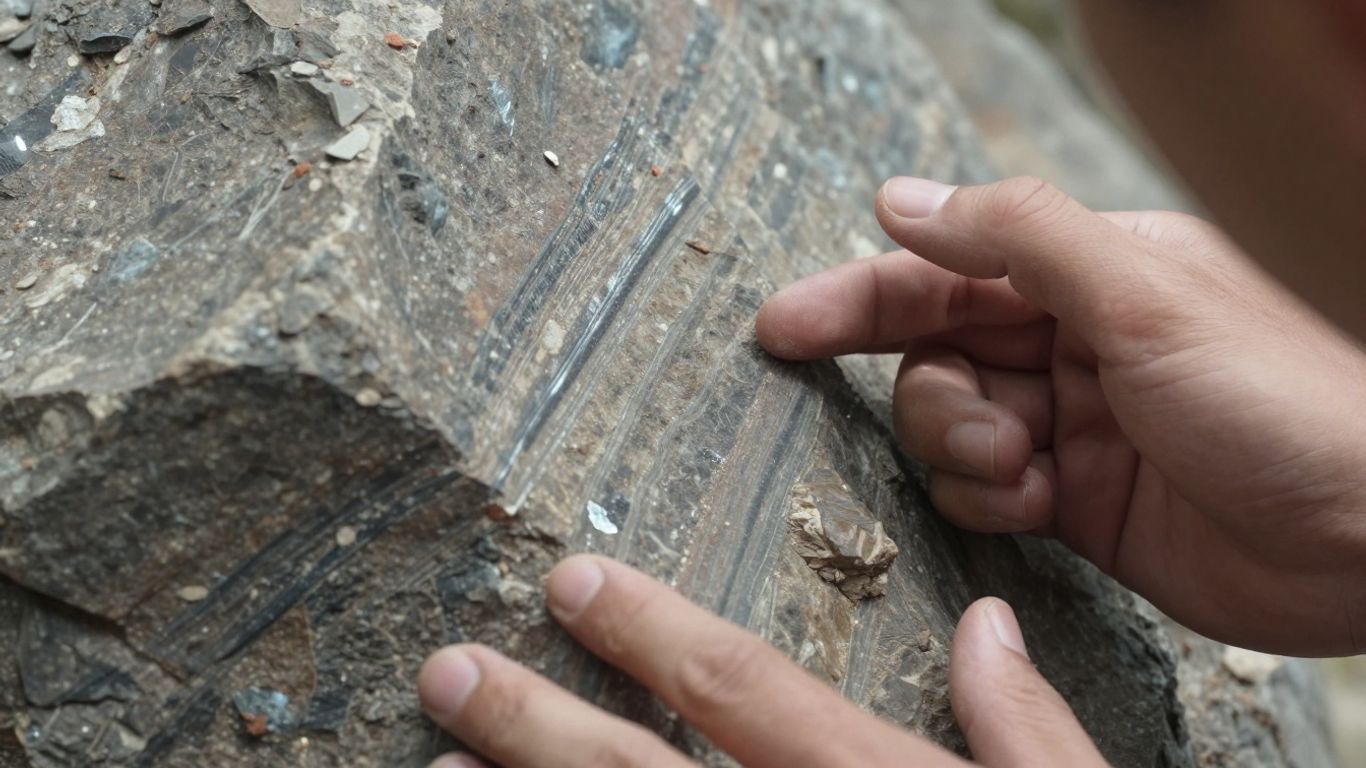
So, we've broken down the sounds of "gneiss" and practiced putting them together. But how does this word actually show up in the real world, and does that change how we say it? Let's take a look.
Geological Terminology and Gneiss
This word pops up a lot in geology. Gneiss is a type of metamorphic rock, meaning it's formed from other rocks that have been changed by heat and pressure deep inside the Earth. It's often found alongside other rocks like granite. When geologists talk about gneiss, they're usually pretty consistent with the pronunciation we've been practicing: "nice." It's a technical term, so precision matters. You won't typically hear variations in a professional setting.
Regional Variations in Pronunciation
While "nice" is the standard, language is always a bit fluid, right? In some educational contexts, especially historically, there was a strong emphasis on clear articulation for all words. For instance, old educational reports from places like Colorado in the late 1800s stressed the importance of pupils pronouncing words distinctly. This focus on clear enunciation means that while "nice" is the dominant pronunciation for gneiss, you might encounter slight differences in how people were taught to say it, though these are rare today for this specific word.
Tips for Confident Delivery
Feeling unsure about saying "gneiss"? Don't sweat it. Here are a few pointers to help you feel more comfortable:
- Practice the "n" sound: Make sure you're not trying to pronounce the "g." It's silent, remember? Focus on a clean "n" sound.
- Embrace the "ice" sound: The "ei" followed by "ss" creates a familiar "ice" sound, just like in the word "nice."
- Say it out loud: The best way to get confident is to just say the word. Try it a few times on your own, then maybe with a friend.
Sometimes, the simplest approach is the most effective. Don't overthink it. Focus on the core sounds, and you'll get it right.
Remember, pronunciation is about clear communication. By understanding the context and practicing the sounds, you'll be saying "gneiss" like a pro in no time.
So, That's Gneiss!
Alright, so we've gone over how to say 'gneiss'. It's not as tricky as it looks, right? Just remember that 'g' is silent, and it sounds like 'nice'. It's one of those words that can trip you up if you're not careful, but now you know. Keep practicing it, and soon it'll just roll off your tongue. Knowing how to pronounce words like this can make a big difference when you're talking about rocks or even just trying to sound smart. So go out there and use your new skill!
Frequently Asked Questions
What's the trick to saying 'Gneiss' correctly?
It's simpler than it looks! The 'G' is silent, like in 'gnat.' Then, you say 'nice.' So, it sounds like 'nice.'
Why is the 'G' in 'Gneiss' silent?
That's a great question! In many words that come from older languages, like Greek or Latin, certain letters became silent over time. The 'G' before an 'N' at the start of a word is often silent in English, just like in 'gnat' or 'gnaw'.
How do I pronounce the 'ei' part?
The 'ei' in 'Gneiss' sounds just like the 'ei' in 'height' or 'eight.' It makes a long 'i' sound, like the 'i' in 'ice.'
Are there other words that sound like 'Gneiss'?
Yes! Words like 'reign,' 'vein,' and 'eight' all have that same 'ei' sound. It's a common sound pattern in English, even though the spelling can change.
What does 'Gneiss' mean?
'Gneiss' is a type of rock! It's a really common rock found all over the world, and it's formed when other rocks get squeezed and heated up deep inside the Earth.
Is the pronunciation the same everywhere?
Mostly, yes! The standard way to say 'Gneiss' is 'nice.' While accents can differ slightly, this pronunciation is widely understood, especially when talking about rocks.


