

Understanding Basalt Formation: A Deep Dive into How Basalt Is Formed
GMS Kumar
Ever wondered about those dark, tough rocks you see sometimes, especially near the coast or in old volcanic areas? They're usually basalt, and they're a pretty big deal geologically. Basalt is everywhere, from the ocean floor to faraway planets. So, how is basalt formed? It all comes down to hot, molten rock from deep inside the Earth. This article breaks down the basics of basalt, where it shows up, and what makes it tick.
Key Takeaways
- Basalt is a common, dark-colored volcanic rock that forms from the quick cooling of lava rich in iron and magnesium.
- It's primarily found where tectonic plates pull apart, like mid-ocean ridges, and over hotspots in the ocean.
- Basalt also forms on land from large volcanic eruptions, sometimes creating distinct column shapes.
- The rapid cooling of basaltic lava prevents large crystals, giving it a fine-grained texture.
- Basalt plays a major role in shaping landscapes, including ocean floors, islands, and even coastal features.
Understanding Basaltic Lava
The Nature of Basaltic Lava
Basaltic lava is pretty common stuff when it comes to volcanic activity. It's what you'll find spewing out of many volcanoes around the world. What makes it distinct is its composition. Think low silica, but a good amount of iron and magnesium. This makes it quite fluid, meaning it doesn't just sit there; it likes to move. This fluid nature is key to how it spreads out and forms the landscapes we see.
Because it's so fluid, basaltic lava can travel pretty far from its source. This allows it to create vast, wide fields and even large plateaus. It's not usually a thick, sticky mess like some other lavas. Instead, it flows more like a river, sometimes at surprisingly high speeds. For instance, recent eruptions in Iceland produced tholeiitic basaltic lavas that moved quickly across large areas.
Composition and Flow Characteristics
So, what's actually in this stuff? Basaltic lava is primarily made up of minerals like pyroxene, olivine, and plagioclase. The percentages can vary a bit, but generally, you're looking at about 45% oxygen, 25% silicon, 12% aluminum, 8% iron, and 6% calcium, with smaller bits of sodium, magnesium, and potassium. This mix gives it that characteristic dark color.
Here's a quick rundown of its flow:
- Silica Content: Low (typically less than 52%)
- Iron & Magnesium: High
- Viscosity: Low (flows easily)
- Temperature: High (usually between 1,000°C and 1,200°C)
- Flow Speed: Can be quite fast, covering large distances
This low viscosity means that when volcanic gases are present, they can escape more easily. However, if the lava cools quickly, these gas bubbles can get trapped, creating a porous texture known as vesicular basalt. This is how rocks like scoria form, which are essentially gas-rich versions of basalt. The trapped bubbles are called vesicles.
The way basaltic lava behaves, especially its ability to flow quickly and cover large areas, is a major factor in shaping the Earth's surface. It's responsible for everything from the ocean floor to volcanic islands and expansive lava plateaus.
Where Basalt Forms
Basalt isn't just some random rock; it pops up in some pretty specific and dramatic geological settings. Think of it as Earth's way of showing off its internal heat and movement. Most of the basalt you'll find is churned out at tectonic plate boundaries, especially where the plates are pulling apart.
Oceanic Plate Boundaries
This is where the real action is for basalt. Imagine vast underwater mountain ranges, like the Mid-Atlantic Ridge. Here, magma from the Earth's mantle constantly oozes up to fill the gap as tectonic plates drift away from each other. This molten rock then cools quickly in the ocean water, forming new seafloor. It's a continuous process, happening far below the surface, and it's responsible for the bulk of the basalt on our planet. These underwater eruptions often create pillow-shaped formations as the lava solidifies.
Oceanic Hotspots
Then there are the hotspots. These are areas where plumes of super-hot mantle material rise up, punching through the crust regardless of plate boundaries. Hawaii is the classic example. As the tectonic plate moves over a stationary hotspot, a chain of volcanic islands forms. Each island is essentially a pile of basalt lava that has erupted over thousands, or even millions, of years. The sheer volume of lava from these hotspots can create massive landmasses.
Continental Volcanic Activity
Basalt doesn't just stick to the oceans, though. It can also erupt on land, often through large fissures or vents. When this happens, especially during prolonged eruptions, it can create vast plains or plateaus of basalt. Think of places like the Columbia Plateau in North America. These continental eruptions can pour out enormous amounts of lava, covering huge areas and building up thick layers of rock over time. These extensive lava flows are a testament to the immense power lurking beneath the Earth's surface.
Basalt formation is intrinsically linked to the planet's internal heat engine. Whether it's the slow, steady spread of new seafloor at mid-ocean ridges or the fiery bursts from a hotspot, the process involves molten rock rising from the mantle and cooling relatively quickly at the surface. This constant geological activity shapes our planet in profound ways, from the ocean depths to towering volcanoes.
The Process of Basalt Formation
So, how does all this dark, dense rock actually come to be? It all starts deep within the Earth, where conditions are pretty wild. Think intense heat and pressure. When molten rock, or magma, finds its way towards the surface, that’s where the magic of basalt formation really kicks off.
Magma Ascent and Cooling
Magma that eventually becomes basalt originates from the Earth's mantle. It's less dense than the surrounding rock, so it tends to rise. This journey upwards can take a long time, but once it gets close to the surface, or even erupts as lava, things speed up. The rate at which this molten rock cools is the biggest factor in determining the final rock's texture. When lava hits the cooler air or water, it loses heat really fast. This rapid cooling is what prevents large crystals from forming.
Rapid Cooling and Fine Grains
Because basaltic lava cools so quickly, the minerals within it don't have much time to grow into big, chunky crystals. Instead, they form tiny crystals that are hard to see with the naked eye. This gives basalt its characteristic fine-grained, or aphanitic, texture. It’s a stark contrast to rocks formed from magma that cools slowly deep underground, which end up with much larger crystals. This quick solidification is key to understanding basaltic lava cooling.
The Role of Pressure and Temperature
While rapid cooling is the main event at the surface, the conditions underground also play a part. The initial high temperatures and pressures in the mantle are what allow the rock to melt in the first place. As the magma rises, the pressure decreases, which helps dissolved gases to come out of solution, forming bubbles. If this happens during cooling, it can lead to rocks with lots of little holes, called vesicles. Sometimes, changes in temperature during eruptions can also affect how fast the lava cools, influencing the final rock structure. Temporal factors really matter in these geological processes.
The journey from molten magma to solid basalt is a race against time. The faster the cooling, the finer the grains. This simple principle dictates much of basalt's appearance and properties, shaping everything from volcanic islands to the ocean floor.
Key Characteristics of Basalt
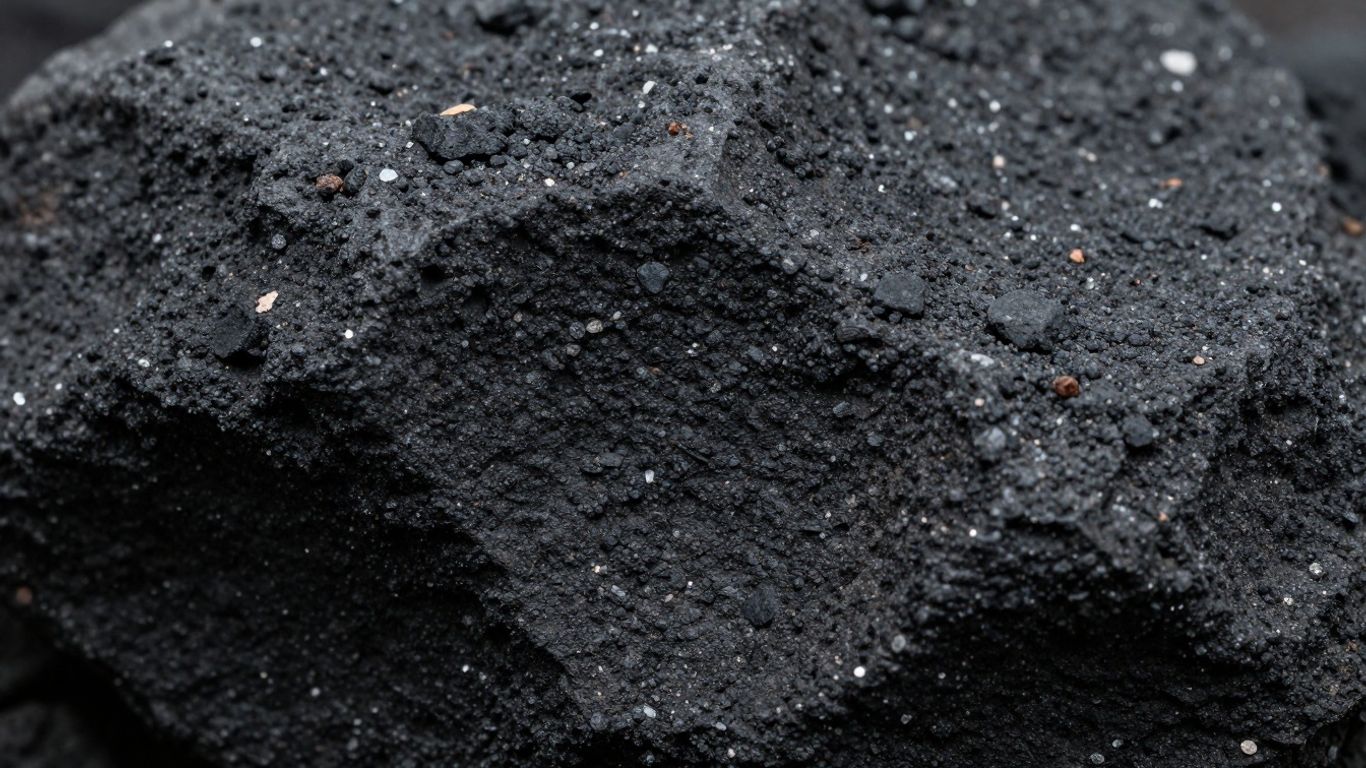
So, what makes basalt, well, basalt? It's not just any old rock; it's got some pretty distinct features that tell us a lot about how and where it formed.
Fine-Grained Texture
One of the first things you'll notice about basalt is its texture. It's usually really fine-grained, meaning if you look closely, you won't see many individual crystals with the naked eye. This happens because the lava it comes from cools down super fast, often when it hits the air or water. There just isn't enough time for big crystals to grow. Think of it like making candy – if you cool it quickly, you get small sugar crystals, but if you let it cool slowly, you get bigger ones. Basalt is the fast-cooling candy of the rock world.
Color and Mineral Content
Basalt is typically dark-colored, ranging from a deep grey to black. This color comes from its mineral makeup. It's rich in iron and magnesium, which are elements that give it that darker hue. You'll often find minerals like olivine, pyroxene, and plagioclase feldspar in basalt. Because it's packed with these heavier elements, basalt is also denser and heavier than many other types of igneous rocks. It's often called a "mafic" rock, which is a nod to its magnesium and iron content.
Here's a quick look at what's generally inside:
| Element | Approximate Percentage by Weight |
|---|---|
| Oxygen | 45% |
| Silicon | 25% |
| Aluminium | 12% |
| Iron | 8% |
| Calcium | 6% |
| Others | Trace amounts |
Columnar Jointing
Sometimes, when basalt lava cools, it cracks in a really neat way. This process is called columnar jointing. As the lava solidifies and shrinks, it forms these amazing, often hexagonal, columns that look almost like they were carved by an artist. You can see incredible examples of this all over the world, like at the Giant's Causeway. It's a striking visual reminder of the forces at play during volcanic activity.
These columns aren't just pretty; they're a direct result of the physical stresses within the cooling lava. The way the cracks propagate and meet dictates the final shape and arrangement of the columns, creating geometric patterns in the landscape.
Basalt's durability and resistance to weathering make it a key player in shaping geological features, especially along coastlines. Its dense structure and mineral composition mean it stands up well against the elements, contributing to the longevity of the landforms it creates.
Basalt's Role in Geological Landscapes
Ocean Floor and Islands
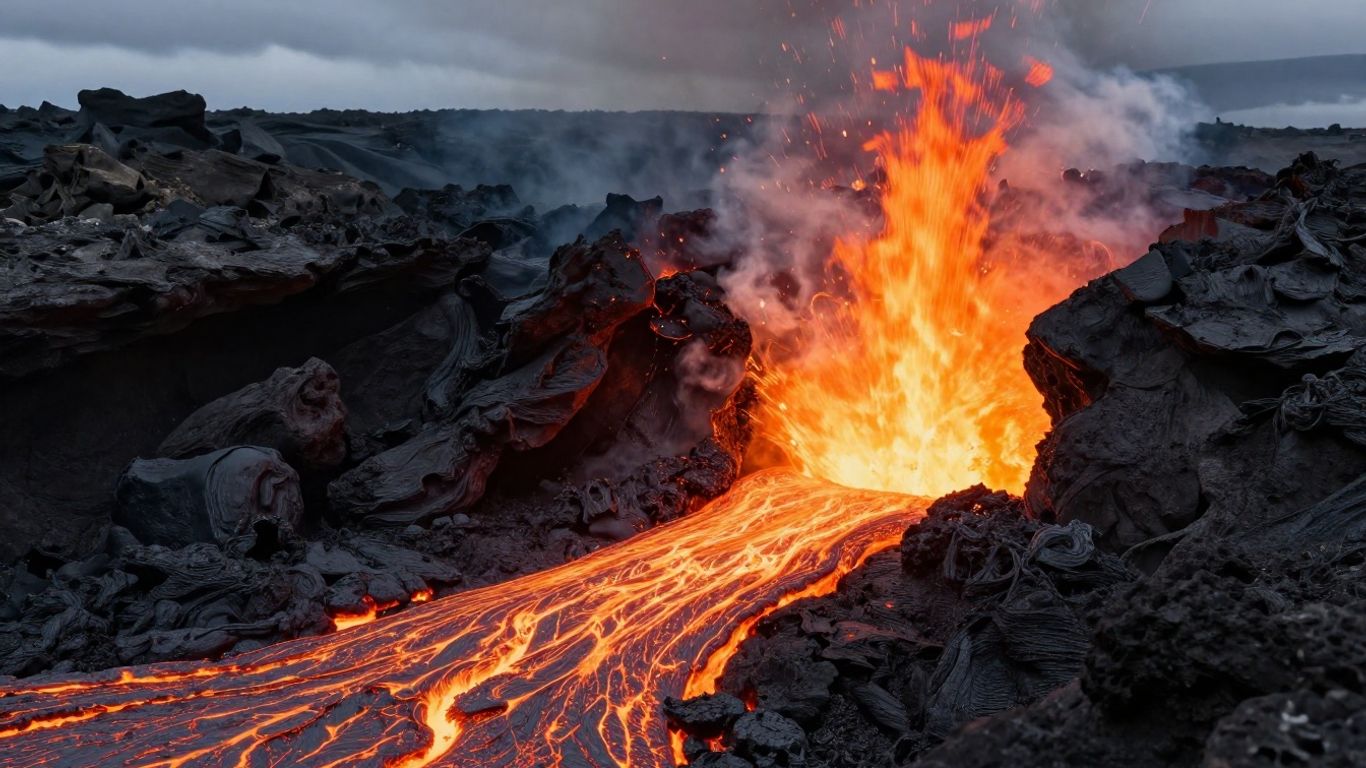
Basalt is the rock that makes up most of the ocean floor. Seriously, over 90% of it is basalt! When tectonic plates pull apart, magma from the Earth's mantle rises up to fill the gap. This magma is basaltic, and it cools quickly in the ocean water to form new oceanic crust. Think of it as the planet constantly rebuilding itself from the bottom up. This process is also how volcanic islands, like Hawaii, are formed. Over millions of years, repeated eruptions build up layers of basalt, eventually poking above the sea surface. It's a slow but steady process that shapes vast underwater mountain ranges and creates new land.
Continental Plateaus
Sometimes, basalt doesn't just form islands or the ocean floor. It can also create massive, flat-topped mountains called plateaus. This happens when huge volumes of basaltic lava erupt from fissures in the Earth's crust, spreading out over enormous areas. These events, known as flood basalt eruptions, can cover thousands of square miles. The Columbia Plateau in North America is a prime example, formed by countless lava flows over millions of years. These plateaus are often quite fertile because the basalt weathers down into rich soil over time, making them great for agriculture.
Coastal Features
Basalt plays a starring role in shaping coastlines too. When lava flows into the ocean, it cools rapidly, forming distinctive shapes. You'll often see dramatic cliffs, sea stacks, and wave-cut platforms made of basalt. The famous Giant's Causeway in Northern Ireland is a stunning example of columnar basalt, formed as lava cooled and contracted. Even the dark sand on some beaches is often the result of basalt being broken down by the waves. Its resistance to erosion makes basalt a sturdy guardian of the coast, but its eventual breakdown also contributes new material to the shore.
Here are some common coastal features influenced by basalt:
- Volcanic islands
- Dark sand beaches
- Basalt cliffs and sea stacks
- Columnar jointing formations
The interaction between molten basalt and the ocean is a powerful force, creating some of the most striking geological formations found along our planet's edges. The rapid cooling leads to unique textures and structures that stand as testaments to volcanic activity meeting the sea.
The Basalt Rock Cycle
So, we've talked about how basalt forms, right? Mostly from lava cooling down. But what happens to it after that? Well, it's part of a much bigger, slower story – the rock cycle. Think of it as Earth's way of recycling its own building materials.
Mantle Upwelling and Crust Formation
This is where it all starts, deep down. Hot stuff from the Earth's mantle, called magma, pushes its way up. When this magma reaches the surface, especially in places like mid-ocean ridges or over hotspots, it erupts as lava. As this lava cools and solidifies, it forms new basaltic crust. This is how the ocean floor gets made, layer by layer, over millions of years. It's a constant process of creation, pushing older crust away.
Subduction and Recycling
But what goes up must eventually come down, geologically speaking. When tectonic plates move, older, denser basaltic crust can get pushed beneath another plate. This process is called subduction. As the basaltic crust sinks deeper into the Earth, the intense heat and pressure start to break it down. Eventually, it melts back into magma, ready to rise again and start the cycle anew. This continuous loop of creation and destruction is what keeps our planet's geology dynamic.
It's pretty wild to think about, isn't it? The very ground beneath the oceans, which seems so permanent, is actually being constantly formed and then reabsorbed over vast stretches of time. This cycle is a key part of understanding how Earth's crust is shaped and reformed.
Here's a simplified look at the journey:
- Mantle Upwelling: Hot magma rises from deep within the Earth.
- Eruption & Cooling: Magma erupts as lava and cools to form basalt.
- Crust Formation: New basaltic crust is created, often on the ocean floor.
- Subduction: Older basaltic crust is pulled back down into the mantle.
- Melting & Re-emergence: The basalt melts, becoming magma again, ready to rise.
The basalt rock cycle isn't just about basalt itself; it's a fundamental part of how the Earth's surface is constantly being reshaped. It connects the deep interior of the planet with the crust we see, influencing everything from volcanic activity to the very shape of continents and oceans over eons. It’s a slow, powerful dance of creation and recycling.
Wrapping Up Basalt's Story
So, we've taken a good look at how basalt comes to be. It's pretty wild to think about this dark, common rock forming in so many different places, from the bottom of the ocean to volcanic mountains. Whether it's bubbling up at a mid-ocean ridge, erupting from a hotspot, or cooling down after a continental volcano, basalt is constantly being made. It's a huge part of our planet's surface and even other worlds. Understanding where it comes from helps us appreciate the dynamic nature of Earth and how these processes shape the landscapes we see, like those dramatic coastlines. It’s a reminder that the ground beneath our feet has a pretty interesting history.
Frequently Asked Questions
What exactly is basalt, and how does it form?
Basalt is a dark-colored, fine-grained volcanic rock. It forms when lava that is rich in iron and magnesium erupts from a volcano and cools down very quickly. This fast cooling prevents large crystals from forming, giving basalt its smooth texture. Think of it like pouring hot chocolate into a cold glass – it hardens fast!
Where can we find most of the basalt on Earth?
The vast majority of basalt is found deep under the ocean. It makes up the ocean floor! It also forms along the cracks where tectonic plates pull apart in the middle of the oceans, creating underwater mountain ranges. You can also find basalt on islands formed by volcanoes, like Hawaii, and in large areas on land called plateaus.
Does basalt only form in the ocean?
No, basalt can also form on land. When volcanoes erupt on continents, the lava that flows out can cool to form basalt. Sometimes, these eruptions happen over long periods, creating tall stacks or columns of basalt rock.
What makes basalt have a fine-grained texture?
The texture of basalt is fine-grained because the lava it comes from cools down very quickly. When lava cools rapidly, the minerals inside don't have enough time to grow into big crystals. Instead, they form tiny crystals that are packed closely together, making the rock look smooth and fine-grained.
What are those cool hexagonal columns sometimes seen in basalt?
Those amazing columns are called columnar jointing. They form when a thick flow of basalt lava cools and shrinks. As it shrinks, it cracks, and these cracks often form in a hexagonal pattern, like a honeycomb. It's a natural way for the rock to relieve stress as it solidifies.
What is basaltic lava like?
Basaltic lava is quite fluid, meaning it's not super thick and sticky. It has less silica than other types of lava and is packed with iron and magnesium. Because it's so fluid, it can travel long distances from where it erupts, creating wide, flat areas or even building up islands over time.


