Table of Contents
- What Are the Benefits of Limestone Kitchen Worktops?
- Limestone Worktop Variations
- Is Limestone Durable Enough for a Kitchen?
- Limestone Worktop Comparison with Other Surfaces
- How to Choose the Right Supplier and Installation Service
- Requesting a Sample Before You Buy
- How Much Does a Limestone Kitchen Worktop Cost?
- Conclusion
- Frequently Asked Questions and Answers
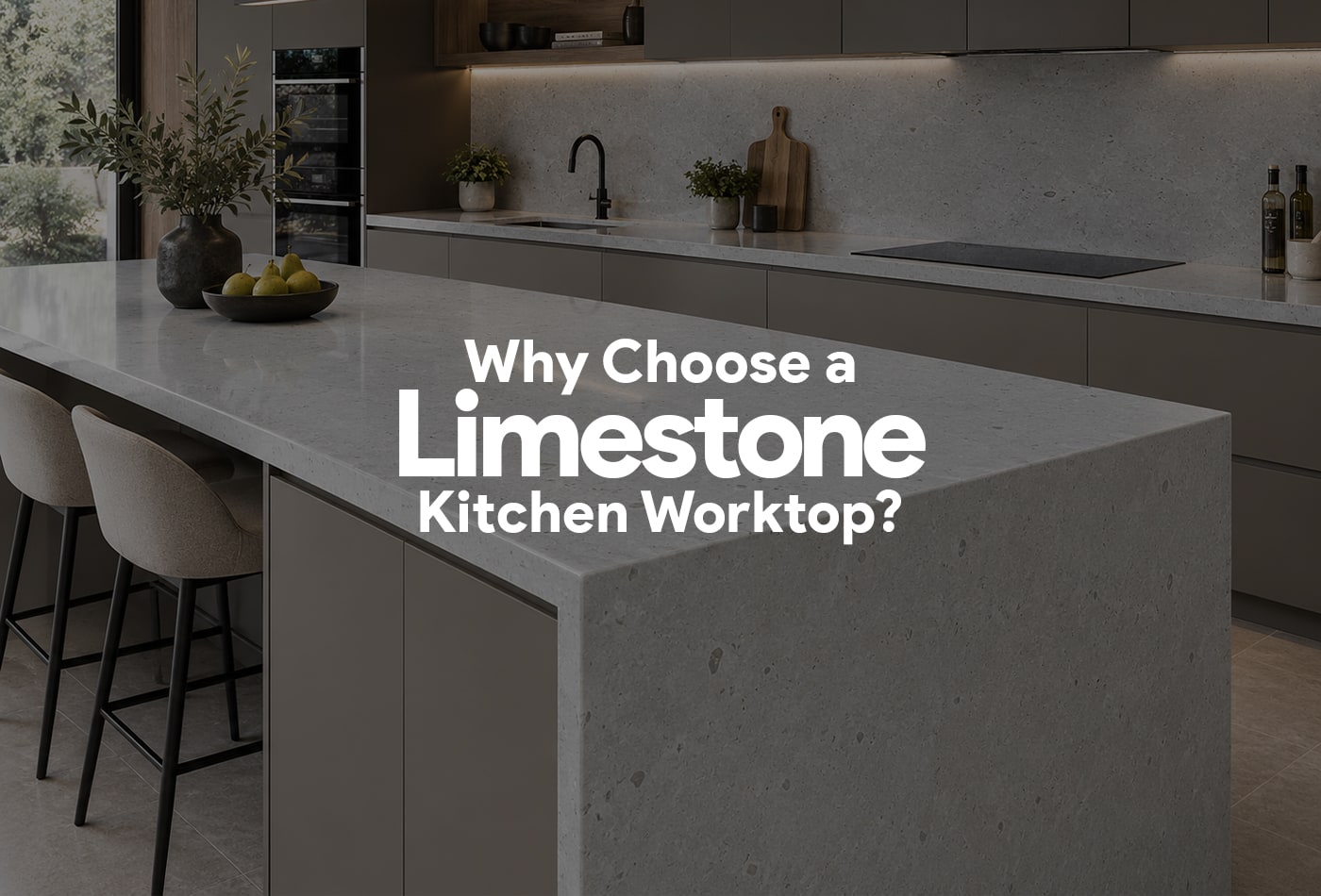
When choosing the best type of kitchen worktop, Homeowners should consider appearance, durability, maintenance requirements and cost when choosing a worktop. A limestone kitchen worktop will provide the natural stone surface with light colours. This versatile type suits into traditional, country style and modern kitchens, providing a natural alternative to the other materials. However, limestone is relatively soft and porous, making it more susceptible to scratches, stains and surface damage, so it requires careful maintenance.
Potential buyer should consider the pros and cons of a limestone kitchen worktop, including the benefits and drawbacks of the available finish, the required maintenance and the installation process. This article will provide more information to help buyers identify what to consider when selecting this material and how to choose a reliable supplier with the required expertise.
You can also read: Lime Stone - What Is It? - A Detailed Description
What Are the Benefits of Limestone Kitchen Worktops?
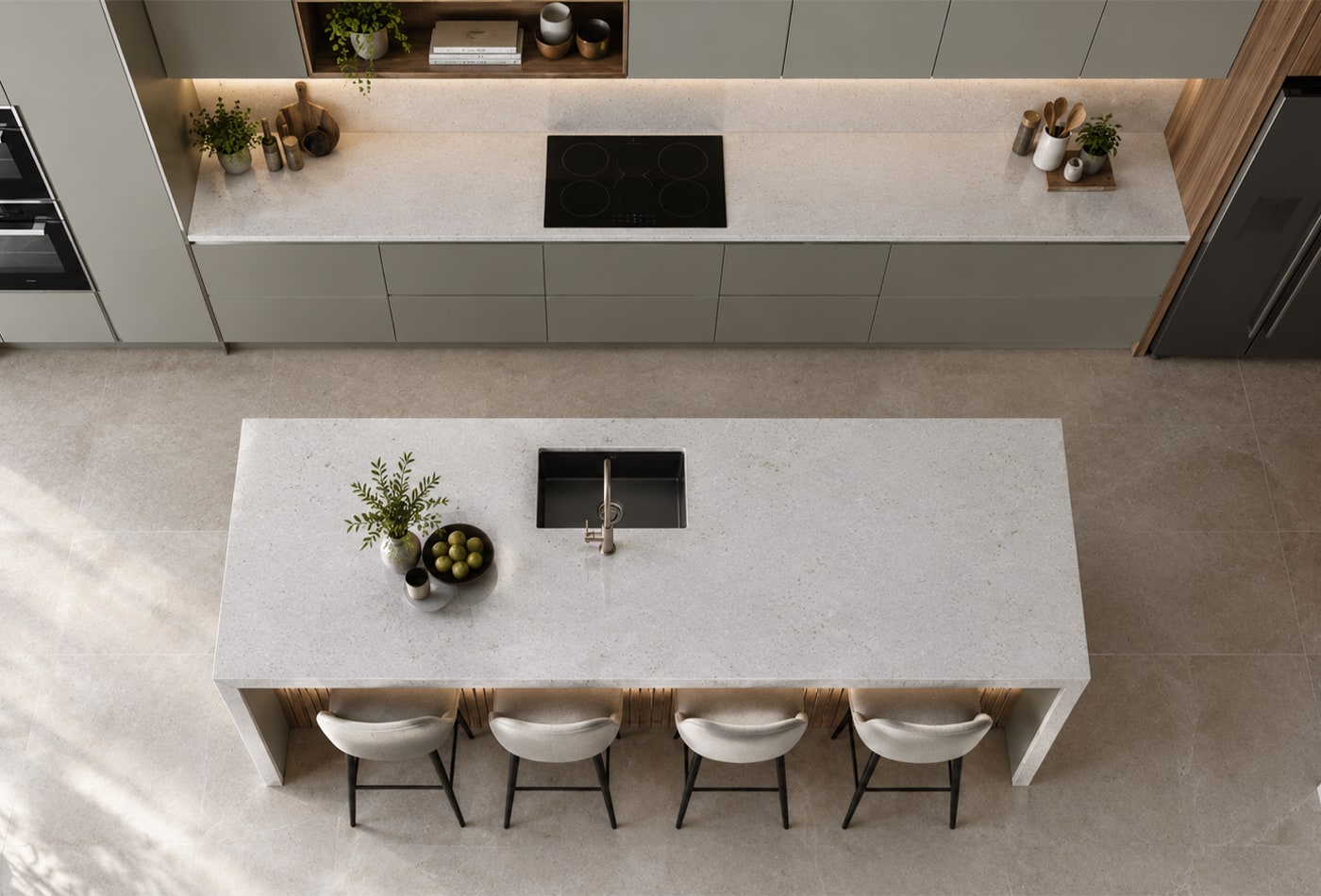
The natural beauty of a limestone kitchen worktop is often the main reason for selecting it. Unlike the man-made materials, this product will have different shades and veining, which will give unique character to every slab. The limestone worktops can be found in an array of natural colours from classic creamy white, through beige to grey. The neutral colours will help to blend the furniture made of wood, paint kitchen cabinets, and natural floor tiles. In addition, this option is ideal for those who want light colours without the dramatic veining associated with marble. Each limestone kitchen worktop has its own natural variations, so reviewing the available slabs helps you choose a surface that complements your kitchen design.
Another advantage of a limestone kitchen worktop is that there are different finishes available. For instance, the worktop can be honed to produce a matte surface, or it can be polished to achieve a smooth and slightly glossy finish depending on the preference and the properties of the individual slab. Limestone worktops can be customised to accommodate sinks and hobs, with matching upstands added to complement the kitchen design.
CREMA BELLA LIMESTONE
£262.70
Crema Bella Limestone is a natural stone that has grey background colour which is topped by some light, dotted grains in an irregular fashion.Quarry region: TurkeyAt Work-tops, these Crema Bella Limestone is available in different dimensions, both as large stone… read more

MOLEANOS LIMESTONE
£237.05
Moleanos limestone has a white backdrop and a somewhat greyish tone, with thin to medium grain and dispersed brownish fine specks. Finally, there are the mixed-colored Moleanos, which have a brown and black background. Limestone Countertop are extremely durable but… read more

JURA BEIGE LIMESTONE
£266.75
Jura Beige Limestone is a beige sandstone from Germany notable for its hardness and richness of fossils. the traditional colour of Jura Limestone This product is mostly used for interior floors and staircases. The limestone's hardness and density allow it… read more

Limestone Worktop Variations
Different variations of this natural stone will offer varying colours and patterns. As such, it is essential, for the buyer, to study the slabs in detail, and, where possible, view the actual material, prior to making an order. As such, the crema limestone worktop is a great option, in the instance, of those looking to introduce some natural contrast to the pale emulsion. It pairs well with wood-effect, neutral-colour and cream kitchen cabinets, as well as other wooden kitchen furniture. In contrast, the jura beige limestone worktops offer a light beige surface with unique fossil details to make the slab unique. Meanwhile, the moleanos limestone worktop is a popular option with similar beige tone but more subtle effect.
The natural variations of the limestone worktop, including colour, veining, fossils, and consistency, mean that the image should be used as a guideline only for the intended match.
You can also read: Crema Bella Limestone; Best Stone for Commercial Use
Is Limestone Durable Enough for a Kitchen?
A limestone kitchen worktop can be an excellent choice for a well-maintained kitchen, but keep in mind that it is a relatively soft material that is more susceptible to scratching and liquid stains than some other options are. Acidic substances like lemon juice, vinegar, and wine will permanently etch a kitchen worktop made of Limestone. While sealing the material can reduce the risk of this occurring, it will not prevent it entirely. As such, a homeowner must take care when using acidic liquids on this surface and treat any spillages immediately to prevent permanent staining.
In addition, one should use knives on a chopping board and hot pans on a heat-resistant mat in order to avoid damaging surfaces in other ways. It is also vital to use recommended cleaners in order to ensure that surfaces are not permanently harmed. In this regard, it is advisable to choose a pH-neutral cleaner that is designed for use on natural stone for regular cleaning. Moreover, surfaces made of this material should be sealed at least once per year to make them more resistant to liquids.
If a homeowner is concerned about the appearance of their kitchen being damaged on a daily basis, a less maintenance-intensive option such as quartz is available. A limestone kitchen worktop is a good choice for people who value the beauty of natural patterns and do not mind the additional maintenance.
Limestone Worktop Comparison with Other Surfaces
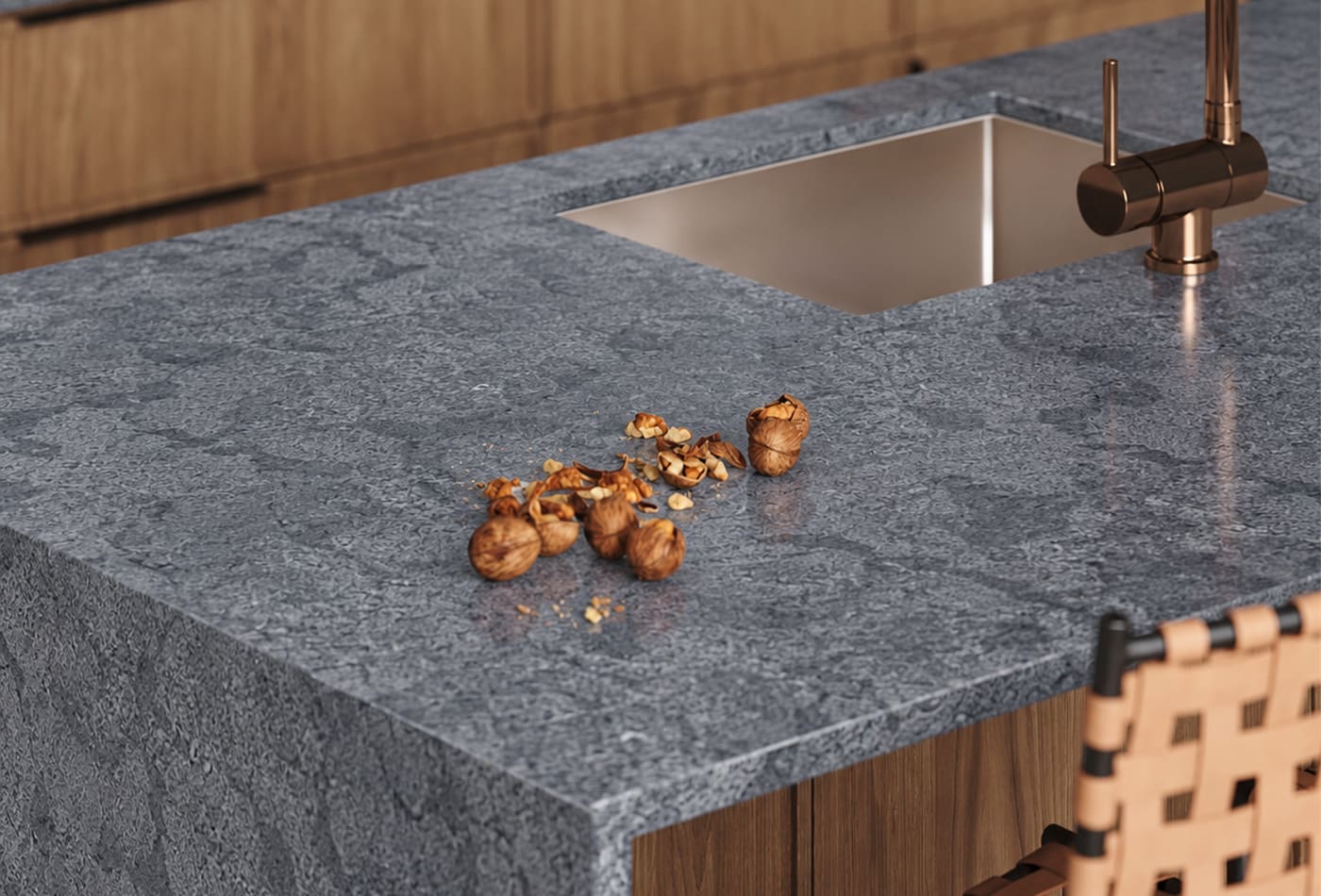
When choosing the best worktop material for the kitchen, comparing limestone to the others can help pick the one that will suit better the usage, maintenance and budget.
Limestone vs Quartz Worktops
Compared to limestone, quartz worktops are more scratch and stain resistant, yet they can chip easily when enough pressure is applied. In addition, unlike limestone, quartz surfaces are not affected by harsh chemicals, but they still need some maintenance and care
Limestone vs Granite Worktops
Granite is generally harder than limestone and more scratch resistant. Stain and liquid resistance also depends on the type of granite, but unlike limestone, some types need regular sealing. The pattern of each slab also varies, which is different than the uniformity of limestone.
Limestone vs Porcelain Worktops
Porcelain worktops are generally more scratch, stain and heat resistant than many other materials including limestone. They also do not need much maintenance. On the other hand, edges can chip when enough pressure is applied and professional fabrication and installation are required.
Limestone vs Marble Worktops
Both materials can be easily scratched and etched by acidic liquids, so they both need some caution and maintenance. Their colours and patterns vary, but overall, they have a different appearance.
In the end, the choice between these materials and surfaces depends on the budget, appearance preference and maintenance willingness. Considering that it is a natural stone, but still needs some special care, limestone worktops can be a great choice.
SEMI-RIJO LIMESTONE
£255.95
Semi Rijo Limestone has a white base which is adorned with subtle moving grey veins. This slab surface can blend into any kitchen or bathroom. It is given a dazzling finish that makes a perfect addition in both residential and… read more

CALIZA CAPRI LIMESTONE
£282.95
Caliza Capri is a type of limestone that is quarried in Spain and has a light beige colour. It is most popular for its tiny white and golden touches on its pure surface. Caliza Capri Limestone can be used for… read more

EVORA FOSSIL LIMESTONE
£254.60
Evora Fossil Limestone has a white base which is adorned with grey patches at random places. This slab surface can blend into any kitchen or bathroom. It is given a dazzling finish that makes a perfect addition in both residential… read more

How to Choose the Right Supplier and Installation Service
A supplier who can provide the most relevant information about the characteristics of the material and the available types of finish will be able to offer the best choice to the buyer. Moreover, the buyer should pay attention to the set of services included in the quotation. The most cost-effective option will include templating, fabrication, cutting, delivery, and installation, as well as cut-outs, upstands, and other services. Furthermore, it is essential to clarify with the supplier what is not included in the quotation so that there are no additional costs when the order is placed. One of the most critical points to discuss when choosing a supplier is the templating service. The process will ensure that accurate measurements are taken, particularly when the kitchen cabinets have been installed and are completely level. The specialist will take readings of the walls, including any inconsistencies, and the position of the hob and sink. The company may use digital templating or traditional methods, depending on the specialist’s preferred approach.
The fabrication process will then begin, which will include cutting the slab and creating cut-outs. A reliable fabricator will have extensive knowledge and experience working with natural stone, including understanding the characteristics and potential weaknesses of the material. An experienced installer will support the surface correctly and ensure that all of the joining points are well-placed so that the worktop is strong and aesthetically pleasing. They will also make sure that the appropriate sealants are applied and that the gaps around the sink are appropriately addressed. When selecting a limestone kitchen countertop, ask the supplier how the stone will be handled during fabrication and installation to minimise the risk of chips, cracks and surface damage.
Requesting a Sample Before You Buy
Visually inspecting the sample is crucial to assess the appearance of the material in practice. Ideally, a buyer should view the sample in the proposed kitchen, comparing it to the furniture, floor, and wall colours. This is particularly important for potential buyers of beige worktops, whose colour may vary significantly under natural and artificial lights. Whenever possible, the buyer should ask to see an image of the intended slabs or ask to look at the actual materials before making the final decision. This is especially crucial for slabs with fossils, colour variation, and veining.
How Much Does a Limestone Kitchen Worktop Cost?
Limestone kitchen worktops from WORK-TOPS.COM cost around £450 per square metre, depending on the type of stone, colour and finish. The price quoted will be for the templating, cutting and installation of your worktop. If you would like a quotation, please contact us.
Conclusion
A limestone kitchen worktop may be an excellent choice for somebody, who wants to enjoy the beauty of natural materials. At the same time, one should be aware that this option needs more maintenance compared to some other materials. When choosing such a worktop, a buyer should ask questions concerning the sample, templating, and fabrication, and learn more about the material characteristics, maintenance, and the supplier’s expertise to make the right choice.
At WORK-TOPS.COM, we can assist buyers in finding the best worktop for their needs. Contact us on +44 0330 113 5868 or email us at info@work-tops.com for more information on our services and to get a quotation for your kitchen.
Frequently Asked Questions and Answers
Is limestone good for kitchen worktops?
Limestone is good for kitchen worktops as long as the owner is aware of the maintenance involved and the reaction to certain liquids and scratches.
Do I need to seal my limestone?
The majority of limestone kitchen worktops should be sealed. In case you are not sure, ask your supplier which sealer is the most appropriate and how often the sealing should be done.
Would lemon juice ruin my limestone worktop?
Yes, any acidic liquid can permanently damage a limestone worktop by etching. While using it daily, one should always cut on a chopping board made of wood or other materials and always clean any spills immediately.
Is limestone better than quartz?
The two materials differ in terms of advantages and disadvantages. Limestone worktops are natural, while quartz worktops require less maintenance and are more chemically resistant.
Is it possible to see a sample before buying?
One should always ask the supplier if it is possible to see a sample in order to have an idea of how the colour will suit the general colour scheme of the kitchen.
Why is templating by a professional important?
Professional templating makes sure that the measurements of the kitchen worktop, including the positions of the sinks, hobs and cut-outs are taken accurately. It also considers irregularities in the walls and cabinets to ensure that the worktop fits perfectly during the installation.