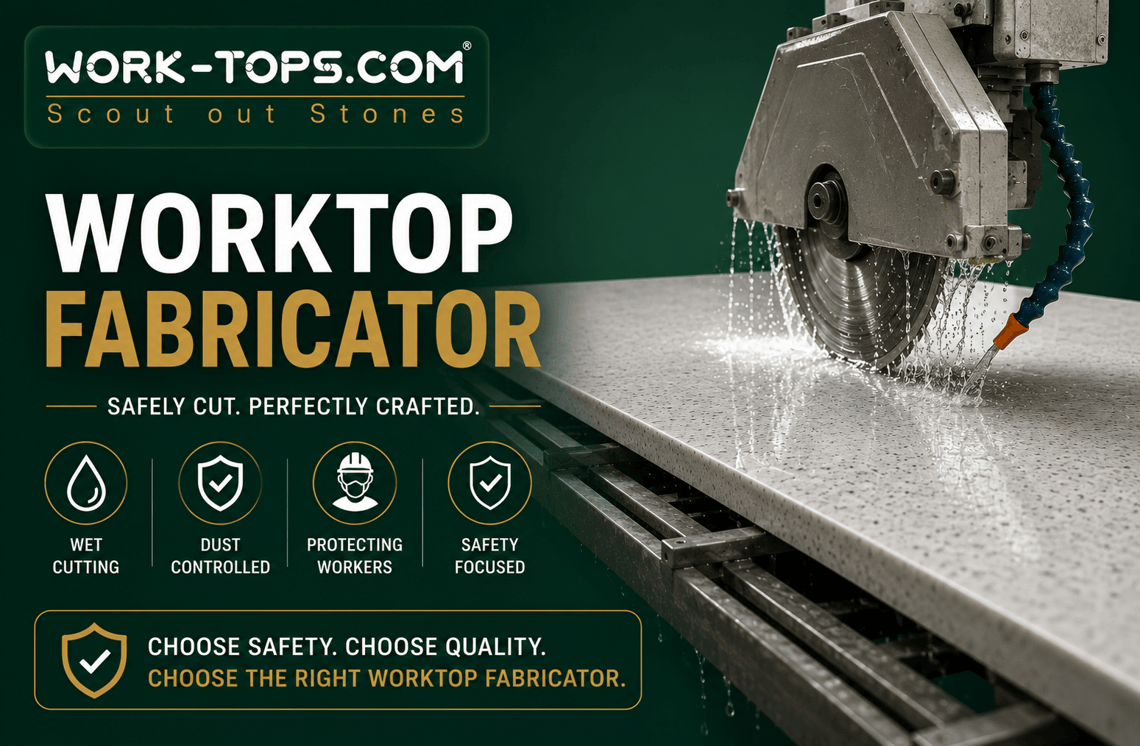
The short answer: a worktop fabricator that cuts stone safely is one that wet cuts every time, controls the dust properly, and won't flinch when you ask them to prove it. Get those three things straight and you've filtered out most of the cowboys before a single slab is touched.
Choosing who fabricates your worktop used to be a conversation about price and lead time. Since the 2026 silica rules, it's also about safety, both for the people cutting your stone and for your own peace of mind that you're buying from a proper outfit. This checklist walks you through exactly what to ask a worktop fabricator, what a good answer sounds like, and the red flags that should have you closing the door.
Why How Your Fabricator Cuts Now Matters
Quick bit of background, because it frames everything else. Engineered stone, most quartz, is loaded with crystalline silica. Cut it dry and it throws off a fine dust that wrecks lungs over time. Silicosis. No cure. In 2026 the HSE stepped in hard after workers died, and dry cutting is now flatly unacceptable.
So when you pick a worktop fabricator today, you're not just choosing a craftsman. You're choosing whether your money backs a workshop that protects its people or one cutting corners in a dust cloud. That's a real ethical line now, and honestly, the safe workshops tend to be the well run ones anyway. Careful with dust usually means careful with your templating, your seams, your edges. If you want the wider context on the materials themselves, our guide to natural stone versus engineered stone fills in the background.
The First Question to Ask Any Worktop Fabricator
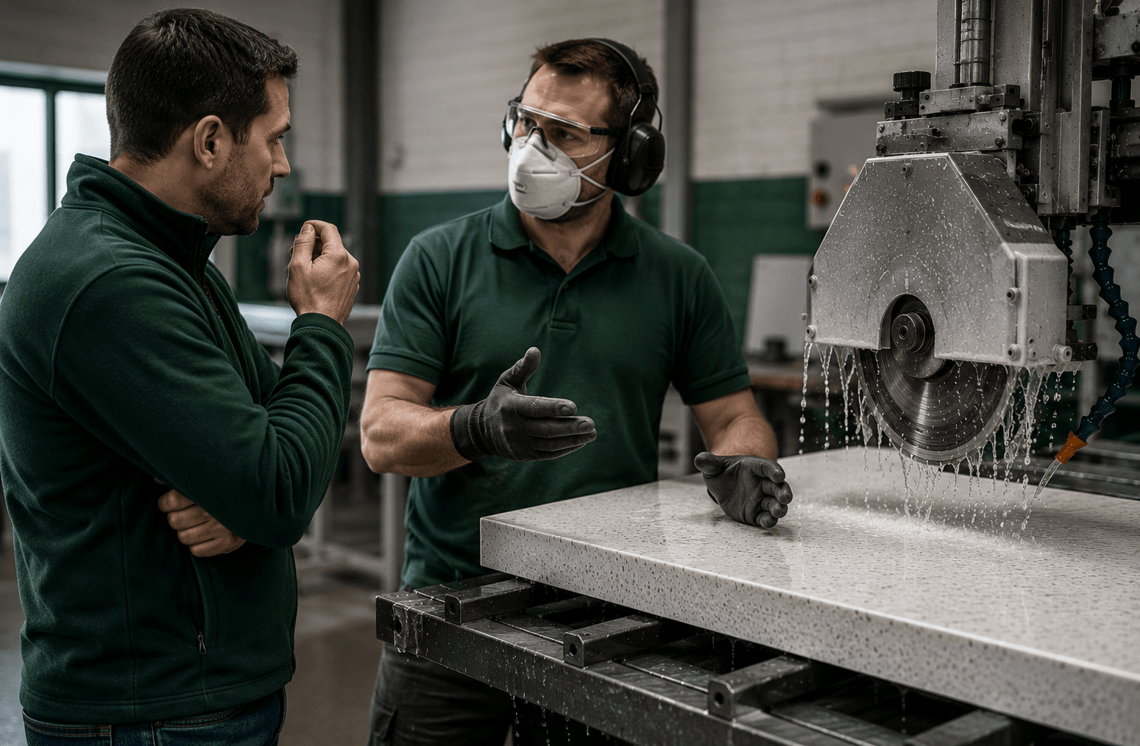
One question sorts the wheat from the chaff faster than anything else. "Do you wet cut, and can I see how you control dust?"
Watch how they answer, not just what they say. A good worktop fabricator answers instantly and specifically, yes, we wet cut everything, on tool water suppression, extraction on the bridge saw, the lads wear FFP3 masks, we do face fit testing. That fluency tells you it's routine. A fabricator who hesitates, gets vague, or waves it off with "oh, don't worry about all that" has just told you everything. Dust control isn't a thing they think about daily, which means it probably isn't happening.
A customer of ours phoned three local firms before coming to us and said two of them couldn't answer the wet cutting question at all, just went quiet. That silence is your answer. You want the one who can't stop talking about it.
If you want to go a layer deeper, ask what they cut on. A firm running a proper CNC bridge saw with integrated water feed is a different proposition to someone with a handheld disc cutter and a hopeful attitude. You don't need to understand the machinery, just listen for whether the kit sounds purpose built for wet cutting or improvised around it. And ask where the offcuts go, a workshop recycling or properly disposing of stone waste is usually one that runs a tight, compliant operation across the board.
Get the Safety Claims in Writing
Here's the practical bit people skip. Ask the worktop fabricator to put their cutting method on the quote or order confirmation. One line: "All stone wet cut with water suppression and extraction." Costs them nothing. Takes ten seconds.
Why bother? Two reasons. A firm happy to write it down is a firm doing it, no genuine outfit hesitates over that. And if anything ever goes sideways, you've got it on paper. I'd treat reluctance here as a quiet red flag. Same goes for the stone itself, get the actual product name and, if it's engineered stone, ideally the silica percentage noted down too. A worktop fabricator who knows their materials will have that to hand without a fuss.
While you're at it, ask whether any cutting will happen in your kitchen. Most fabrication is done in the workshop, but the odd tap hole or trim gets done on site, and that on site work needs the same dust control. If they're planning to dry cut on your worktop with your windows shut, that's a no.
Checking Credentials Without Being an Expert
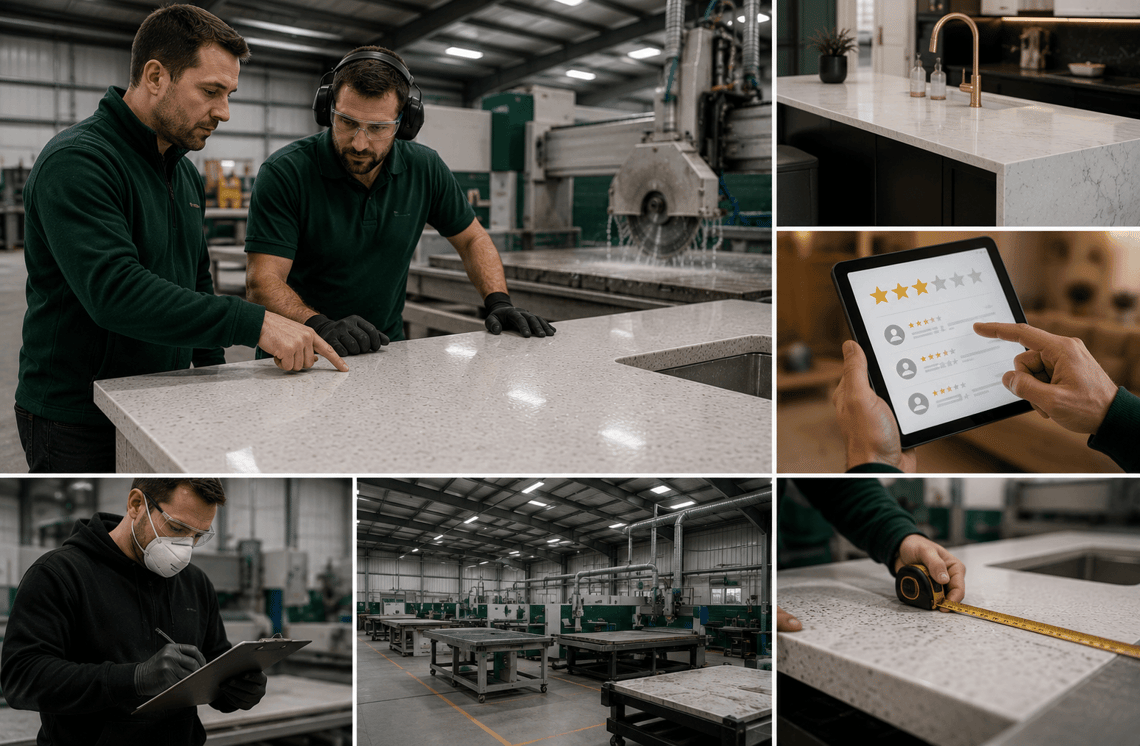
You don't need to know a bridge saw from a breakfast bar to vet a worktop fabricator. You just need to know what to look for.
Ask if they do health surveillance for their team, lung function testing, that sort of thing. It's now expected under the HSE guidance, and a fabricator who does it is one taking the whole thing seriously. Ask how long they've been trading and to see recent work, ideally in a home like yours. Look at reviews, but read the middling ones, not just the five stars, that's where the real picture lives. And trust the visit. If you get to see the workshop and it's a fog of dust with no extraction running, walk. A tidy, well ventilated workshop tells you more than any certificate.
It's also worth asking who actually does the templating and fitting. Some firms subcontract the on site work to whoever's free that week, which can mean the careful workshop and the person in your kitchen aren't the same standard at all. You want the templating done by someone who'll take responsibility for the final fit, because a millimetre out on a template is a gap you'll stare at every morning. A settled, in house team is usually a better bet than a rotating cast of subbies.
One honest caveat: the cheapest quote and the safest worktop fabricator are rarely the same firm. Proper dust control, decent kit, trained staff, health checks, none of that is free, and it shows up in the price. Paying a bit more here isn't a rip off. It's the cost of a job done right by people who'll still have working lungs in twenty years. If budget's tight, our 2026 quartz worktops buyer's guide helps you see where the money actually goes.
Red Flags That Should End the Conversation
Some things aren't worth a second meeting. A worktop fabricator who can't or won't explain how they cut. One who dodges putting anything in writing. A workshop visit that's all haze and no masks. A quote that's suspiciously, wildly below everyone else's, because something's being skipped, and it's usually safety.
Also be wary of anyone who talks you out of caring. "The silica thing is overblown, mate" is not reassurance. It's a tell. The good fabricators are, if anything, keener to talk about their safety setup than you are, because they've invested in it and they're proud of it. When picking your fabricator, indifference to the topic is the single clearest warning sign there is. And if you're still weighing materials before you even get to fabricators, our quartz versus granite comparison is a good place to start.
The Bottom Line on Choosing a Worktop Fabricator
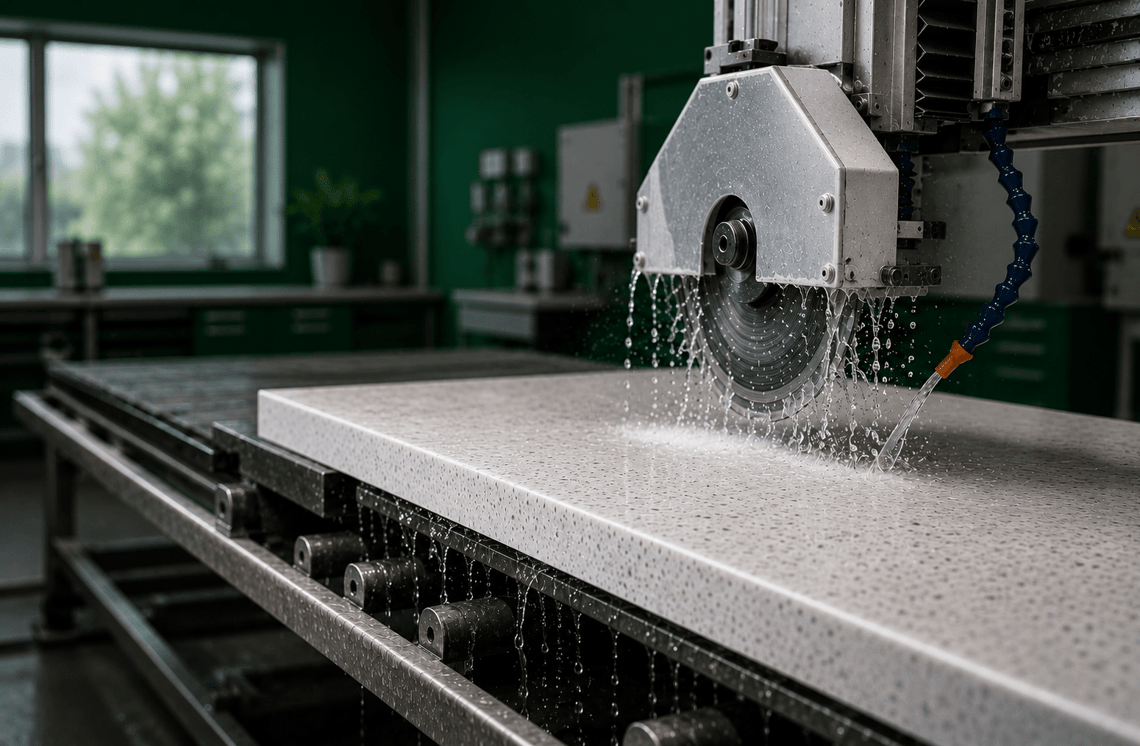
Choosing a worktop fabricator in 2026 comes down to one instinct: does this firm treat safe cutting as normal, or as an inconvenience? Ask the wet cutting question, get the method in writing, take the workshop visit, and read between the lines. The right fabricator makes all of that easy, because they've nothing to hide and everything to be proud of.
At Work Tops we hold ourselves to exactly these standards and only work with suppliers and fabricators who do the same, so the surface in your kitchen arrives beautifully made and responsibly cut. Planning a new worktop and want a straight, no nonsense steer on getting it right? Browse our worktop range and get in touch, we're always glad to talk it through and help you choose well.
Frequently Asked Questions
What's the single most important question to ask a worktop fabricator? Ask whether they wet cut and how they control dust. A good worktop fabricator answers instantly and specifically. Hesitation or vagueness is a red flag that dust control isn't part of their daily routine.
Is it safe to buy from a fabricator after the 2026 silica rules? Yes, as long as they cut stone safely. The rules make wet cutting the legal standard, so a compliant worktop fabricator is now producing surfaces under far tighter dust controls than before.
Should the fabricator's cutting method be in writing? Ideally, yes. Ask for one line on the quote confirming the stone is wet cut with water suppression and extraction. A firm that's genuinely doing it won't hesitate to write it down.
Will choosing a safe fabricator cost me more? Usually a little. Proper dust control, trained staff and health checks all cost money, so the safest worktop fabricator rarely gives the cheapest quote. It's the fair price of a job done properly.
Does any cutting happen in my kitchen? Sometimes, for a tap hole or a final trim. That on site work needs the same dust control as the workshop, so ask your fabricator how they'll manage it before they start.